

How to Care for Amaryllis: Planting, Blooming and Reblooming

An amaryllis is one of the easiest ways to get big, bold flowers in the middle of winter. A healthy bulb needs a snug pot, a sunny window and careful watering, and it usually rewards you with one or more tall stalks of trumpet-shaped flowers. With the right care after flowering, the same bulb can bloom again for years.
This guide covers how to choose and plant a bulb, how to water it, how to make the flowers last, what to do with a wax-coated bulb, and the after-bloom and rest routine that gets it flowering again. The advice comes from university extension services, listed at the end. It is part of our flower care guides. For the symbolism and history of the flower, see amaryllis meaning.
Amaryllis care at a glance
- Pot: narrow, with drainage holes, about 1 inch wider than the bulb.
- Planting depth: leave the top third to half of the bulb above the soil.
- Light: a sunny window while it grows; out of direct sun once the flowers open.
- Water: when the top inch or two of soil is dry. Never leave the pot standing in water.
- Time to bloom: Michigan State University Extension says flowering usually follows about 8 to 12 weeks after planting a bare bulb.
- After blooming: cut off the faded flowers, keep the leaves and keep the plant growing.
- Pets: the ASPCA lists amaryllis as toxic to dogs, cats and horses.
Choosing an amaryllis bulb
Most plants sold as amaryllis are hybrids of Hippeastrum, native to Central and South America. University of Minnesota Extension gives these tips for choosing one:
- Pick the largest bulb you can find for the variety you want. Bigger bulbs produce more stalks and flowers in the first year.
- The bulb should be firm and dry, with no mold, soft spots or damage.
- New green growth is normal. Choose bulbs where it is bright green, without spots.
If you are not planting right away, Michigan State University Extension suggests keeping the bulb somewhere cool, around 50°F, so it doesn’t start growing too early.
How to plant an amaryllis bulb
Amaryllis bloom best when their roots are a little crowded, so resist the urge to use a big pot. University of Minnesota Extension recommends:
- A pot with one or more drainage holes, about 1 inch wider than the widest part of the bulb and roughly twice as tall as the bulb.
- Fresh potting mix, not garden soil. Fill the pot about half full and set the bulb on it so the roots rest on the mix.
- Add more mix around the bulb, firming it gently, until one third to one half of the bulb is still showing above the soil.
- Water thoroughly over a sink, let it drain completely, then set it on a saucer in a sunny window.
Michigan State suggests not watering again until you see a bud or green shoots, then watering when the top inch of mix feels dry. Turning the pot every few days helps the stalk grow straight rather than leaning toward the window.
Watering and feeding
Too much water is the main thing to avoid. Wet soil can rot the bulb and roots and attract fungus gnats.
- Water when the top 1 to 2 inches of soil feel dry, and let the pot drain freely each time.
- Empty the saucer. Don’t let the pot sit in water.
- Once new growth is visible, University of Minnesota Extension suggests feeding with a houseplant fertilizer at half the label strength each time you water.
Making the flowers last
How long do amaryllis flowers last? North Carolina State Extension says the blooms last three to four weeks. Each stalk carries several flowers that open over time, and a large bulb may send up a second stalk.
When the buds start to open, move the plant out of direct sun. University of Maryland Extension says temperatures above 65°F shorten the bloom period, so a cooler spot away from radiators and heat vents helps the flowers last longer. The flower stalks can become top-heavy, so add a stake early if yours is leaning, pushing it in carefully so you don’t damage the bulb, and tie the stalk loosely with a soft tie.
What about waxed amaryllis bulbs?
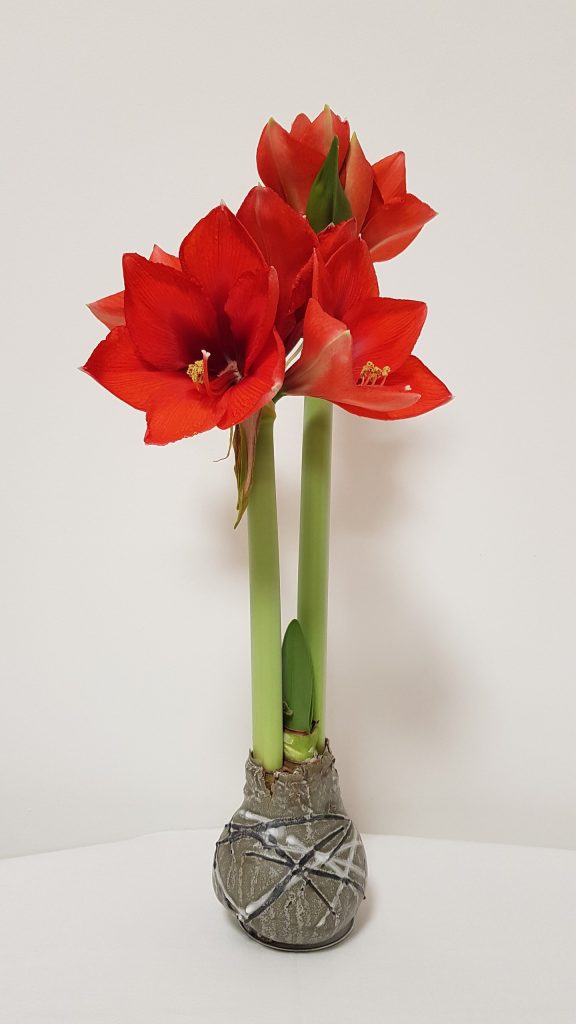
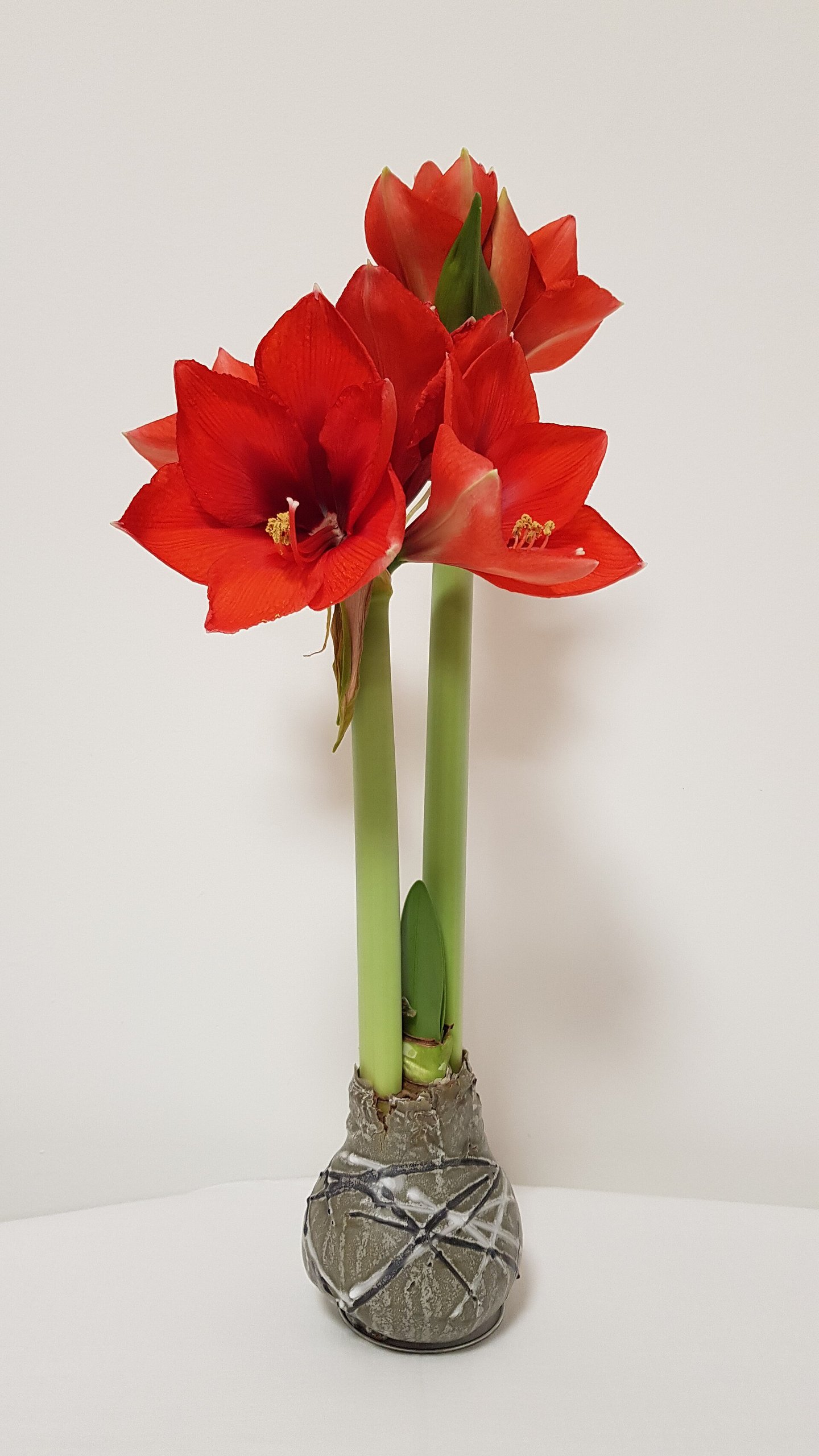
Wax-coated amaryllis bulbs are sold as decorations that flower without soil or water. Michigan State University Extension says you can follow the directions on the label and discard the bulb after it blooms, or remove the wax and plant it.
Saving one takes some patience. Iowa State University Extension explains that the bulb uses its stored food to flower and can’t replace it without soil and water, so it shrinks. If you want to try:
- After the last flower fades, peel off the wax carefully, without breaking any small roots at the base.
- Check the bulb for soft, sunken or dark patches. Throw it away if it shows signs of rot.
- Pot it like a regular bulb and give it plenty of light and regular feeding through spring and summer.
Iowa State notes that it may not flower the next year, or may grow only leaves at first, because it needs time to rebuild its reserves.
A waxed bulb, or a pot if you are planting one
A waxed bulb is a short-term display and is not the same as the planted, rebloomed bulbs in this guide. If you are planting a bulb, use a pot with a drainage hole. Amaryllis is toxic to pets; see the pet section below. Prices are on Amazon and change often, so we do not list them here.
- Bonnie Plants Red Waxed Minerva Amaryllis Bulb
 A wax-coated bulb sold to bloom without potting or watering. The listing is non-returnable except if the bulb arrives damaged or defective.
- D’vine Dev terracotta pots and saucers, 4, 5 and 6 inch, 3-pack
 Unglazed pots with drainage holes and matching saucers. Choose a size that fits the bulb you are planting, with the top third of the bulb above the mix, as this guide describes.
As an Amazon Associate, Flowerlyn earns from qualifying purchases.
After it blooms
The University of Minnesota Extension calls this the secret to keeping amaryllis for years: keep the plant actively growing after it finishes flowering.
- Cut off the faded flowers so the plant doesn’t spend energy making seed.
- Leave the flower stalk until it turns yellow, then cut it off. Iowa State suggests cutting 1 to 2 inches above the bulb.
- Keep all the leaves. They make the food the bulb stores for next year’s flowers.
- Move the plant to the sunniest spot you have indoors, and keep watering and feeding it regularly. Illinois Extension suggests a monthly all-purpose houseplant fertilizer.
Once there is no longer a risk of frost, the pot can go outside for the summer. Start it in shade or filtered light, then move it gradually to a spot with at least 6 hours of sun a day. Keep watering and feeding, and bring it back indoors before the first frost.
How to get an amaryllis to bloom again
Amaryllis don’t strictly need a rest period. University of Minnesota and Wisconsin extension services both say a bulb that keeps growing will bloom again. A rest period is useful because it lets you control when it flowers, for example in time for the holidays.
- Start the rest: in late summer or early fall, bring the pot indoors and stop watering. Put it somewhere cool, dark and dry, such as a basement or closet. Extension services give slightly different temperatures, roughly 45 to 60°F.
- Let the leaves die back: wait until they turn yellow or brown, then cut them off.
- Wait 8 to 12 weeks: check the bulb now and then for mold, and don’t water.
- Wake it up: when new growth appears, or after 8 to 12 weeks if nothing has appeared, move it to a sunny window, trim any dead leaves and start watering again.
University of Minnesota Extension says flowers usually develop about 4 to 6 weeks after a bulb comes out of dormancy. For a holiday bloom, count back from the date you want: a rest that starts in September usually brings flowers in winter. Repot only every 3 or 4 years, after a rest period, since amaryllis flower best a little potbound.
Why isn’t my amaryllis blooming?
- Only leaves, no stalk: University of Minnesota Extension says this usually means the bulb didn’t store enough food after its last bloom. Give it more light and regular feeding through spring and summer.
- A small or spent bulb: waxed bulbs and bulbs that bloomed heavily may need a full season of growth before they flower again.
- A soft bulb or yellowing leaves while growing: often too much water. Let the soil dry more between waterings and check for rot.
Is amaryllis safe for pets?
The ASPCA lists amaryllis as toxic to dogs, cats and horses. Signs can include vomiting, diarrhea, drooling, abdominal pain, loss of appetite and tremors. Keep the plant and bulb where pets can’t reach them, and call your vet or an animal poison control line if you think your pet has chewed one. For pet-safer flowers, see flowers safe for cats and flowers safe for dogs. If you want a pet-safe holiday plant, the Christmas cactus is on the ASPCA’s non-toxic list; see our Christmas cactus care guide.
Keep exploring
Read about the meaning of the amaryllis and other Christmas flowers, or try more winter blooms: how to care for a poinsettia, Christmas cactus care and how to grow paperwhites. For cut amaryllis stems in a vase, see how to keep cut flowers fresh. For more flowers to enjoy this season, see winter flowers.
Frequently asked questions
Water when the top 1 to 2 inches of soil feel dry, let the pot drain, and empty the saucer. After planting a bare bulb, water sparingly until you see a bud or green shoots.
Michigan State University Extension says a newly planted bare bulb usually flowers about 8 to 12 weeks after planting. A bulb coming out of a rest period usually blooms in about 4 to 6 weeks.
Cut off the faded flowers, leave the stalk until it yellows, keep the leaves, and grow the plant in a sunny spot with regular water and fertilizer so the bulb can store energy for next year.
Not strictly. Extension services say a bulb that keeps growing can bloom again, but a cool, dry rest of 8 to 12 weeks lets you time the flowers, for example for the holidays.
Sometimes. After it blooms, peel off the wax carefully, check for rot, then pot it and grow it in good light with regular feeding. It may take a season or more to flower again.
Sources
- University of Minnesota Extension: Growing and caring for amaryllis
- Michigan State University Extension: Growing amaryllis, a favorite holiday plant
- University of Maryland Extension: Amaryllis care
- University of Illinois Extension: How to take care of amaryllis and get them to rebloom
- University of Wisconsin-Madison Extension: Amaryllis, Hippeastrum
- Iowa State University Extension: Can I get my waxed amaryllis bulb to rebloom?
- Iowa State University Extension: What should I do with my amaryllis after it blooms?
- North Carolina State Extension: Hippeastrum (amaryllis)
- ASPCA: Amaryllis