

Christmas Cactus Care: Watering, Light and How to Make It Bloom
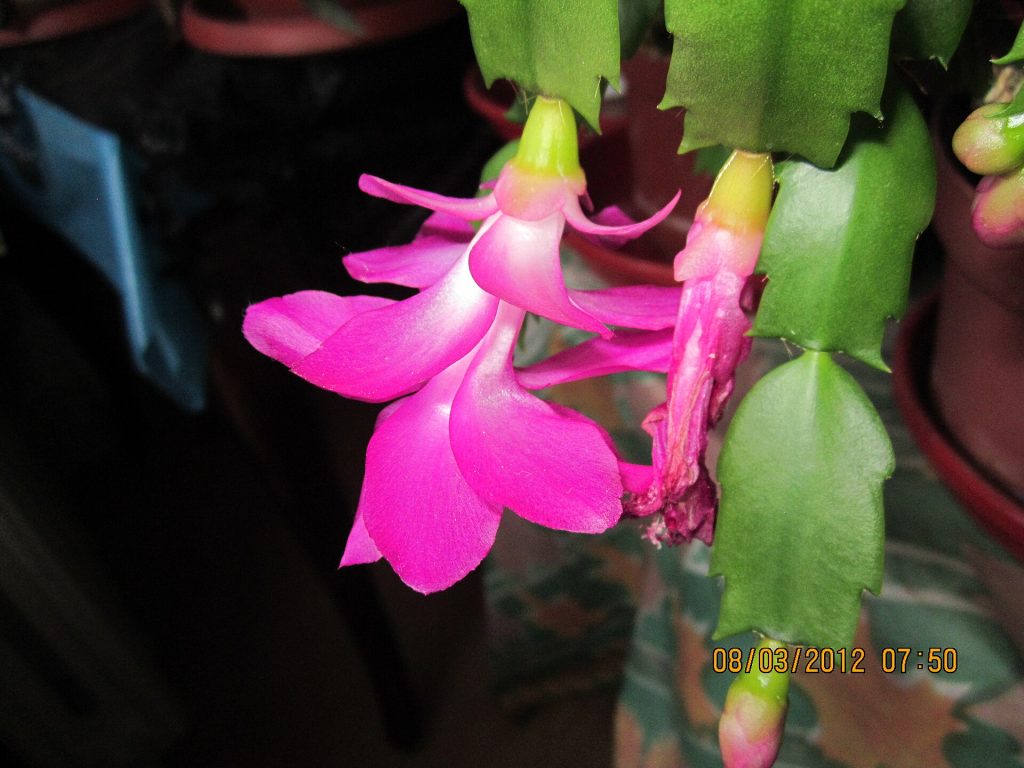
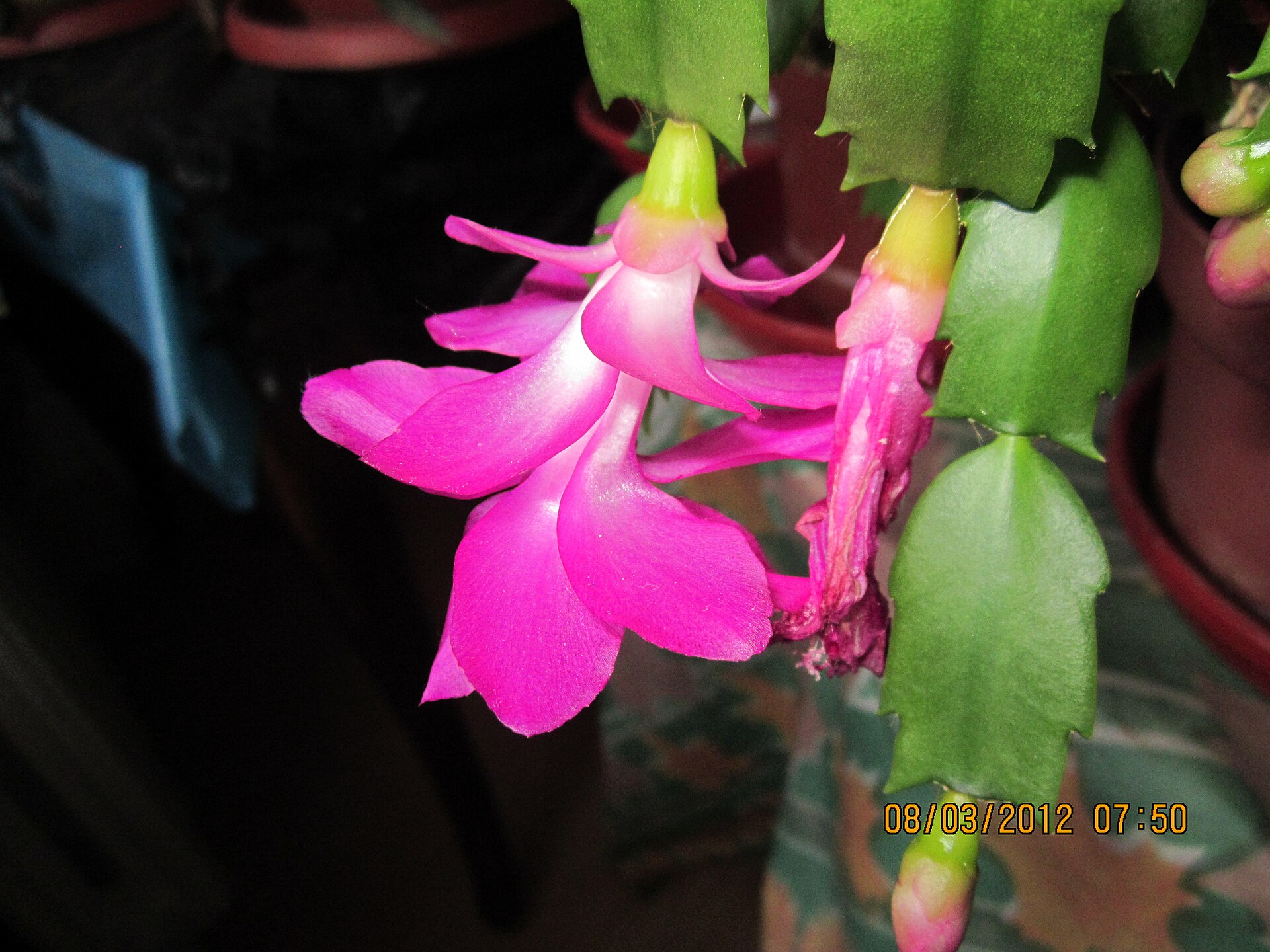

A Christmas cactus is one of the few holiday plants that is easy to keep for years. It is not a desert cactus: it grows naturally on trees in the tropical mountains of southeast Brazil, so it likes bright but indirect light, a well-drained mix and more water than most cacti. University of Illinois Extension notes that plants can live for decades and are often passed down through families.
This guide covers where to put your plant, how to water it, why the buds drop, how to tell which holiday cactus you have and how to get it to flower again next winter. The advice comes from university extension services, listed at the end. It is part of our flower care guides.
Christmas cactus care at a glance
- Light: bright, indirect light. Full summer sun can turn the stems pale or scorched.
- Temperature: about 60 to 70°F indoors, with cooler nights in fall to set buds.
- Water: let the soil dry slightly between waterings, then water thoroughly and let it drain. Keep it a little more evenly moist while it blooms.
- Soil: a well-drained potting mix. Illinois Extension suggests cactus mix or regular potting soil with 20 to 40% perlite.
- To bloom: long, uninterrupted nights and cool temperatures for about 6 weeks in fall.
- Pets: the ASPCA lists Christmas cactus as non-toxic to dogs, cats and horses.
Is it a Christmas cactus or a Thanksgiving cactus?
Several holiday cacti are sold under the name Christmas cactus. University of Illinois Extension says most plants sold as Christmas cactus are actually Thanksgiving cacti. You can tell them apart by their flat stem segments, which look like leaves:
- Thanksgiving cactus (Schlumbergera truncata): pointed, claw-like teeth along the edges of the segments, and yellow pollen at the tips of the flowers. It usually blooms from late November to late December.
- Christmas cactus (Schlumbergera x buckleyi): smooth, rounded or scalloped edges, and purplish-brown pollen. It usually blooms from late December into March.
- Easter cactus: rounded edges and star-shaped flowers, usually in spring.
The good news is that Thanksgiving and Christmas cacti need the same care, so everything below works for both.
Where to put a Christmas cactus
Iowa State University Extension recommends bright, indirect light and temperatures of 60 to 70°F indoors. Keep it away from heat vents, fireplaces and cold drafts. University of New Hampshire Extension suggests an east- or west-facing window.
In summer, the plant can go outside in a sheltered spot with light shade. University of Minnesota Extension suggests filtered sun, such as under a tree, or 3 to 6 hours of sun a day. Too much sun can turn the stems pale green or sunburned. Bring it indoors in fall once nights start dropping into the low 50s°F, and check it for pests before you do.
How often to water a Christmas cactus
Holiday cacti need more water than desert cacti, but soggy soil is the most common way to lose one.
So how often is that? North Carolina State Extension suggests watering about every 1 to 2 weeks, or when the soil is nearly dry. University of New Hampshire Extension explains that the right interval depends on the potting mix, the size of the pot, how much light the plant gets and how warm the room is, so check the soil rather than watering on a fixed schedule. A simple test from Illinois Extension: water when the top inch of soil is dry to the touch. When in doubt, UNH Extension advises erring on the side of underwatering.
- Let the soil dry out slightly between waterings. Purdue University suggests watering thoroughly when the top half of the soil in the pot feels dry.
- Water over a sink and let it drain. Empty the saucer or decorative pot, as standing water can cause bud drop, wilting and root rot.
- In fall, while buds are forming, water a little less. University of Missouri Extension says slightly drier soil at this time, along with long nights and cool temperatures, helps the plant flower.
- While it is in bloom, keep the soil a little more evenly moist. Illinois Extension notes that letting it get too dry while blooming can make it drop its flowers.
- After flowering, water a little less until new growth starts in spring, then go back to normal watering.
Feed with a complete houseplant fertilizer from spring, when growth resumes, through late summer.
A simple way to check the mix
A moisture meter is optional, but it helps you test below the surface, which is the point of the finger-test advice in this section. Prices are on Amazon and change often, so we do not list them here.
- XLUX Plant Soil Moisture Meter
 A battery-free probe with a color-coded dial. The maker notes that readings can be off in a very loose mix, and the probe should be wiped and stored after each use, not left in the soil.
- Miracle-Gro Cactus, Palm and Citrus Potting Mix, 8 qt., 2-pack
 A fast-draining potting mix with peat, sand and perlite, sold as a two-pack of 8-quart bags. A Christmas cactus prefers a mix that does not stay soggy.
As an Amazon Associate, Flowerlyn earns from qualifying purchases.
Why is my Christmas cactus dropping buds?
Bud drop is the most common complaint. Once buds form, holiday cacti don’t like change. University extension services list these causes:
- Moving the plant after buds have formed, or changing which way it faces the light. Iowa State suggests waiting until the flowers start to open before moving it to a more prominent spot.
- Cold or hot drafts, and sudden temperature changes. Illinois Extension warns that temperatures below 50°F can make buds fall.
- A room that is too warm.
- Soil that is too dry or too wet.
- Too little light, or low humidity.
Why are the stems limp or wrinkled?
Wilted, shriveled or dull gray-green stems can mean too little water, but Illinois Extension says overwatering is the most common cause: soggy soil kills the roots, and the plant can no longer take up water. Check the soil before watering more. If it is wet, let it dry out, make sure the pot drains, and avoid leaving water in the saucer.
How to get a Christmas cactus to bloom
Holiday cacti are short-day plants: they form flower buds when nights get long and cool in fall. You can give them those conditions in two ways.
- Long nights: give the plant at least 12 to 14 hours of uninterrupted darkness every night for about 6 weeks, with bright light during the day. A spare room where no lamps are switched on at night works well. Iowa State notes that most plants need 14 to 16 hours of darkness, though some bloom with 12.
- Cool nights: keep night temperatures around 55°F. University of Minnesota Extension says that at 55°F plants often bloom in about 5 to 6 weeks, sometimes regardless of day length.
Temperature matters as much as darkness. Iowa State says temperatures above 70°F can prevent flowering even with long nights, and Minnesota Extension notes that plants are unlikely to bloom with nights above 65°F. Purdue University suggests starting dark treatments around mid-October, or cool treatments by early November, to have flowers for the holidays. Even a brief stray light from a lamp, a streetlight or car headlights can interrupt the dark period, according to University of Missouri Extension. Once buds have formed, day length no longer matters.
For more flowers next year, Illinois Extension suggests pinching the stems back in June to encourage branching, since flowers form at the stem tips.
Repotting
Holiday cacti flower best when slightly potbound. Iowa State University Extension says they can go many years without repotting; when one has completely outgrown its pot, repot in spring or early summer, not while it is in bloom. Use a well-drained mix and a pot with drainage holes.
Pots, mix and a winter light
If you are repotting, use a pot with a drainage hole and a mix that dries reasonably quickly. A small clip-on light can help in a dim winter window. Prices are on Amazon and change often, so we do not list them here.
- D’vine Dev terracotta pots and saucers, 4, 5 and 6 inch, 3-pack
 Unglazed pots with drainage holes and matching saucers, in three small sizes. Porous clay helps the mix dry more evenly.
- Miracle-Gro Cactus, Palm and Citrus Potting Mix, 8 qt., 2-packA fast-draining potting mix sold as a two-pack of 8-quart bags, for cacti and succulents. Use a pot with a drainage hole.
- TPS Nutrients Christmas Cactus Fertilizer, 8 oz
 A liquid plant food labeled for Christmas cactus. Use it only as the label directs, and usually not while the plant is in its dry rest before budding.
- SANSI clip-on LED grow lights, 5W, 2-pack
 A two-pack of small USB clip-on lights with a timer and dimming, meant for small potted plants, not a greenhouse.
As an Amazon Associate, Flowerlyn earns from qualifying purchases.
Is a Christmas cactus safe for pets?
Yes. The ASPCA lists Christmas cactus as non-toxic to dogs, cats and horses, which makes it a good holiday gift for a home with pets, unlike amaryllis, holly or lilies. Chewing any plant can still upset a pet’s stomach, so keep it out of reach of determined chewers. See flowers safe for cats and flowers safe for dogs for more pet-safer choices.
Keep exploring
Looking for more holiday plants? See our Christmas flowers guide, how to care for a poinsettia, how to care for amaryllis and how to grow paperwhites. For more on choosing gifts, browse what flowers to send for every occasion.
Frequently asked questions
Usually about every 1 to 2 weeks, but check the soil first rather than following a schedule. Water thoroughly when the top inch or so has dried out, then let it drain and empty the saucer. Keep it a little more evenly moist while it is in bloom.
Usually the room is too warm or the nights are too short. For about 6 weeks in fall, give it 12 to 14 or more hours of uninterrupted darkness each night, or keep it at around 55°F at night.
Bud drop is usually caused by moving the plant after buds form, drafts, sudden temperature changes, temperatures below 50°F, or soil that is too dry or too wet.
Look at the stem segments. A Thanksgiving cactus has pointed, claw-like teeth on the edges; a Christmas cactus has smooth, rounded edges. Both need the same care.
No. The ASPCA lists Christmas cactus as non-toxic to dogs, cats and horses.
Sources
- University of Illinois Extension: How to identify and care for holiday cacti and get them to rebloom
- University of Minnesota Extension: Holiday cacti
- Iowa State University Extension: All about holiday cacti
- Purdue University: Getting Christmas cactus to rebloom
- University of Missouri Extension: Christmas cactus, a gift that keeps on giving
- North Carolina State Extension: Schlumbergera (holiday cacti)
- University of New Hampshire Extension: How often should I water a Christmas cactus?
- Illinois Extension: Low-maintenance, winter blooming holiday cacti
- ASPCA: Christmas cactus