

How to Care for an Orchid: Watering, Light and Reblooming
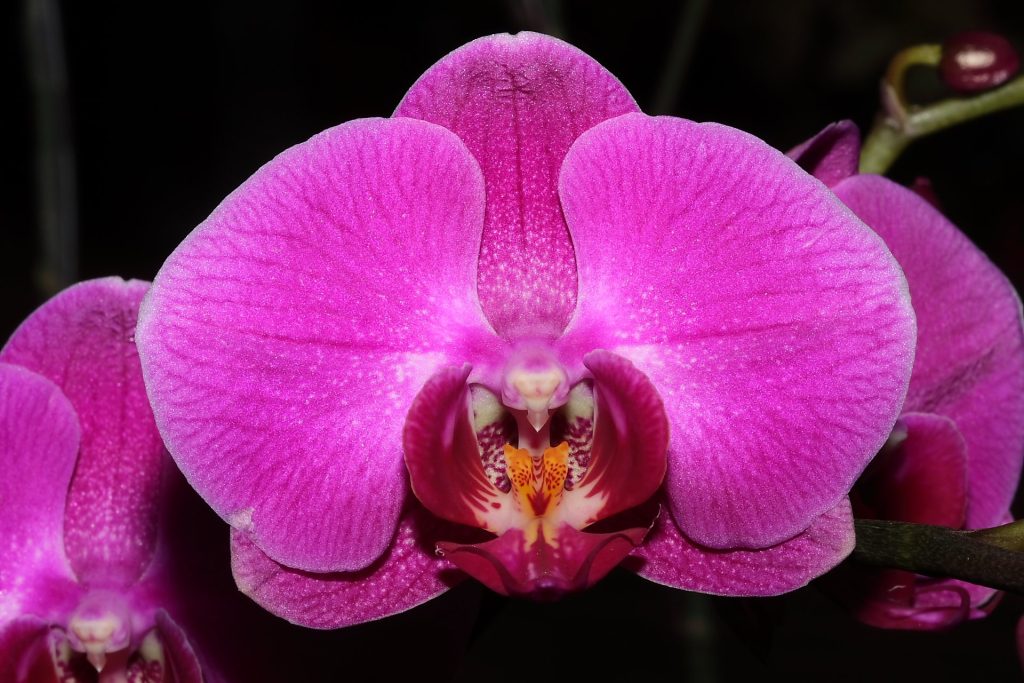
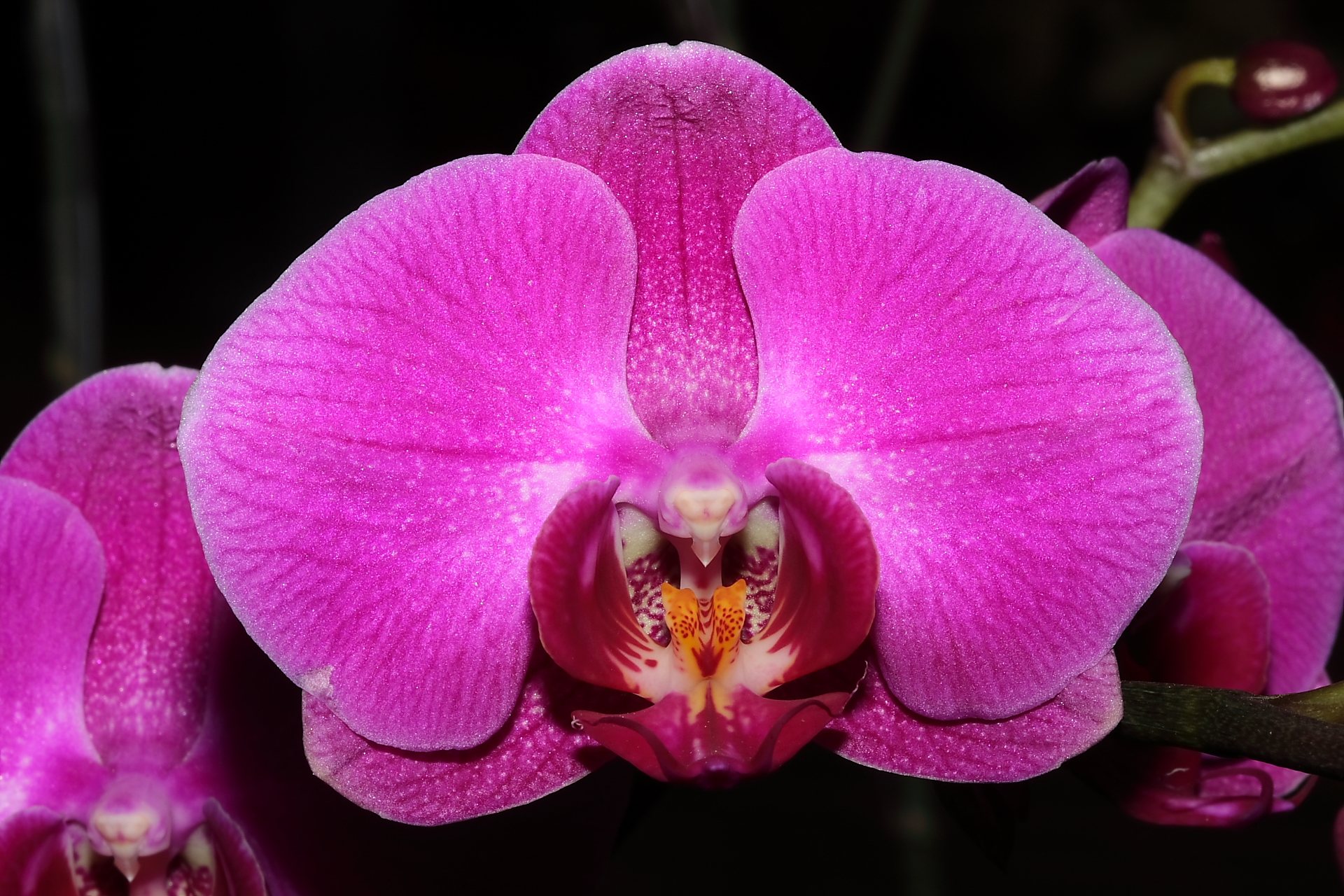

The orchid in most homes is a moth orchid, Phalaenopsis, the kind sold in supermarkets, garden centers and gift shops. It has broad, flat leaves and long arching sprays of flowers in white, pink, purple, yellow or patterned shades. University of Maryland Extension calls the many hybrids very easy to grow and flower under most home conditions. Most of the problems people have come from treating it like an ordinary potted plant.
This guide covers how to water an orchid, where to put it, when to feed and repot it, what to do after the flowers fall and how to get it to bloom again. The advice comes from university extension services and an orchid society, listed at the end. It is part of our flower care guides. For what orchids symbolize and when to give them, see our orchid meaning guide.
Orchid care at a glance
- Light: bright, indirect light, such as an east window or a shaded west or south window.
- Water: water thoroughly, let it drain completely, then let the bark get nearly dry before watering again. In a typical home that is about once a week.
- Temperature: normal room temperatures. Iowa State Extension gives 70 to 80°F by day and 60 to 70°F at night, and advises avoiding temperatures below 55°F.
- Feeding: a dilute orchid or balanced fertilizer while the plant is growing, less or none in winter.
- After blooming: trim the old flower spike, keep caring for the leaves and roots, and give it cooler nights in fall to bloom again.
- Pets: the ASPCA lists the Phalaenopsis orchid as non-toxic to dogs, cats and horses.
Why orchids need different care
In the wild, moth orchids grow on tree trunks and branches in the tropics rather than in the ground. University of Maryland Extension explains that they cling to bark and send out aerial roots, so many roots will grow above the pot and sprawl over the edge. That is normal, so do not cut healthy aerial roots off.
Because the roots need air, moth orchids are sold in chunky bark or sphagnum moss rather than potting soil. North Carolina State Extension notes that the roots can photosynthesize, which is why orchids are often sold in clear plastic pots. A clear pot also makes it easy to see when the roots need water.
How to water an orchid
Overwatering is the most common way to lose a moth orchid. Iowa State Extension warns that plants are prone to root rot and death when watered too often or left sitting in water. The goal is a thorough soak, then a chance to dry out.
- Water thoroughly: take the plant to the sink and run lukewarm water through the bark until it drains out of the bottom. University of Maryland Extension suggests 3 or 4 drenches over about 10 minutes so the bark has time to absorb water.
- Drain completely: let all the water run out before putting the pot back in its cover pot or saucer. Never leave an orchid standing in water.
- Check before watering again: Iowa State suggests pushing a wooden chopstick into the bark. When it comes out completely dry, it is time to water.
- Watch the roots: healthy roots turn from silvery white to green when they have had enough water.
- How often: University of Maryland says that at normal home temperatures watering should not be needed more than about once a week. Plants may need water more often in warm summer weather and less in a cool room.
- Moss is different: many orchids are sold in sphagnum moss, which stays wet much longer than bark and is hard to rewet once it dries out completely. Check it with your finger and water less often than you would bark.
- Keep water off the crown: Iowa State advises avoiding wetting the foliage. If water collects where the leaves meet, gently dab it out.
Misting does not replace watering. University of Maryland notes that misting usually does not provide enough moisture indoors. A tray of pebbles under the pot can raise humidity a little, as long as the pot sits above the water line.
You may have seen advice to water orchids with ice cubes. Our sources do not recommend it. Their advice is to water thoroughly with lukewarm water and let the pot drain.
Where to put an orchid
Moth orchids like bright light without hot, direct sun. North Carolina State Extension says the best spot in a home is an east windowsill, though shaded west and south windows also work. University of Maryland adds that during short winter days a plant can even sit in a south window, and that an orchid can live in an interior room or on an office desk under a grow light.
The leaves tell you if the light is right:
- Medium, grassy green leaves: the light is about right.
- Dark green, stiff leaves: too little light. Low light is the most common reason a moth orchid will not rebloom.
- Yellowish leaves or reddish edges: too much light. The Illinois Orchid Society warns that bright light plus too much heat can cause sunburn: a yellow, tan or white patch that dries into a light tan spot.
Keep orchids away from heating vents, radiators and cold drafts, and do not let the leaves touch a frosty window in winter.
Feeding your orchid
Moth orchids need only light feeding. University of Maryland warns that overfeeding gives lush leaves at the expense of flowers. Two simple approaches from our sources:
- Use a commercial orchid fertilizer every third or fourth watering, following the label (University of Maryland).
- Use a balanced fertilizer at half strength or quarter strength with every other or every third watering in spring and summer (Iowa State).
University of Maryland suggests skipping fertilizer during the cooler, darker winter months.
What to do when the flowers fall
Moth orchid flowers last a long time. University of Maryland says they last at least a month or longer with good care, and North Carolina State says flowers can last four months or more. When the last flowers drop, you have a choice:
- Leave a green spike: moth orchids often grow new flowering branches from the old spike, so watch it for new buds.
- Trim a green spike to encourage a new branch: University of Maryland suggests cutting it back to about ½ inch above the second node (the small swelling on the stem) above the leaves. North Carolina State suggests cutting just above the first node below the faded flowers. Often, though not always, the node produces a new branch with more flowers.
- Remove a brown spike: if the spike turns yellow or brown and dries out, cut it off at the base. The plant will grow a new one from between the leaves.
Use clean, sharp scissors or pruners. Old yellow leaves at the bottom of the plant can also be removed once they have dried.
How to get an orchid to bloom again
Many moth orchids stop flowering after the first year, usually because of light, feeding or temperature rather than age. With the right conditions they rebloom once a year, often in winter.
- More light: move the plant to a brighter window. University of Maryland also suggests putting it outdoors in a shady spot in summer and bringing it in when nights drop into the 50s °F.
- Regular feeding: feed lightly through spring and summer while the plant grows new leaves.
- Cooler nights in fall: Iowa State Extension says moth orchids need several weeks of nights 10 to 15°F cooler than the day, ideally down to 55 to 65°F, to start a flower spike. In a warm, evenly heated home this drop may not happen on its own. A cooler room or a spot near (not touching) a window in fall can provide it.
- Patience: a new flower spike grows from between the leaves, and the buds take time to develop and open. Keep caring for the plant as usual while you wait.
North Carolina State notes that modern dwarf hybrids, bred from summer-flowering species, do not need a cool chill to flower. It also notes that orchids with dyed flowers, such as bright blue ones, produce white flowers if they rebloom.
Once a spike grows tall, University of Maryland suggests supporting it with a thin stake of bamboo, wood or metal, fixed loosely with small plastic clips or plant ties.
When and how to repot an orchid
Orchid bark breaks down over time and starts to hold too much water, which leads to root rot. University of Maryland suggests replacing the potting mix every 1 to 2 years, and repotting sooner if the bark looks like mulch, drains poorly or the plant has outgrown its pot. The best time is when new growth starts, not necessarily right after blooming.
- Use a commercial orchid bark mix and a pot with excellent drainage. Do not use regular potting soil.
- Gently remove the plant. If roots are stuck to the pot, soak it until they can be eased off.
- Cut off dead, mushy or papery roots and rinse away the old bark.
- Hold the plant in the new pot and fill bark in around the roots so the plant sits at the top, then water to settle the bark.
Common orchid problems
- Wrinkled, limp leaves: usually too little water or low humidity. University of Maryland notes moth orchids have no water-storing pseudobulbs, so they show thirst in the leaves. Check the roots too: mushy, brown roots from overwatering can also leave leaves limp, because damaged roots cannot take up water.
- Yellow leaves: an old lower leaf that slowly yellows and dries can simply be removed, as University of Maryland suggests. Yellowish leaves across the plant can mean too much light, and soft yellow leaves are worth checking for overwatered, rotting roots.
- Buds drop before opening: check for the stresses covered above, such as cold drafts, a hot vent nearby, or soil kept too wet or too dry.
- No flowers: usually too little light, no fertilizer during the growing season, or no cool nights in fall.
Are orchids safe for pets?
The ASPCA lists the Phalaenopsis orchid, also called the moth orchid or moon orchid, as non-toxic to dogs, cats and horses. That makes a moth orchid one of the best flowering gifts for homes with pets. The entry covers Phalaenopsis specifically, so check the exact name of any other orchid. See our guides to flowers safe for cats and flowers safe for dogs for more options.
Keep exploring
An orchid makes an easy-care gift for many occasions, from sympathy flowers to Christmas. For other winter plants, see Christmas cactus care, how to care for amaryllis and how to care for a poinsettia, or browse all our flower care guides.
Frequently asked questions
In a typical home, about once a week. Water thoroughly at the sink, let it drain completely, and water again only when the bark is nearly dry. Orchids in sphagnum moss need water less often, because moss stays wet longer.
If the spike is still green, you can leave it or trim it just above a node, the small swelling on the stem, which may produce a new branch of flowers. If the spike has turned brown and dry, cut it off at the base.
Give it bright, indirect light, feed it lightly in spring and summer, and in fall give it several weeks of nights about 10 to 15°F cooler than the day, ideally down to 55 to 65°F.
Leave them. Moth orchids naturally grow aerial roots that reach outside the pot. Only remove roots that are dead, mushy or papery, ideally when you repot.
The ASPCA lists the Phalaenopsis (moth) orchid as non-toxic to dogs, cats and horses. Check the exact name of other orchid types.
Sources
- University of Maryland Extension: Care of Phalaenopsis orchids (moth orchids)
- Iowa State University Extension: Growing moth orchids at home
- Iowa State University Extension: How to get orchids to rebloom
- North Carolina State Extension Gardener Plant Toolbox: Phalaenopsis
- Illinois Orchid Society: Phalaenopsis culture sheet
- ASPCA: Phalaenopsis orchid