

Mother’s Day Flowers: What to Send and What Each Flower Means
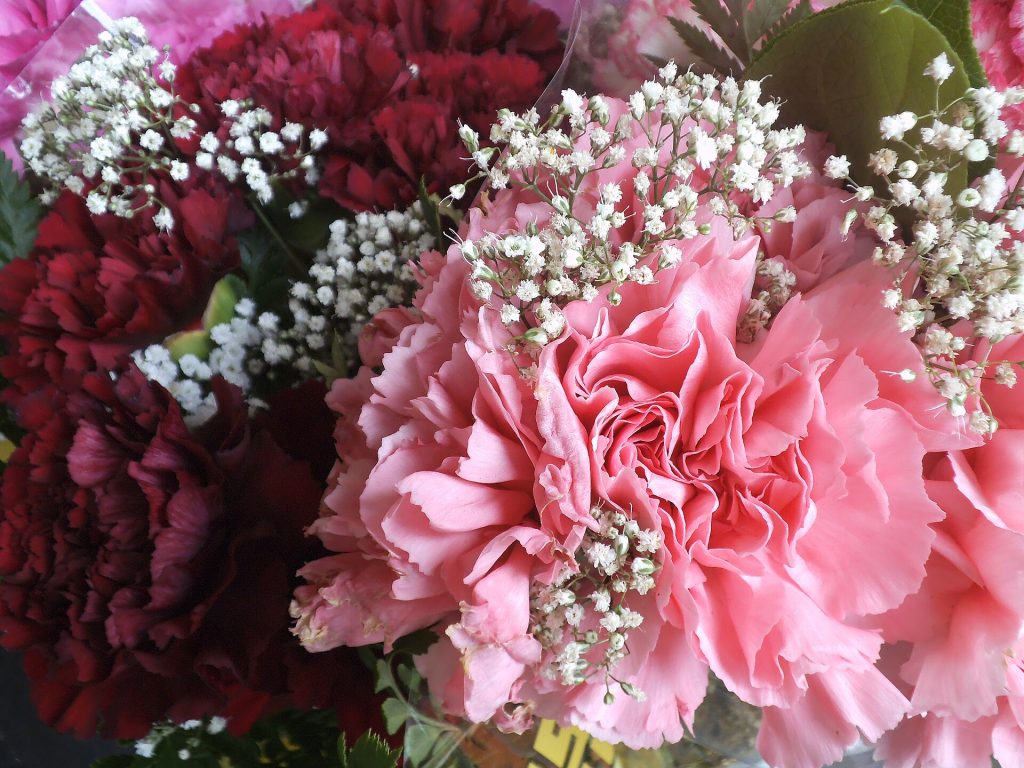
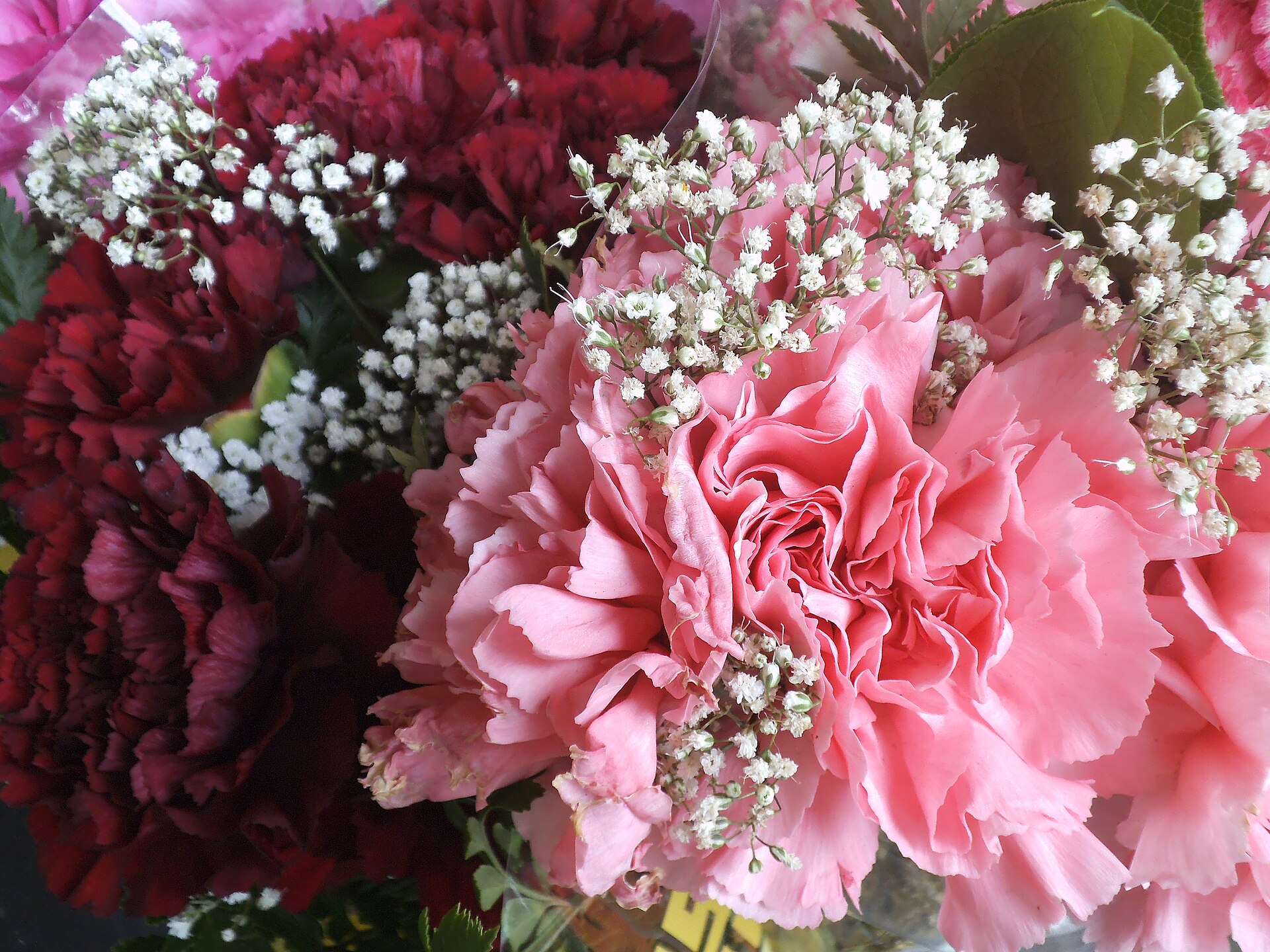

Mother’s Day is one of the biggest days of the year for flowers, and it has its own official flower: the carnation. But you don’t have to stick to tradition. The best Mother’s Day bouquet is one that feels like her, whether that is a pot of orchids, an armful of peonies or the flowers she grows in her own garden.
This guide covers the history of Mother’s Day flowers, the best flowers and colors to send, what to avoid, card message ideas, budget, pet safety and when to order. It is part of our what flowers to send guide.
Mother’s Day flowers at a glance
- Traditional flower: the carnation.
- Other favorites: roses, tulips, peonies, orchids and lilies.
- Colors: pink is the classic Mother’s Day color. White carnations traditionally honor a mother who has died.
- When: the second Sunday in May in the US, and the fourth Sunday of Lent (Mothering Sunday) in the UK.
- Order early: it is one of the busiest weeks of the year for florists.
Why carnations are the Mother’s Day flower
According to Britannica, the modern Mother’s Day began in the United States with Anna Jarvis. After her mother, Ann Jarvis, died in 1905, she campaigned for a day honoring mothers, held on the second Sunday of May. The first Mother’s Day church service was held on May 10, 1908, at her late mother’s church in Grafton, West Virginia. Within five years virtually every state was observing the day, and in 1914 President Woodrow Wilson made it a national holiday.
Jarvis promoted the wearing of a white carnation, her mother’s favorite flower. A custom then developed of wearing a red or pink carnation for a mother who is living, and a white carnation for a mother who has died. The carnation remains the official flower of the holiday. Britannica also notes that Jarvis spent the last years of her life trying to abolish the holiday in protest against its commercialization.
In the UK, the day is known as Mothering Sunday. Britannica traces it to a medieval custom of visiting your home parish, and your mother, on Laetare Sunday, the fourth Sunday of Lent.
The Old Farmer’s Almanac gives carnations the Victorian meanings “fascination, female love and a mother’s love”, and Interflora notes that pink carnations are often given on Mothering Sunday as an expression of love and gratitude. They are also among the longest-lasting cut flowers: University of Illinois Extension says carnations may last up to two weeks in a vase.
The best Mother’s Day flowers, and why
- Carnations: the official flower, affordable, long-lasting and available in many colors.
- Roses: pink roses stand for grace, happiness and gentleness in the Almanac, and gratitude and admiration according to Interflora, which makes them a perfect “thank you, Mom” flower.
- Tulips: in season in spring, and pink tulips carry a gentle, affectionate love suitable for family.
- Peonies: their season starts in May, and Interflora says pink peonies stand for romance and prosperity. A luxurious choice for a US Mother’s Day.
- Orchids: a potted moth orchid keeps flowering for weeks, so mom can enjoy it long after the day.
- Daisies: the Almanac notes that daisies have long been linked with motherhood and new beginnings, and associated with Freyja, the Norse goddess of love, beauty and fertility.
- Lilies: elegant and fragrant, but only if she has no cats (see pet safety below).
Choosing colors
Pink is the classic Mother’s Day color, standing for love, gratitude and gentleness. Soft pastels suit spring, and bright mixed bouquets feel celebratory. If you are honoring a mother or grandmother who has died, white flowers, especially white carnations, follow Anna Jarvis’s original tradition.
What to avoid
- Yellow carnations: in the Victorian language of flowers, yellow carnations meant disdain or rejection, and striped carnations meant refusal. Choose pink, red or white instead.
- White or yellow flowers for a Chinese mother: the Cultural Atlas notes that white and yellow flowers are generally avoided as gifts in Chinese culture.
- White flowers and lilies for a Japanese mother: the Cultural Atlas notes that in Japan lilies, lotus flowers, camellias and white flowers are usually associated with funerals.
- Carnations or even numbers for a Russian mother: the Cultural Atlas notes that in Russia carnations are associated with funerals and Soviet holidays, and that an odd number of flowers should be given for every occasion except a funeral.
- Chrysanthemums for an Italian mother: they symbolize death in Italy, according to the Cultural Atlas.
- Sending on the wrong date: the UK Mothering Sunday is usually in March, weeks before the US Mother’s Day in May. Check the date in the country where she lives.
Pet safety
Many moms have pets, so check before you send. The ASPCA lists true lilies as highly toxic to cats, and the FDA warns that even small amounts of pollen or vase water can cause kidney failure. Carnations, tulips, peonies, hydrangeas and chrysanthemums are listed as toxic to dogs and cats, usually causing stomach upset. The ASPCA lists roses, orchids (Phalaenopsis), gerbera daisies, sunflowers, snapdragons and alstroemeria as non-toxic, so a pink rose and orchid gift is a good pet-safe choice.
Budget guidance
Mother’s Day is one of the busiest flower days of the year, so popular flowers sell out quickly. Some ways to get more for your budget:
- Carnations are long-lasting and good value, and they are the traditional choice.
- Seasonal spring flowers such as tulips, and peonies when they are in season, often look generous for the price.
- A potted plant, such as an orchid, lasts far longer than a cut bouquet.
- Ordering early usually gives you more choice and avoids rush delivery fees.
- If several siblings are sending flowers, pooling for one larger arrangement can mean more than several small ones.
Delivery timing
Order at least a week ahead, because florists are very busy around Mother’s Day. Not every florist delivers on Sundays, so check, and if not, choose Friday or Saturday delivery. A delivery a day or two early means she can enjoy the flowers all weekend. If you will see her in person, consider buying from a local florist and bringing the flowers yourself.
Card message ideas
- “Happy Mother’s Day, Mom. Thank you for everything.”
- “To the best mom in the world. All my love.”
- “For all the times you were there for me. Happy Mother’s Day.”
- “Pink carnations for a mother’s love, and for the best mother I know.”
- For a grandmother: “Happy Mother’s Day, Grandma. We love you.”
- For someone who has lost her mother: “Thinking of you and your mom today.”
- From a partner, on behalf of young children: “Happy first Mother’s Day. You are amazing.”
Keep exploring
Read about carnation meanings, peony meanings and rose meanings, or see what flowers to send for every occasion.
Frequently asked questions
The carnation. Anna Jarvis, who founded the US Mother’s Day, promoted the white carnation, her mother’s favorite flower.
Traditionally, a white carnation honors a mother who has died, and a red or pink carnation celebrates a mother who is living.
In the US it is the second Sunday in May. In the UK, Mothering Sunday is the fourth Sunday of Lent, usually in March.
At least a week ahead. Florists are very busy, and not all deliver on Sundays, so a Friday or Saturday delivery is often the safest choice.
Avoid lilies, which are highly toxic to cats. Roses, moth orchids, gerberas and sunflowers are listed as non-toxic by the ASPCA.
Sources
- Britannica: Mother’s Day
- The Old Farmer’s Almanac: Flower meanings
- The Old Farmer’s Almanac: April birth flowers
- Interflora: Carnation guide
- Interflora: Rose guide
- Interflora: Peony guide
- University of Illinois Extension: Help your flowers last longer
- Cultural Atlas: Chinese etiquette
- Cultural Atlas: Japanese etiquette
- Cultural Atlas: Russian etiquette
- Cultural Atlas: Italian etiquette
- ASPCA: Lily
- FDA: Lovely lilies and curious cats