

Amaryllis Flower Meaning: What Amaryllis Symbolizes
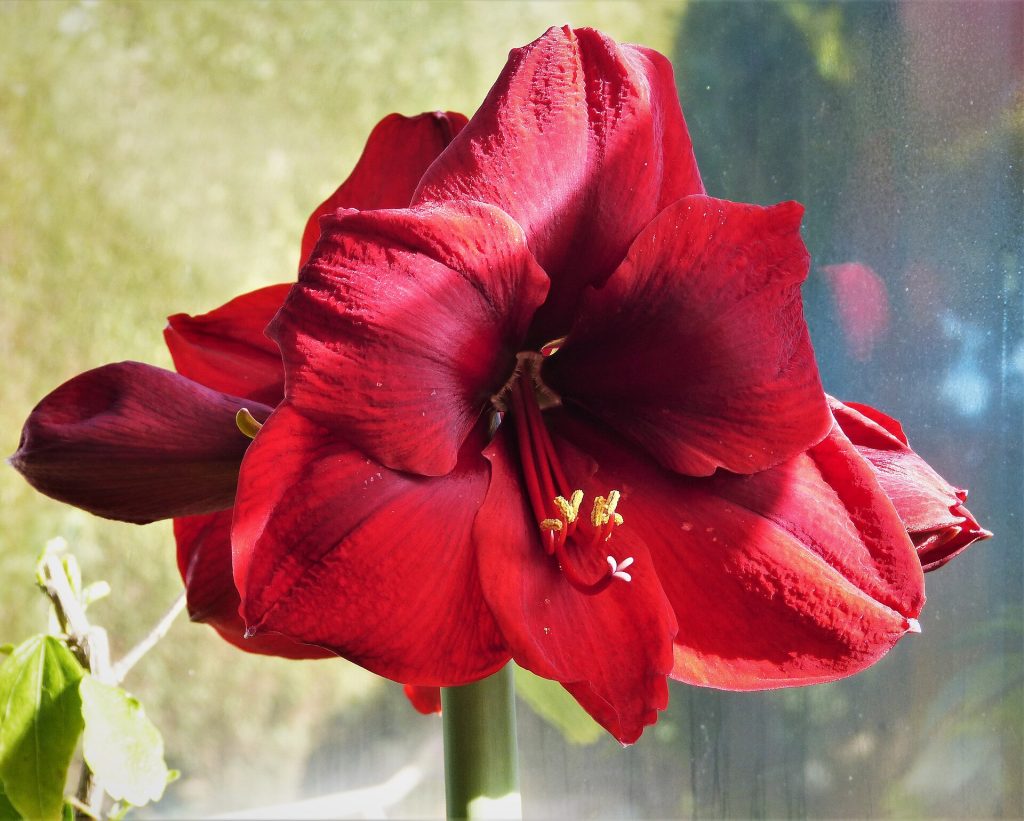
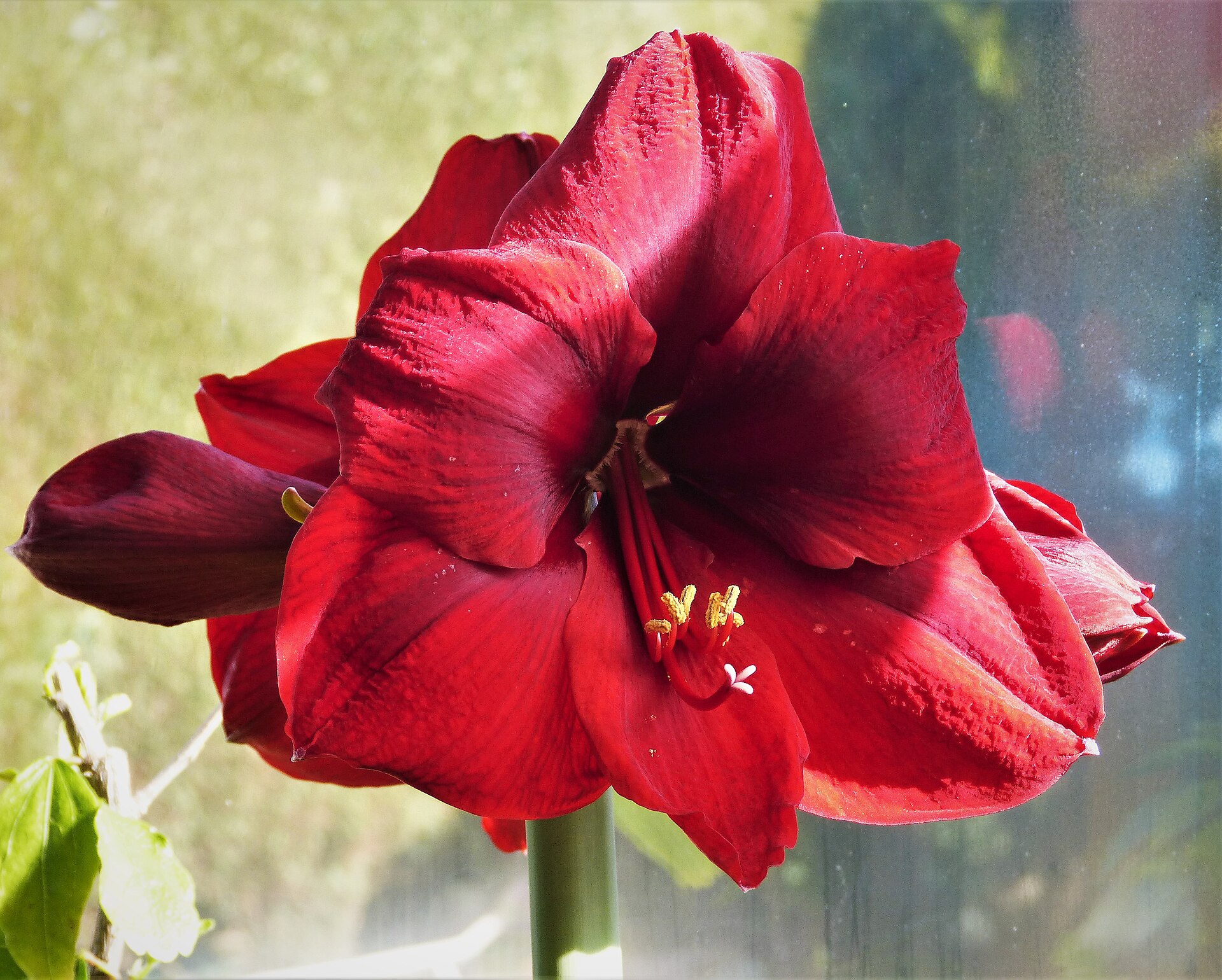

Few flowers make an entrance like the amaryllis. A single bulb sends up a tall, sturdy stalk crowned with huge trumpet-shaped blooms, just when the rest of the garden is asleep. Little wonder its meanings are bold ones: in the Victorian language of flowers, the amaryllis stood for pride, and today it is linked with strength and determination.
This guide covers what the amaryllis means, its color meanings, the myth behind its name, the best occasions, care and pet safety. It is part of our flower meanings guide.
Amaryllis meaning at a glance
- Overall meaning: pride, strength and determination.
- Birth month: none; the amaryllis isn’t on the main US or UK birth flower lists.
- Best for: the winter holidays, good luck wishes and gifts that keep growing.
- Vase life: Interflora says the blooms look their best for up to three weeks, as a plant or as cut stems.
- Pets: toxic to dogs and cats, according to the ASPCA.
What does the amaryllis symbolize?
The Old Farmer’s Almanac’s chart of Victorian flower meanings gives the amaryllis a single meaning: pride. The Almanac adds that the Victorians associated the amaryllis with strength and determination because of its height and sturdiness. Interflora says the flowers are believed to mean pride, strength and determination because they stand tall above other winter blooms, and it also describes the amaryllis as a symbol of success.
The myth of Amaryllis
The name has a Greek root. The Almanac explains that amaryllis comes from the Greek word amarysso, which means “to sparkle.” Interflora retells a tragic legend about a nymph named Amaryllis who loved a shepherd called Alteo. To prove her love, she pierced her heart with a golden arrow every day, and on the 30th day, a red amaryllis flower grew from her blood.
True amaryllis and Hippeastrum
There is some confusion about the name. The Almanac and the University of Wisconsin-Madison Extension both explain that most “amaryllis” sold today are hybrids of Hippeastrum, a genus native to South America, while the true amaryllis, Amaryllis belladonna or belladonna lily, is native to South Africa. Both belong to the family Amaryllidaceae. Interflora notes that Hippeastrum means “knight’s star,” after the shape of the flowers, and that there are over 90 species.
UW-Madison Extension says amaryllis breeding began in England in 1799. Each bulb produces a hollow flower stalk 18 to 24 inches tall, topped with two to six flowers, and the Almanac notes that larger bulbs produce more flowers.
Amaryllis color meanings
UW-Madison Extension lists amaryllis colors including white, red, pink, salmon, apricot and rose, plus bicolors. Interflora gives these meanings:
- Red: love, passion and attraction. In Chinese culture, Interflora says, red amaryllis is considered a lucky flower.
- White: purity and spirituality, and also remembrance and sorrow for more somber occasions.
- Orange: positive energy, happiness and good health.
- Pink: most often friendship, though it can be romantic.
- Purple: royalty and spirituality.
- Yellow: good luck.
Best occasions for amaryllis
The amaryllis isn’t a birth month flower on the US or UK lists, but its season makes it a natural fit for:
- Christmas and the winter holidays. Interflora calls the amaryllis a traditional Christmas flower, and the Almanac notes that bulbs are forced to bloom in time for the holidays.
- Good luck wishes, before an exam or while someone waits for big news, as Interflora suggests.
- Winter birthdays, where a potted bulb lasts far longer than a bouquet.
- Sympathy, using white amaryllis for remembrance.
Season and availability
According to the Almanac, amaryllis are naturally spring-blooming bulbs that flower between late winter and mid-spring (February to April in the Northern Hemisphere), but they are commonly forced to bloom earlier, in time for the winter holidays. Interflora lists them as available from November to April.
How to care for amaryllis
The Almanac’s tips for a potted bulb:
- Use a pot with no more than 1 inch of space around the bulb, and leave the top third of the bulb above the potting mix.
- Water sparingly, only when the top inch of potting mix is dry, and keep water off the neck of the bulb.
- Keep it at 60 to 70°F in a bright room, away from drafts and direct light. Expect blooms in 6 to 8 weeks.
- Turn the pot every few days to keep the stalk straight, and stake it early, since the flowers are top-heavy.
- Once it blooms, move it somewhere cooler and out of direct light to make the flowers last longer.
For cut amaryllis, Interflora warns that the stems are hollow, so cut them with a sharp knife without squashing them, and use a sturdy vase. To get a bulb to bloom again, UW-Madison Extension recommends keeping the leaves growing after flowering and then giving the bulb a rest period of 8 to 10 weeks. For the full routine, from planting to reblooming, see our guide on how to care for amaryllis. For more tips, read our guide to keeping flowers fresh longer.
Is amaryllis safe for cats and dogs?
No. The ASPCA lists amaryllis (Amaryllis species) as toxic to dogs, cats and horses, with signs including vomiting, depression, diarrhea, abdominal pain, hypersalivation, loss of appetite and tremors. It separately lists the holiday amaryllis, Hippeastrum (Barbados lily), as toxic to dogs and cats, noting that the bulbs are the most poisonous part and that large amounts can cause convulsions, low blood pressure, tremors and heart arrhythmias. If your pet eats any part of an amaryllis, contact your vet or the ASPCA Animal Poison Control Center on (888) 426-4435 (a fee may apply).
Keep exploring
See all flower meanings, or read about other winter and holiday favorites, the poinsettia, the chrysanthemum and the carnation, another bloom from a bulb, the hyacinth, or our Christmas flowers guide. Growing one? See how to care for amaryllis, and for other holiday plants, how to care for a poinsettia and Christmas cactus care.
Frequently asked questions
The amaryllis symbolizes pride, strength and determination, which the Victorians linked to its tall, sturdy stalk.
Red amaryllis stands for love, passion and attraction, and in Chinese culture it is considered a lucky flower.
Yes. Amaryllis bulbs are usually forced to bloom in time for the winter holidays, and it is a traditional Christmas flower.
Most amaryllis sold today are Hippeastrum hybrids from South America. True amaryllis, the belladonna lily, is from South Africa.
Yes. The ASPCA lists both Amaryllis and Hippeastrum as toxic to dogs and cats, and the bulbs are the most poisonous part.