

Poinsettia Meaning: What Poinsettias Symbolize at Christmas

Few plants say “Christmas” as clearly as the poinsettia. Mississippi State University Extension calls it the traditional flower associated with Christmas and the top-selling flowering potted plant in the United States. Behind the red and green is a much older story, from Aztec gardens to a Mexican legend about a humble Christmas Eve gift.
This guide covers what the poinsettia means, the legend behind it, how it got its English name, what the different colors can say and whether it is safe around pets. It is part of our flower meanings guide.
Poinsettia meaning at a glance
- Overall meaning: Christmas joy and celebration, and, through its Mexican legend, the idea that a humble gift given with love is enough.
- Older meanings: the Aztecs regarded the plant as a symbol of purity, according to University of Illinois Extension.
- Botanical name: Euphorbia pulcherrima, in the spurge family.
- Other names: flor de Nochebuena (Christmas Eve flower) in Mexico, cuetlaxochitl in Nahuatl, and lobster flower or flame leaf flower.
- Best for: Christmas gifts, host gifts and holiday decorating.
- Pets: listed as toxic to dogs and cats by the ASPCA, though usually only mildly irritating.
What does the poinsettia symbolize?
Christmas and the Christmas Eve legend
The poinsettia’s Christmas meaning comes from Mexico. Mississippi State University Extension retells the legend of Pepita, a poor girl who had no gift for the Christ Child at the Christmas Eve service. She gathered a handful of roadside weeds and laid them at the nativity scene, and the bouquet burst into brilliant red blooms. From then on, the story goes, the plants were known as the Flores de Noche Buena, the Flowers of the Holy Night.
That is why the poinsettia is often given as a symbol of Christmas cheer and of the idea that the spirit of a gift matters more than its cost. Illinois Extension adds that, after the Spanish conquest, Franciscan priests in 17th-century Mexico used the plant in nativity processions because of its holiday color and blooming time. Many people also see the star-like shape of the colored bracts as a nod to the Star of Bethlehem.
Aztec roots: purity and new life
Long before it was a Christmas plant, the poinsettia was cultivated by the Aztecs, who called it cuetlaxochitl. Illinois Extension and South Dakota State University Extension both translate the name as “mortal flower that perishes and withers like all that is pure”, and Illinois Extension says the Aztecs regarded it as a symbol of purity. It was also a symbol of the new life earned by warriors who died in battle, and the Aztecs used the red bracts to make dye for textiles and cosmetics.
How the poinsettia got its name
The English name honors Joel Roberts Poinsett, the first US ambassador to Mexico. Extension sources date his first encounter with the plant to the late 1820s, after which he sent plants home to his greenhouse in South Carolina and shared them with friends and botanical gardens. By the 1830s the plant was being called the poinsettia.
December 12 is National Poinsettia Day in the US, marking the date Poinsett died in 1851. The Smithsonian Libraries note that the day was set by a House of Representatives resolution in 2002. South Dakota State University Extension also notes that, because of Poinsett’s history, some groups prefer to use the name cuetlaxochitl instead.
The colored “petals” are really leaves
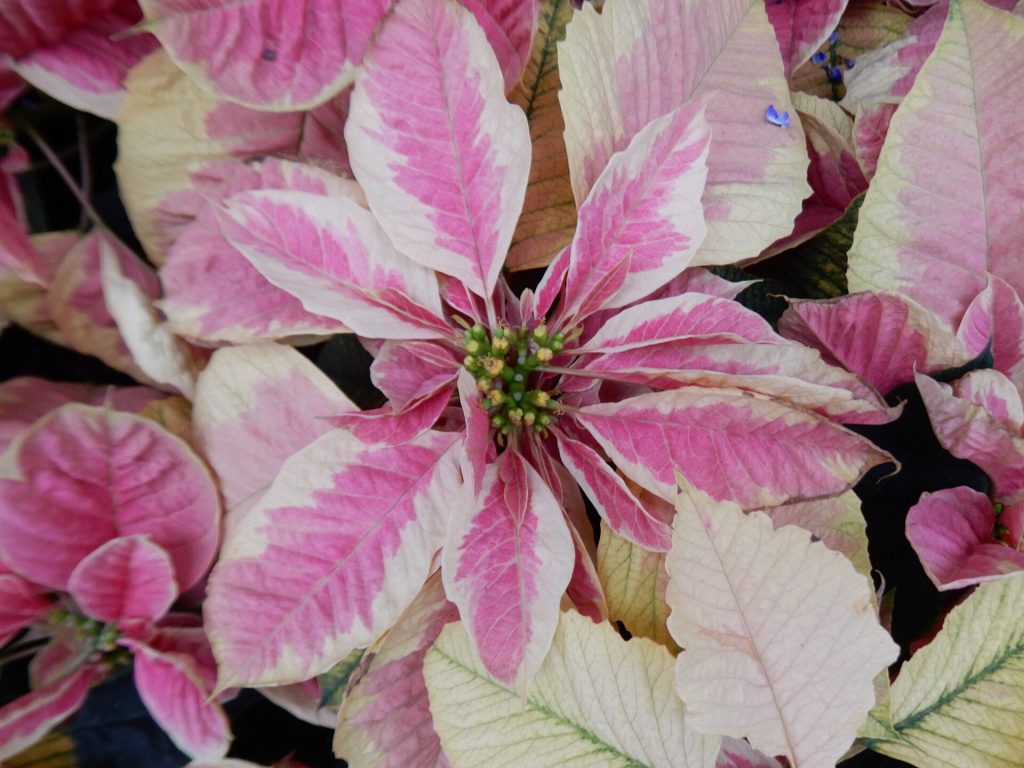
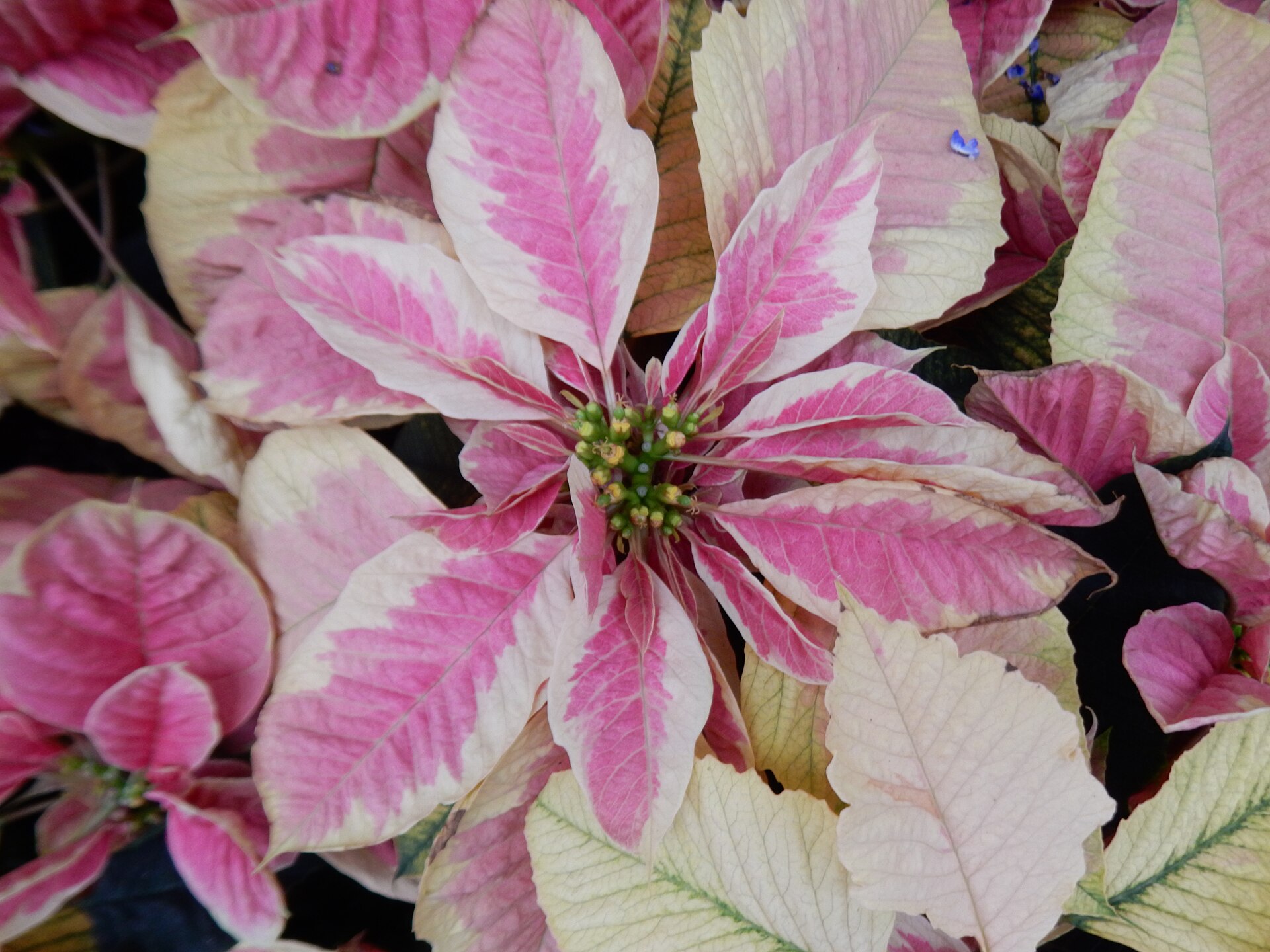
What most people call the poinsettia’s flowers are bracts, modified leaves that change color. Mississippi State University Extension explains that the true flowers are the small yellow, bead-like structures in the center, called cyathia. In the photo above you can see them clustered in the middle of the pink and cream bracts.
Poinsettia color meanings
Poinsettias come in far more than red. Illinois Extension lists cream, yellow, peach, pink, salmon and marbled varieties, and says red poinsettias still account for more than 70 percent of sales. There is no official language of poinsettia colors, so these meanings follow general flower color symbolism:
- Red: the classic Christmas color, for celebration, warmth and love.
- White or cream: purity, peace and calm. A white poinsettia also suits a quieter winter gift, such as for someone grieving over the holidays (see our white flowers meaning guide).
- Pink: affection and gentleness, a softer alternative to red.
- Marbled and speckled: playful and modern, a good choice for someone who already has a red one.
Best occasions for a poinsettia
- Christmas gifts for family, neighbors and coworkers.
- Host gifts for holiday dinners. See our Christmas flowers guide for more ideas.
- National Poinsettia Day on December 12.
- Brightening an office or reception area through December.
The poinsettia isn’t one of the traditional December birth flowers. Those are narcissus (paperwhite) and holly.
Is the poinsettia poisonous to pets?
The ASPCA lists the poinsettia as toxic to dogs, cats and horses. Its irritant sap can irritate the mouth and stomach and sometimes cause vomiting, but the ASPCA describes it as generally over-rated in toxicity. Mississippi State University Extension adds that the milky sap may irritate skin or eyes in some people and that the plant is not meant to be eaten. Keep it out of reach of pets and small children. For pet-safer gift ideas, see flowers safe for cats.
Caring for a poinsettia
A healthy poinsettia can stay colorful for weeks: bright indirect light, no cold drafts, and water only when the soil feels dry. Our full guide on how to care for a poinsettia covers choosing a healthy plant, watering, why leaves drop and how to make it bloom again next year.
Keep exploring
See all flower meanings, or read about other winter favorites: the amaryllis, the camellia and the carnation. Planning ahead? Our Valentine’s Day flowers guide is ready for February. Keeping your plant alive? See how to care for a poinsettia, plus Christmas cactus care and how to care for amaryllis for other holiday plants. Another winter favorite: the Christmas rose.
Frequently asked questions
The poinsettia symbolizes Christmas joy and celebration. Its Mexican legend links it with a humble gift given with love, and the Aztecs regarded it as a symbol of purity.
In Mexico it blooms around December, and a legend tells of roadside weeds that turned into red blooms on Christmas Eve. It became known as the flor de Nochebuena, the Christmas Eve flower.
White poinsettias are usually read as purity, peace and calm, following general white flower symbolism. They make a quieter winter gift than red.
Joel Roberts Poinsett, the first US ambassador to Mexico, who sent plants home to South Carolina in the late 1820s. National Poinsettia Day, December 12, marks the date he died.
The ASPCA lists poinsettias as toxic to cats and dogs because the sap irritates the mouth and stomach, but it calls the toxicity generally over-rated. Keep them out of reach anyway.
Sources
- University of Illinois Extension: History of poinsettia
- Mississippi State University Extension: Selecting and maintaining poinsettias
- South Dakota State University Extension: Cultural history of the Christmas tree and poinsettia
- NDSU Extension: History, facts and care of poinsettias
- Smithsonian Libraries: National Poinsettia Day
- ASPCA: Poinsettia