

How to Grow Paperwhites Indoors (and Stop Them Flopping)
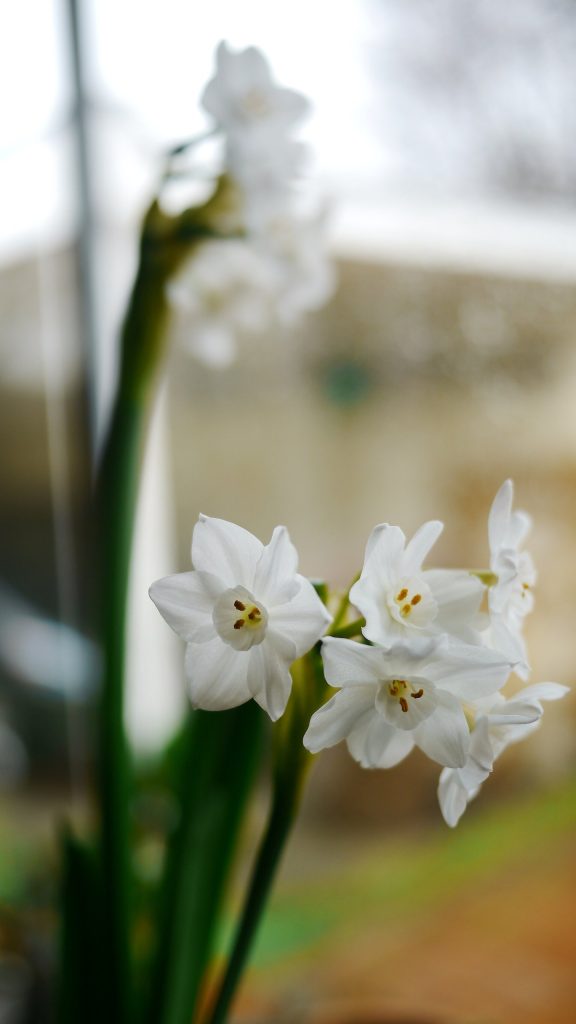
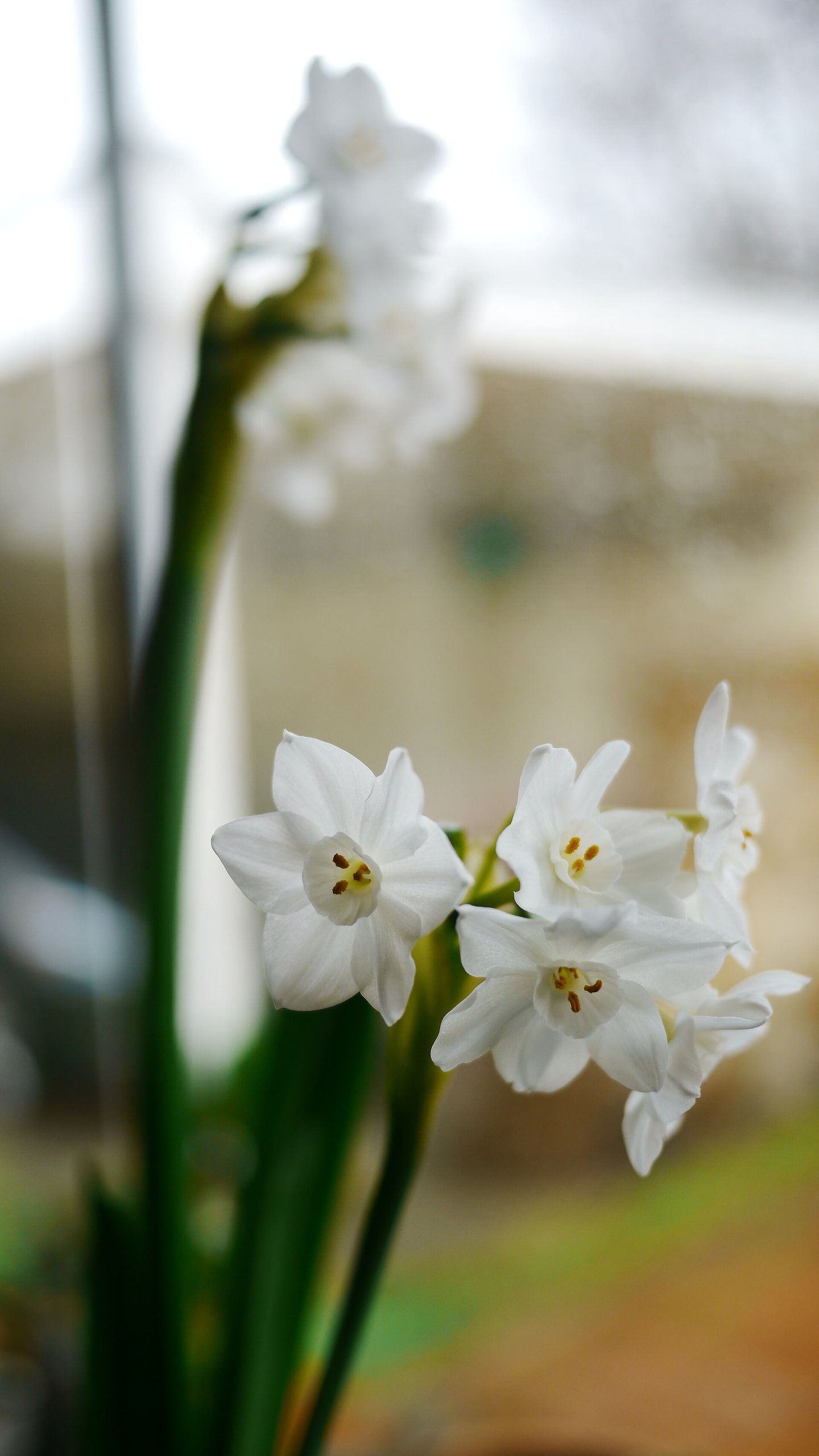

Paperwhites are the easiest bulbs to bring into flower indoors. Unlike tulips or most daffodils, they don’t need weeks of cold first: you plant them in a bowl of pebbles and water or a pot of soil, and they usually flower in about 4 to 6 weeks. That makes them a simple winter project, a nice gift and one of the December birth flowers.
This guide covers choosing bulbs, planting in pebbles or soil, light and temperature, how to keep the stems from flopping, the scent and what to do with the bulbs afterwards. The advice comes from university extension services and Cornell University’s Flower Bulb Research Program, listed at the end. It is part of our flower care guides.
Paperwhites at a glance
- Time to bloom: about 4 to 6 weeks after planting.
- Planting: close together, about an inch apart, with the tips of the bulbs showing.
- Water: in pebbles, keep the water level just touching the bottom of the bulbs. In soil, keep it moist.
- Light and temperature: a cool spot for root growth first, then bright light. Cool rooms give shorter, sturdier plants.
- Floppy stems: once shoots are 1 to 2 inches tall, switch to a 4 to 6% alcohol solution.
- Afterwards: forced paperwhites are usually thrown away after flowering.
- Pets: the ASPCA lists narcissus, including paperwhites, as toxic to dogs, cats and horses. The bulbs are the most poisonous part.
What are paperwhites?
Paperwhites are a type of daffodil, often called paperwhite narcissus. University of Illinois Extension says two species are sold under the name, Narcissus papyraceus and Narcissus tazetta, both native to Europe and the Mediterranean. Unlike most daffodils, they carry clusters of several small, fragrant flowers on each stem.
Choosing paperwhite bulbs
- Choose firm, healthy bulbs with no mold or damage. Larger bulbs generally produce more flowers.
- ‘Ziva’ is the most widely grown variety, with pure white flowers. Others include ‘Inbal’ and ‘Galilee’ (white), ‘Bethlehem’ (creamy white with a pale yellow cup), ‘Wintersun’ (white with a yellow cup) and ‘Grand Soleil d’Or’ (yellow with an orange cup).
- If you won’t plant right away, keep the bulbs cool. University of Missouri Extension says bulbs stored warm are poorer quality and may fail to flower.
How to plant paperwhites in pebbles and water
This is the classic way, and a glass bowl lets you watch the roots grow. Iowa State and Illinois extension services describe the same method:
- Use a bowl or other container without drainage holes. Add 1 to 2 inches or more of washed gravel, pebbles, marbles or glass beads.
- Set the bulbs on top, pointed end up, close together.
- Add more stones around them to hold them steady, leaving the tips of the bulbs exposed.
- Add water until it just touches the bottom of the bulbs, and keep it at that level. Don’t cover the bulbs with water, or they may rot.
University of Missouri Extension suggests checking the water now and then. If it smells bad, flush the bowl gently under a running tap to replace it with fresh water, then drain off the excess.
How to plant paperwhites in soil
Paperwhites grow just as well in a pot of potting mix, and Missouri Extension notes that bulbs in soil are less likely to topple over than bulbs in gravel.
- Fill a pot with drainage holes about two thirds full of potting mix.
- Set the bulbs on the mix, close together, and add more mix around them so only the tips show.
- Water thoroughly, let it drain, and keep the mix moist but not soggy.
Light and temperature
- Weeks 1 to 3: keep the planted bulbs somewhere cool to encourage roots. Iowa State suggests 45 to 50°F in a dark spot for 2 to 3 weeks; Illinois Extension suggests 50 to 60°F for a week or two. An unheated room or cool basement works.
- When shoots grow: once the shoots are a few inches tall, move the container to a bright, sunny window.
- In bloom: when the flowers open, move them out of direct sun and somewhere cooler to make the flowers last longer.
Warmth speeds things up but makes taller, floppier plants. Missouri Extension says night temperatures in the 50s°F give good growth without too much stretch.
When to plant paperwhites for Christmas
Paperwhites typically bloom 4 to 6 weeks after planting, so for flowers around Christmas, plant them in mid to late November. For a steady supply, Illinois Extension suggests planting a new batch every 10 days, and Missouri Extension suggests every two weeks, which can give flowers right through the winter.
How to keep paperwhites from flopping
Iowa State University Extension says paperwhites can reach 18 to 20 inches tall, and they often fall over, especially in warm rooms with low light. Three things help:
- More light and a cooler room, so the plants aren’t stretching toward the window.
- Support: a tall-sided glass container, a few stakes, or a ribbon tied loosely around the stems.
- The alcohol trick: researchers at Cornell University’s Flower Bulb Research Program found that watering with a dilute alcohol solution makes paperwhites about one third shorter, with flowers just as large, fragrant and long-lasting.
How to use alcohol on paperwhites
- Start the bulbs in plain water as usual. Wait about a week, until roots are growing and the green shoots are 1 to 2 inches above the bulbs.
- Pour off the water and replace it with a 4 to 6% alcohol solution. Use it instead of water from then on.
- To make it from a 40% alcohol spirit such as vodka or gin, mix 1 part spirit with 7 parts water.
- To make it from 70% rubbing alcohol, mix 1 part rubbing alcohol with 10 or 11 parts water.
- Don’t use beer or wine. Cornell says the sugars cause problems for the plants.
- Don’t overdo it. Cornell notes that problems start above about 10% alcohol.
Why do paperwhites smell?
Paperwhites are known for a strong scent that not everyone likes. Illinois Extension notes that ‘Ziva’, the most common variety, can have a strong, musky fragrance. If you are sensitive to it, look for ‘Inbal’, ‘Wintersun’ or ‘Grand Soleil d’Or’, which are described as milder or more pleasant, and keep the bowl in a large, airy room rather than a small bedroom.
What to do with paperwhites after they bloom
Iowa State University Extension says forced paperwhite bulbs should be discarded after flowering: they can’t be forced again and are not winter-hardy outdoors in cold climates. Bulbs grown in pebbles and water use up their stored food and have no soil to rebuild it. In mild climates where they are hardy (Illinois Extension says zone 8 and warmer), some gardeners plant them outside to grow on, but don’t expect flowers the following winter.
Are paperwhites safe for pets?
No. The ASPCA lists narcissus, including the paperwhite, as toxic to dogs, cats and horses. It can cause vomiting, drooling and diarrhea, and large amounts can cause more serious symptoms. The bulbs are the most poisonous part, so keep bowls of bulbs out of reach and don’t let pets drink the water. For pet-safer choices, see flowers safe for cats and flowers safe for dogs. A Christmas cactus is a pet-safe holiday alternative.
Cut paperwhites in a vase
If you cut paperwhites for a bouquet, treat them like other daffodils: cut narcissus stems release a sap that can shorten the life of other flowers, so stand them in water on their own for a few hours before mixing them in. See how to keep cut flowers fresh and tulips in a vase for more on mixing daffodils with other flowers.
Keep exploring
Read about the paperwhite as a December birth flower and the meaning of daffodils and narcissus, or grow more winter flowers with our guides to amaryllis care, poinsettia care and Christmas cactus care. For gift ideas, see Christmas flowers. For more flowers to enjoy this season, see winter flowers.
Frequently asked questions
Usually about 4 to 6 weeks after planting. Cooler rooms slow them down a little but give shorter, sturdier plants.
No. They grow well in a bowl of pebbles or gravel with water kept just at the base of the bulbs. They also grow well in potting mix, where they are less likely to topple over.
Give them bright light and a cool room, support the stems, and once the shoots are 1 to 2 inches tall, water with a 4 to 6% alcohol solution, such as 1 part vodka or gin to 7 parts water.
Usually not. Iowa State University Extension says forced paperwhites should be discarded after flowering, as they can’t be forced again and aren’t hardy outdoors in cold climates.
Yes. The ASPCA lists narcissus, including paperwhites, as toxic to dogs, cats and horses, and the bulbs are the most poisonous part.
Sources
- University of Illinois Extension: How to grow and care for paperwhites
- Iowa State University Extension: Forcing paperwhite narcissus bulbs
- Iowa State University Extension: Can paperwhite narcissus bulbs be saved after they have been forced indoors?
- University of Missouri Extension: Paperwhites, just add water for instant spring
- Cornell University Flower Bulb Research Program: Pickling your paperwhites
- ASPCA: Daffodil (narcissus, paper white)