

Tulips in a Vase: Why They Droop and How to Keep Them Upright
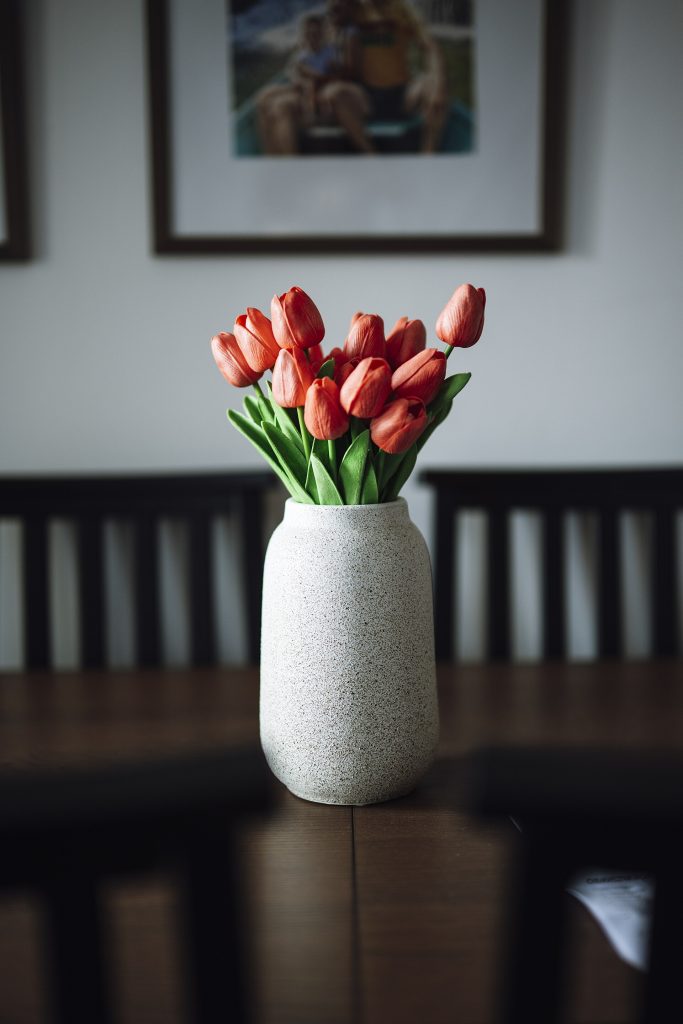
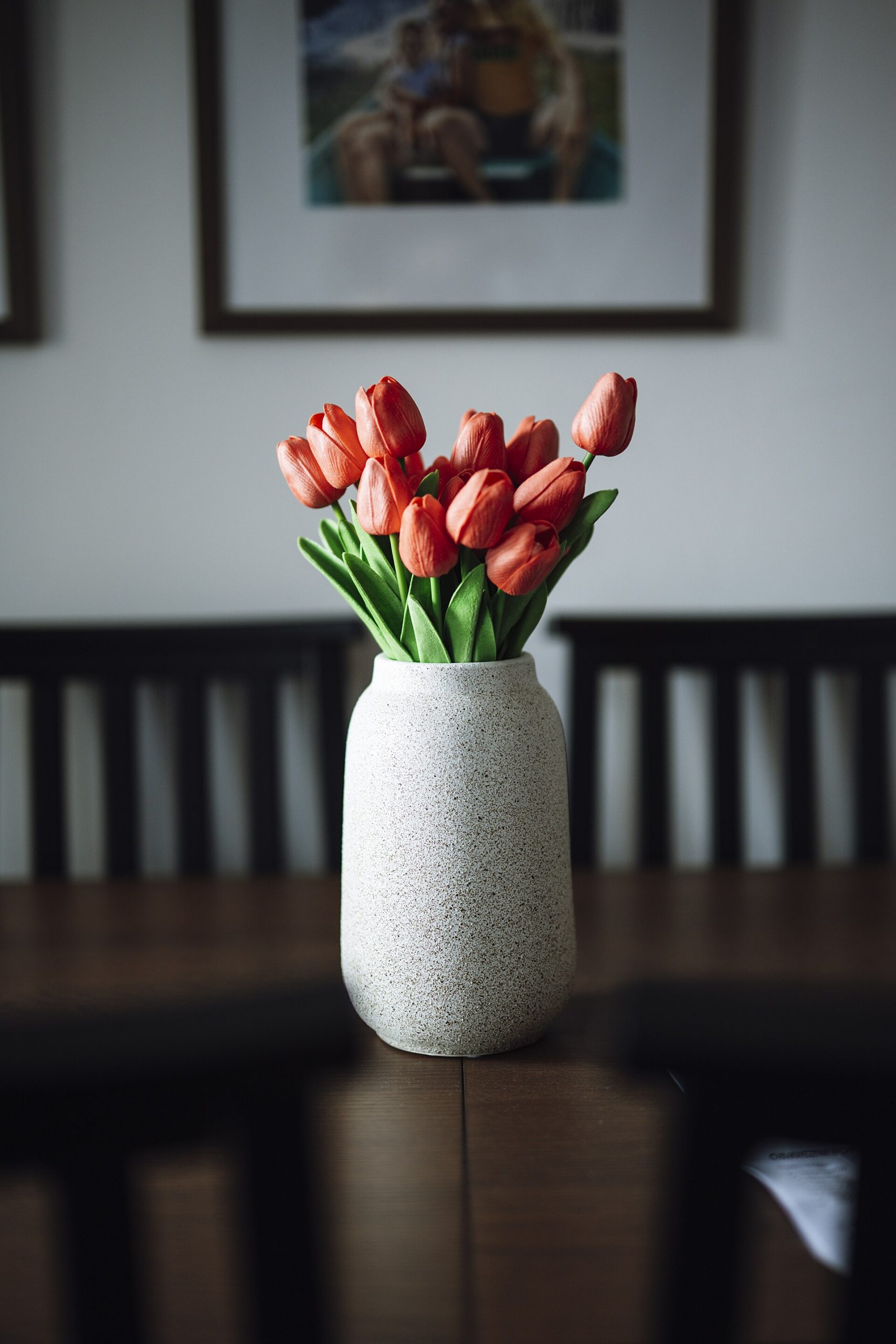

Tulips behave differently from almost every other cut flower. A neat bunch can look loose, curved and leaning toward the window a day or two later. That isn’t always a sign that something is wrong. Cut tulips keep growing, respond to light and gravity, and drink heavily, so they move around in the vase in a way roses and carnations don’t.
This guide explains why tulips droop, how to keep them looking upright and fresh, and what to do when they flop. It draws on advice from NC State University, University of Illinois Extension and University of California Cooperative Extension. It is part of our flower care and learning guides. For what tulips mean, see our tulip meaning guide.
Why do tulips droop in a vase?
- They keep growing: NC State notes that tulip stems often continue to lengthen after they are cut, and can grow out of an arrangement. Longer stems with heavy heads bend more easily.
- They follow the light: like many plant shoots, tulip stems bend toward the strongest light, so a bunch next to a bright window will lean toward it.
- They are thirsty: a stem that has been out of water loses its firmness and needs to take up water to stand upright again, NC State explains.
- They are warm: NC State says tulips need cool conditions to keep the flowers from opening too fast, reduce stem stretch and get the longest vase life.
How long do tulips last in a vase?
NC State gives tulips a vase life of about three to seven days at home, depending on the variety and how open they were when bought. Tulips bought at the tight-bud stage, with the whole bud colored but still closed, generally do best.
How to keep tulips upright
- Recut and trim the base: cut the stems before they go in the vase. NC State suggests removing the white, fleshy part at the base of the stem so water can get in more easily, and stripping any leaves that would sit under water.
- Use tulip food if you have it: NC State notes that specialized bulb or tulip flower foods are designed to reduce stem stretching and leaf yellowing. Otherwise, use the flower food that came with the bouquet.
- Keep them cool: a cool room, away from radiators, heat vents and direct sun, slows stretching and opening.
- Turn the vase: give it a quarter turn each day so the stems don’t all lean toward one window.
- Choose a supportive vase: a fairly tall vase that holds the stems upright for most of their length helps prevent flopping.
- Top up daily: tulips drink a lot, especially in the first days. Change the water every two to three days, or when it turns cloudy.
How to straighten drooping tulips
NC State explains that a tulip stem takes on whatever shape it is in while it takes up water. So the fix is to hold the stems straight while they rehydrate:
- Take the tulips out and recut the stems.
- Wrap the bunch snugly in slightly damp paper, such as newspaper or kraft paper, so the stems are held straight up to just below the heads. Secure it with an elastic band.
- Stand the wrapped bunch in lukewarm water. NC State recommends around 100 to 110°F (38 to 43°C) and at least two hours, or three to six hours if the flowers were very limp.
- Unwrap and return them to a clean vase of fresh water.
If the stems have simply grown too long for the vase, cut them shorter at the next water change.
Tulips and daffodils: keep them apart at first
Tulips and daffodils look lovely together, but freshly cut daffodils release a slimy sap that can clog tulip stems and shorten their vase life, according to NC State. Illinois Extension says unconditioned daffodils can cut the vase life of other flowers in a mixed bouquet by up to half.
The solution is to condition the daffodils first. Illinois Extension recommends standing them in their own warm water for 12 to 24 hours before combining them with other flowers. Read more in our daffodil meaning guide.
Tulip myths
- A pin through the stem: you may see advice to prick a tulip stem just below the flower to stop it drooping or growing. We didn’t find this in any of the university sources we used, so we don’t recommend it.
- A penny or sugar in the water: neither replaces proper flower food. See our guide to homemade flower food for recipes that work and tricks that don’t.
- Drooping means dying: not necessarily. A tulip that leans or bends may simply be growing or thirsty. Petals dropping and browning are the real signs it is finished.
Are tulips safe for pets?
The ASPCA lists tulips as toxic to dogs, cats and horses, with the highest concentration of the toxins in the bulb. Keep cut tulips out of reach of pets that like to chew plants, and keep bulbs well away from them.
When to give tulips
Tulips are a classic spring flower and a popular choice for Mother’s Day, new baby bouquets and apologies. See what flowers to send for every occasion.
Keep exploring
General care that works for every bouquet is in how to keep cut flowers fresh. If other flowers are wilting, see how to revive wilted flowers.
Frequently asked questions
Cut tulips keep growing after they are cut, bend toward light and drink heavily. Warmth makes this worse. Keep them cool, turn the vase daily, top up the water and use a vase that supports the stems.
Recut the stems, wrap the bunch snugly in damp paper so the stems are held straight, and stand it in lukewarm water for at least two hours, as NC State recommends. Then unwrap and return them to fresh water.
About three to seven days at home, according to NC State, depending on the variety and how open the buds were when you bought them.
Only after the daffodils have been conditioned. Fresh daffodil sap can clog tulip stems. Illinois Extension suggests standing daffodils in their own water for 12 to 24 hours first.
Yes. The ASPCA lists tulips as toxic to cats, dogs and horses, with the bulb being the most toxic part.