

Christmas Rose Meaning: Hellebore Symbolism, Legend and Care
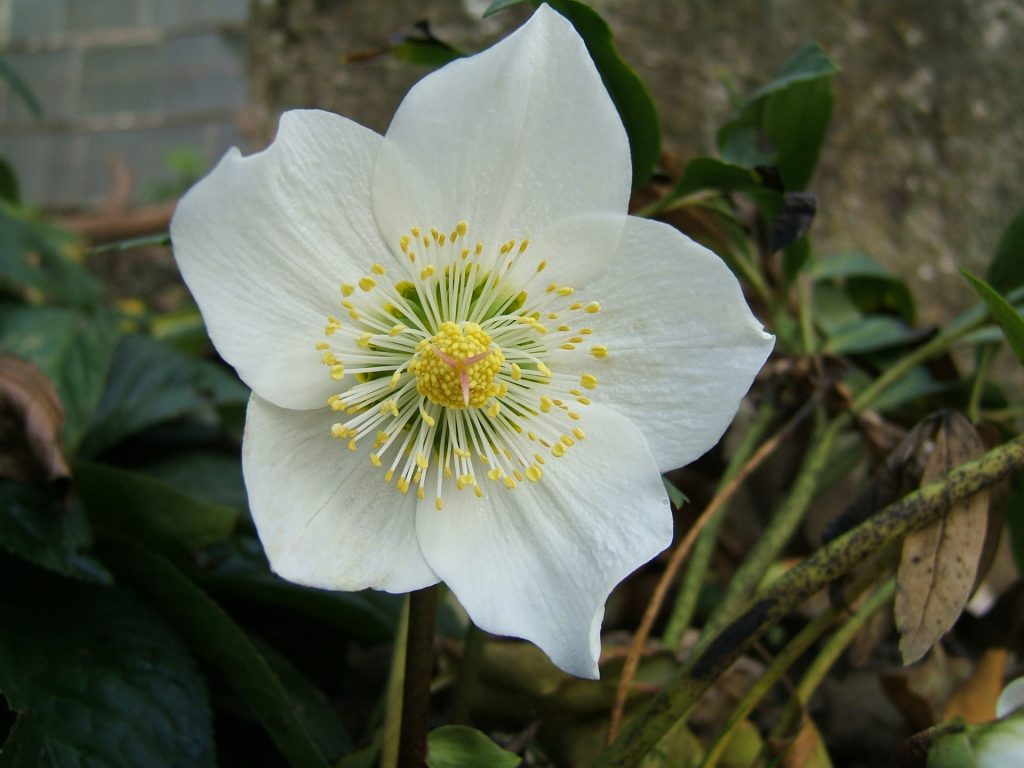
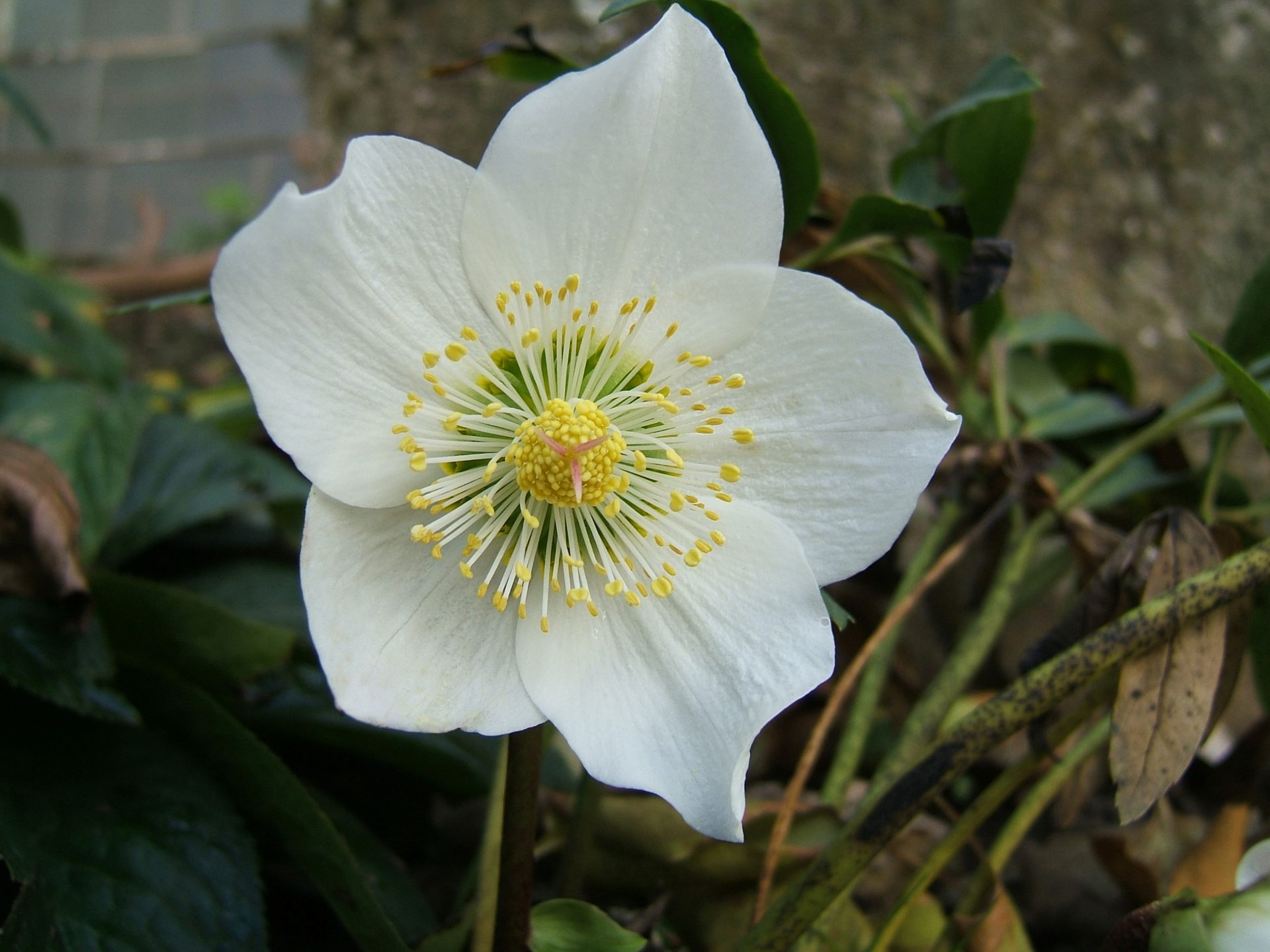

White flowers that open in the middle of winter, sometimes right through the snow, were always going to collect stories. The Christmas rose has a legend about a shepherd girl at Bethlehem, a message in the Victorian language of flowers and a place in Christmas traditions across Europe. It also has a few surprises: it is not a rose, and it is poisonous.
This guide explains the Christmas rose meaning, where the name and the legends come from, how it differs from the Lenten rose, when it makes a good gift and how to look after one. It is part of our flower meanings series, alongside poinsettia meaning, mistletoe meaning and amaryllis meaning.
Christmas rose meaning at a glance
- Main meanings: hope, comfort and peace in the darkest part of the year, and a humble, heartfelt gift, from the legend of Madelon.
- Victorian meaning: “Relieve my anxiety”, according to Kate Greenaway’s 1884 Language of Flowers. The same book gives hellebore in general a far less friendly meaning, “Scandal. Calumny.”
- What it is: Helleborus niger, an evergreen perennial in the buttercup family, not a rose.
- When it flowers: around Christmas where winters are mild, and in February or March in colder areas.
- Safety: all parts are toxic, and the ASPCA lists it as toxic to dogs, cats and horses.
What is a Christmas rose?
The Christmas rose is Helleborus niger, a low, clump-forming evergreen perennial. Despite the name it is not related to roses at all: it belongs to the buttercup family (Ranunculaceae), the same family as ranunculus and anemones. Clemson Cooperative Extension says it is native to mountainous parts of Europe, including the Alps in Switzerland, southern Germany, Austria, Croatia and Italy, and that it grows 9 to 12 inches tall.
Its flowers are white with bright yellow stamens, often with pink shading on the back, and the Missouri Botanical Garden notes that they fade to blush pink as they age.
Why is it called the Christmas rose?
Because of when it flowers. NC State Extension explains that it is called the Christmas rose because it blooms around Christmas in warmer regions, and in early spring in cooler areas. The Missouri Botanical Garden says bloom time can vary a lot with the severity of the winter, from Christmas in warm winter regions to February or March in the cold northern part of its range. In Europe it has holiday names in many languages: Cornell University’s poisonous plants site lists the Swedish julros, the German Christrose, the French rose de Noël and the Italian rosa di Natale.
What does Helleborus niger mean?
The botanical name is less festive. According to NC State Extension, Helleborus comes from Greek words meaning “injures” and “food”, a reference to the plant being poisonous when eaten, and niger, meaning black, refers to the color of the roots, not the flowers. Cornell notes that the plant was given its scientific name by Carl Linnaeus, and that black hellebore is another of its common names.
The legend of the Christmas rose
The best-known story is the legend of Madelon. It is told in several versions, and the details change from one telling to the next. In the version on Cornell’s site, Madelon is a country girl who visits the Christ child in Bethlehem but is sad because she has no gift to bring. An angel sees her sadness, leads her outside and touches the ground, and the first Christmas rose springs up on that spot. In the version told by the UK seed company Suttons, Madelon is a young shepherdess who watches the wise men pass with their gifts and weeps because she has nothing to give, and as her tears fall an angel parts the snow to reveal the white flowers.
Either way, the meaning is the same: the Christmas rose stands for a humble gift given with love, and for hope appearing in the middle of winter.
Selma Lagerlöf’s Legend of the Christmas Rose
Sweden has its own famous version. The Swedish author Selma Lagerlöf, who won the Nobel Prize in Literature in 1909, wrote a short story called The Legend of the Christmas Rose. As the florist magazine Thursd summarizes it, Göinge forest turns into a summer garden every Christmas Eve. An abbot who goes to see the miracle is found holding roots torn from the moss, and once planted in his garden they flower every Christmas Eve, when everything else looks dead. It is a story about compassion and second chances.
Christmas rose meaning in the language of flowers
In Kate Greenaway’s Language of Flowers (1884), one of the best-known Victorian flower dictionaries, the Christmas rose means “Relieve my anxiety”. The book also lists it under “Rose, Christmas” as “Tranquillize my anxiety”. That makes it a gentle message for someone going through a hard winter.
There is a catch. The same book lists the plain “Hellebore” as meaning “Scandal. Calumny.” Very few people today know either meaning, but if your recipient is a language of flowers fan, call it a Christmas rose on the card, not a hellebore.
What the Christmas rose symbolizes today
Today the Christmas rose is mostly read as a flower of hope and comfort, simply because it flowers when almost nothing else does. Thursd quotes the writer An Theunynck, who reads the plant as a symbol of renewal, rebirth and hope, “exactly the spirit of Christmas”. Its white flowers also tie it to the wider meanings of white flowers: peace, purity and new starts. Cornell notes that in Europe it is considered one of the most traditional and noble plants of the Christmas season.
Christmas rose vs Lenten rose
Garden centers sell several hellebores, and the names get mixed up.
- Christmas rose (Helleborus niger): white flowers that fade to pink, the earliest to bloom, hardy in USDA zones 3 to 8 according to Clemson and NC State. The Missouri Botanical Garden says it is more difficult to grow than the later-blooming Helleborus orientalis.
- Lenten rose (Helleborus x hybridus): NC State describes it as a hybrid of H. niger and H. orientalis, hardy in zones 4 to 9. University of Vermont Extension says hellebores like these come in green, white, pink, peach and purple, and that the flowers can last more than four weeks. They bloom from late winter into early spring, around Lent.
Both share the same basic meanings, but if you want the Christmas legend and the Victorian message, look for Helleborus niger on the label.
When to give a Christmas rose
As a Christmas or holiday gift. A potted Christmas rose is a lovely alternative to a poinsettia for someone who already has one, and it can go into the garden afterward. See our Christmas flowers guide for more holiday ideas.
For someone having a hard winter. “Relieve my anxiety” suits a friend who is unwell, worried or grieving. For more ideas, see sympathy flowers and flowers that mean strength.
For a gardener. Hellebores are long-lived and deer resistant, so a potted Christmas rose is a gift that can keep flowering for years.
In a winter arrangement. NC State calls it an excellent cut flower and notes that the blooms look attractive floating in a bowl of water. Float a few heads in a shallow bowl as a simple centerpiece, or see how to make a Christmas flower arrangement.
For a December birthday. The Christmas rose is not one of the traditional December birth flowers (those are narcissus and holly), but it pairs well with them in a winter gift.
How to care for a potted Christmas rose
Potted Christmas roses sold for the holidays are hardy garden plants, not true houseplants, so they need a little extra care indoors.
- Keep it cool. White Flower Farm recommends the coldest room in the house, ideally 55 to 60°F, and says the cooler the room, the longer the flowers last. Horticulture magazine suggests bringing it out for gatherings and keeping it somewhere chilly, like an enclosed porch, the rest of the time.
- Give it bright, indirect light, such as an east or west window.
- Water carefully. White Flower Farm says to water when the potting mix is dry 1 inch below the surface, without letting it dry out completely or sit wet. Horticulture magazine adds that you should avoid wetting the leaves.
- Move it outside afterward. Where the ground does not freeze, harden it off gradually and plant it out. Where winters are cold, keep it as cool as you can indoors and plant it out in spring once hard freezes are over.
Growing Christmas roses in the garden
The Missouri Botanical Garden recommends moist, rich, well-drained soil that is neutral to alkaline, in part shade to full shade, in a spot sheltered from cold winter winds. Plants can take several years to settle in and grow best when left undisturbed. Clemson suggests cutting back last year’s leaves when the new leaves and flowers emerge, which also helps reduce fungal problems. NC State lists the Christmas rose as deer and rabbit resistant. Plant it near a path or window where you will see it in winter. For more winter-blooming plants, see our guide to winter flowers.
Is the Christmas rose poisonous?
Yes. The ASPCA lists the Christmas rose as toxic to dogs, cats and horses, with signs including drooling, abdominal pain, diarrhea, colic and depression. NC State notes that it can also be poisonous to people if eaten and that the sap can irritate skin, and University of Vermont Extension recommends wearing gloves and long sleeves when working with hellebores. Keep potted plants and cut flowers out of reach of children and pets. If your pet eats any part of the plant, call your vet or the ASPCA Animal Poison Control Center on (888) 426-4435 (a fee may apply). See Christmas plants safe for pets for safer holiday choices.
What to write with a Christmas rose
- “Legend says this flower bloomed in the snow for someone who had nothing to give. Thinking of you this Christmas.”
- “A Christmas rose, to relieve your worries this winter.”
- “Hope this brightens the darkest days of the year.”
- “Wishing you peace and calm this Christmas.”
- “Plant this in the garden in spring, and it will flower for you every winter.”
Keep exploring
Find more holiday symbolism in poinsettia meaning, mistletoe meaning and amaryllis meaning, read our Christmas flowers guide, discover more winter flowers, or look up any bloom in our flower meanings list.
Frequently asked questions
The Christmas rose symbolizes hope, comfort and peace in the middle of winter, and, through the legend of Madelon, a humble gift given with love. In Kate Greenaway’s 1884 Language of Flowers it means “Relieve my anxiety”.
No. The Christmas rose is Helleborus niger, a hellebore in the buttercup family. It got its name because it flowers around Christmas in milder regions.
The best-known legend tells of Madelon, a girl who had no gift for the Christ child in Bethlehem. In different versions, an angel touches the ground or her tears fall on the snow, and white Christmas roses spring up for her to give.
The Christmas rose (Helleborus niger) has white flowers and blooms earliest, from around Christmas in mild areas. The Lenten rose (Helleborus x hybridus) is a hybrid that blooms later, in late winter and early spring, in colors from white and green to pink and deep purple.
Yes. The ASPCA lists the Christmas rose as toxic to dogs, cats and horses, with signs such as drooling, abdominal pain and diarrhea. Keep plants and cut flowers out of reach, and call your vet if your pet eats any.
Sources
- Kate Greenaway: Language of Flowers (1884), Project Gutenberg
- Cornell University: Christmas rose (poisonous plants)
- NC State Extension: Helleborus niger
- NC State Extension: Helleborus x hybridus
- Missouri Botanical Garden: Helleborus niger
- Clemson Cooperative Extension: Hellebore
- University of Vermont Extension: Growing hellebores
- White Flower Farm: Growing Christmas rose
- Horticulture: Hellebores as houseplants
- Suttons: The fascinating story of the Christmas rose
- Thursd: Christmas rose, why Helleborus niger flowers in the darkest of winter
- NobelPrize.org: Selma Lagerlöf facts
- ASPCA: Christmas rose