

How to Keep Cut Flowers Fresh: A Simple Care Routine

Cut flowers fade for a few predictable reasons: the stems stop drinking, bacteria build up in the water, and warmth makes the blooms use up their reserves faster. Almost every reliable care tip works against one of those three problems. The good news is that the routine is short, needs no special equipment and works for grocery-store bunches as well as florist bouquets.
This guide pulls together advice from university extension services and botanic gardens, including the University of California, the University of Illinois, UMass Amherst and the Chicago Botanic Garden. It is part of our flower care and learning guides.
The short version
- Wash the vase with hot, soapy water.
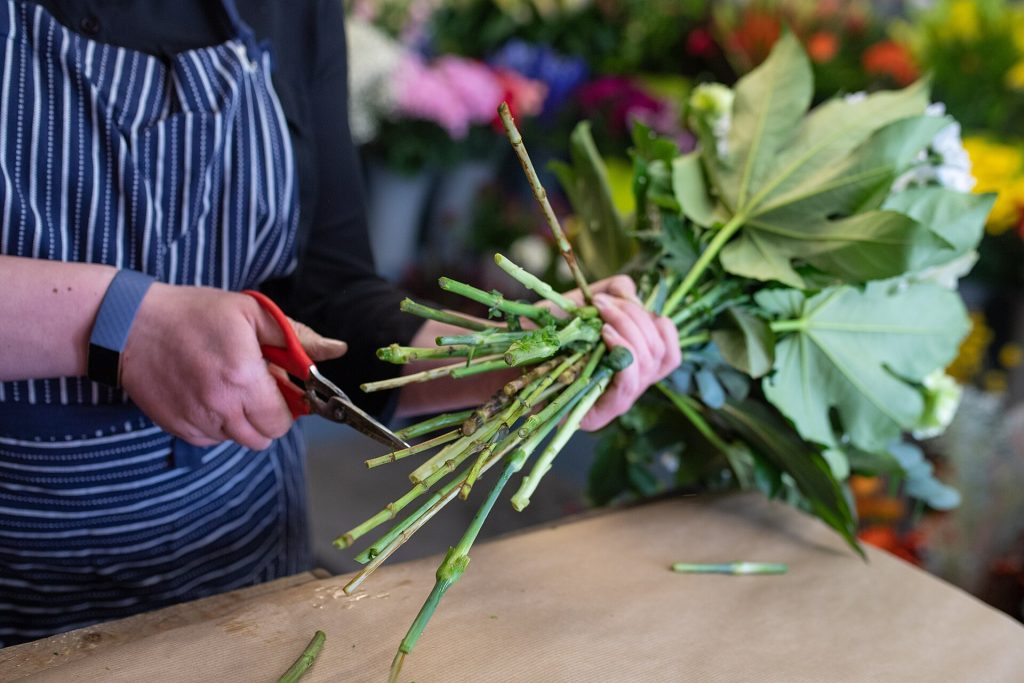
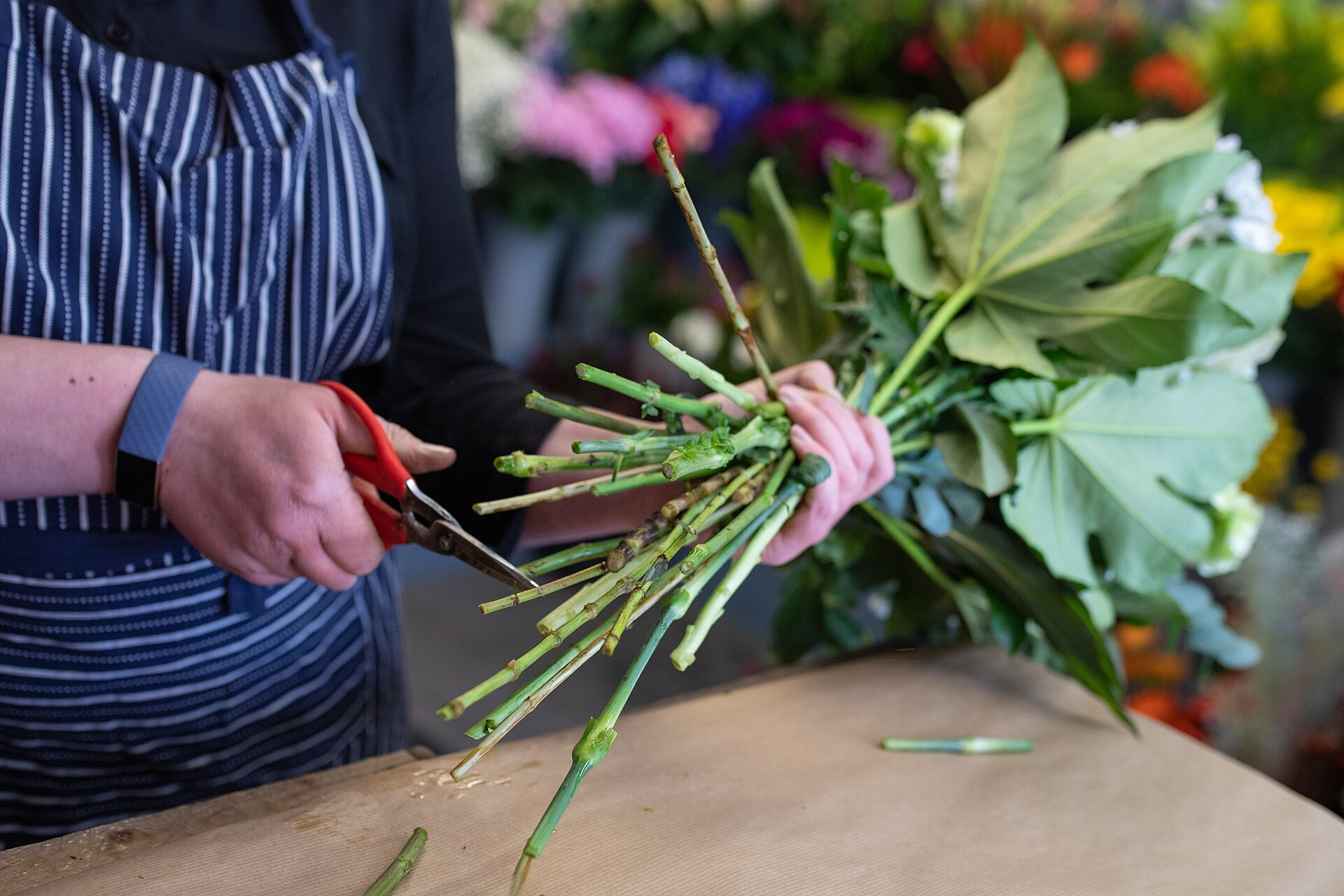
- Recut every stem by about an inch, at an angle, with a sharp knife or pruners.
- Strip off any leaves that would sit below the waterline.
- Fill the vase with water and the flower food that came with the bouquet, mixed as the packet says.
- Keep the flowers somewhere cool, out of direct sun and away from heaters and ripening fruit.
- Top up the water daily. Every two to three days, or when it turns cloudy, change it and recut the stems.
Step 1: Start with a clean vase
Bacteria are one of the main reasons flowers wilt early. As they multiply, they clog the water-conducting tubes in the stems. University of California Cooperative Extension recommends washing the container with hot, soapy water before every use. For crevices you can’t scrub, it suggests a brief soak in one part household bleach to ten parts water, followed by a thorough rinse.
Pick a vase that suits the bouquet. Illinois Extension suggests a vase tall enough to support the stems, with an opening wide enough for the bunch, and flowers about one and a half times the height of the vase.
Step 2: Recut the stems
When a stem is out of water, even for a short time, the cut end dries and seals, and air can enter the stem and block water from moving up. That is why every guide starts with a fresh cut.
- How much: about an inch (2.5 cm) is the usual advice from UMass Amherst and the Chicago Botanic Garden. UC Extension says at least half an inch.
- At an angle: an angled cut exposes more of the stem to water and stops the cut end from sitting flat on the bottom of the vase.
- Under water if you can: several extension guides suggest cutting the stems under water, in a bowl or a sink, so the stem takes up water instead of air the moment it is cut.
- With a sharp blade: UC Extension warns against crushing the stems, which damages the water-conducting tissue. A sharp knife or pruners is better than blunt household scissors.
Some flowers ooze a milky sap when cut, such as poppies and poinsettias. For these, UC Extension suggests dipping the bottom two inches of the stem in boiling water for about ten seconds to stop the sap from clogging it. Keep the flower heads away from the steam.
Step 3: Remove leaves below the waterline
Leaves that sit in water decay quickly and feed the bacteria you are trying to avoid. Strip off every leaf, and any thorns, from the part of the stem that will be under water. Leave the upper foliage in place, since it is part of the look of the bouquet.
Step 4: Use flower food
The little packet that comes with most bouquets is worth using. University of Illinois Extension explains that flower food contains three things: a sugar that feeds the blooms, citric acid that lowers the pH of the water so stems take it up more easily, and a biocide that slows bacterial growth.
Two details matter. First, mix it at the strength the packet says. UC Extension notes that one packet usually treats only about a quart of water, so a large vase may need more than one. Second, if you run out, there are simple homemade mixes that extension services recommend, and some popular tricks, such as aspirin, that do not help. Our guide to homemade flower food and flower care myths covers both.
Flower food and a clean vase
If your bouquet did not include a packet, these are straightforward commercial options. A dedicated vase is easier to keep clean than a jar you also use in the kitchen. Prices are on Amazon and change often, so we do not list them here.
- Chrysal Bio-Based Flower Food, 10 oz jar with scoop
 A commercial flower food from a florist-supply brand, sold in a jar with a scoop. Use it as the label directs.
- FloraLife Fresh-Cut Flower Food, 25 packets
 Single-use packets that give you a measured dose for one vase.
- Nisoger 8-Inch Clear Glass Vase
 A simple clear glass vase, about 8 inches tall, with a wider base.
- Fiskars 6-Inch Steel Micro-Tip Pruning Scissors
 Spring-loaded micro-tip scissors for the fresh cut in Step 2.
As an Amazon Associate, Flowerlyn earns from qualifying purchases.
Step 5: Choose a cool spot
Cut flowers keep using their stored energy after they are cut, and warmth speeds that up. Illinois Extension recommends keeping a bouquet away from heat, including drafts, stoves and ovens, out of direct sunlight, and away from ripening fruit. Fruit gives off ethylene gas, a ripening hormone that can shorten the life of many flowers.
UC Extension adds that most cut flowers tolerate cool temperatures well, and that you can move a bouquet to an unheated room or even the refrigerator overnight. Keep it away from fruit and vegetables in the fridge, and never put it in the freezer. Tropical flowers, such as anthurium, bird-of-paradise and some orchids, are the exception: keep them above about 50°F (10°C).
Step 6: Keep up the routine
- Daily: check the water level and top it up. Flowers can drink a surprising amount, especially in the first couple of days.
- Every two to three days: Illinois Extension suggests changing the water every two to three days, or sooner if it turns cloudy. Rinse the vase, add fresh flower food and recut the stems.
- As blooms fade: remove wilting flowers and yellowing leaves so they don’t foul the water. When most of the bouquet is past its best, move the survivors into a smaller vase.
If the water smells bad or looks cloudy, UC Extension advises replacing it completely, rinsing the stems and trimming them before they go back in.
How long should cut flowers last?
It depends on the flower. University of Illinois Extension says carnations and mums are hardy and may last up to two weeks, gerberas and roses last roughly 4 to 12 days, and daffodils about 4 to 8 days. Our flower meaning guides list typical vase life for each flower, for example carnations, chrysanthemums and alstroemeria, three of the longest-lasting choices.
Mixed bouquets: watch out for daffodils
Freshly cut daffodils release a sap that harms other flowers in the same water. Illinois Extension says that, without conditioning, daffodils can cut the vase life of other flowers in a mixed bouquet by up to half. Stand daffodils in their own water for 12 to 24 hours before adding them to a mixed arrangement. Read more in our guide to tulips in a vase and our daffodil meaning guide.
Flowers and pets
Freshness isn’t the only thing to check when a bouquet comes home. Some popular flowers are toxic to pets according to the ASPCA. Lilies are especially dangerous for cats. Each of our flower meaning guides includes an ASPCA pet-safety note, and the lily meaning guide explains the risk in detail.
Keep exploring
If your flowers are already drooping, see how to revive wilted flowers. For specific bouquets, read how to make roses last longer. Choosing a bouquet to give? Start with what flowers to send or find a birth flower for someone’s month. When a bouquet is past its best, you can still preserve some stems: see how to dry flowers and how to press flowers.
Frequently asked questions
Use a clean vase, recut the stems by about an inch at an angle, remove leaves below the waterline, add flower food, and keep the bouquet cool and out of direct sun. Change the water and recut the stems every two to three days.
University extension guides suggest every two to three days, or sooner if the water turns cloudy or smells. Top up the water level every day in between.
It helps. Cutting under water lets the stem draw up water instead of air at the moment it is cut, which is why several extension guides recommend it. A fresh, angled cut with a sharp blade matters most.
Most cut flowers tolerate it well, according to University of California Cooperative Extension. Keep them away from fruit and vegetables, and don’t do this with tropical flowers such as orchids or anthurium.
The usual causes are a stem that has sealed or filled with air, bacteria in the water, warmth or direct sun, or ripening fruit nearby. Recutting the stems and changing the water fixes the first two in many cases.
Sources
- University of California Cooperative Extension: Extending the Freshness of Cut Flowers at Home (Publication 8113)
- University of Illinois Extension: How to care for flower bouquets (2026)
- University of Illinois Extension: Extend the vase life of your fresh flowers
- UMass Amherst Extension: Care for cut flowers
- University of Illinois Extension: Help your flowers last longer
- Chicago Botanic Garden: Cut flower care
- ASPCA: Lilies