

How to Revive Wilted Flowers (and When to Let Them Go)

A bouquet that droops a day or two after it arrives is often not finished at all. In many cases the flowers are simply thirsty: the stems have sealed, filled with air or clogged with bacteria, so water isn’t reaching the blooms. Fix the water supply and many flowers perk up within a few hours.
This guide walks through a rescue routine based on advice from UMass Amherst Extension, the Chicago Botanic Garden, University of California Cooperative Extension and NC State, plus specific fixes for roses, hydrangeas and tulips. It is part of our flower care and learning guides.
Why cut flowers wilt
UMass Amherst Extension explains that when cut flowers wilt, the water-conducting vessels in the stem may be blocked by air bubbles or bacterial growth. Other common causes are a vase that has run low or dry, warmth or direct sun making the flowers lose water faster than they can drink it, and simple age. The first few causes can be fixed. Age can’t.
Step 1: Check the water
Start with the obvious. If the vase is low or empty, the stem ends may have been sitting in air. Even a short time out of water lets the cut end dry and seal, according to UC Cooperative Extension, so topping up alone often isn’t enough. Go on to the next step.
Step 2: Recut the stems under water
Take the flowers out, and with a sharp knife or pruners cut about an inch (2.5 cm) off each stem at an angle, holding the stems under water in a bowl or sink as you cut. UMass Amherst explains that cutting under water lets water fill the stem’s vessels right away instead of air. Remove any leaves that would sit below the waterline.
Step 3: Give them warm water
Put the stems into a clean vase or bucket of warm water, about 100°F (38°C), roughly bath temperature. UMass Amherst notes that warm water holds fewer dissolved gas bubbles and moves more easily up a cut stem than cold water. Add flower food if you have it, or use one of the homemade flower food recipes. Let the water cool naturally.
Step 4: Rest them somewhere cool
UMass Amherst says wilted flowers often recover within an hour or two. Help them by putting the container somewhere cool and out of direct sun while they drink. Laying the stems in water for an hour or more, so the leaves and flowers lose less water while the stems refill, can help further.
Step 5: Support drooping heads
A stem rehydrates in the shape it is in, so a flopped head can stay crooked. Wrapping the bunch snugly in paper so the stems stand straight while they drink is a long-standing florist method, and NC State recommends it for tulips. Unwrap once the stems feel firm again.
Step 6: Clean up and keep going
Once the flowers have recovered, put them back in a clean vase with fresh water and flower food. Remove any blooms that didn’t come back, since decaying flowers foul the water for the rest. Then follow the routine in our guide to keeping cut flowers fresh to stop it happening again.
Roses with a bent neck
Roses sometimes droop suddenly just below the flower head, which florists call bent neck. The Chicago Botanic Garden says this may be caused by air bubbles trapped in the stem. Its fix: float the whole rose, stem and head, in a sink of warm water, cut another inch off the stem under water, and gently straighten the head while the rose floats with the cut end submerged for at least half an hour. Once the head has firmed up in a straight position, return it to the vase. More in our guide to making roses last longer.
Hydrangeas
Hydrangeas are known for wilting quickly once cut. A common florist rescue is to recut the stem and submerge the entire flower head in a bowl of cool water for 30 minutes to an hour, then return it to a vase of fresh water. Woody hydrangea stems also benefit from a generous fresh cut. Remember that the ASPCA lists hydrangeas as toxic to dogs, cats and horses. Read more in our hydrangea meaning guide.
Tulips
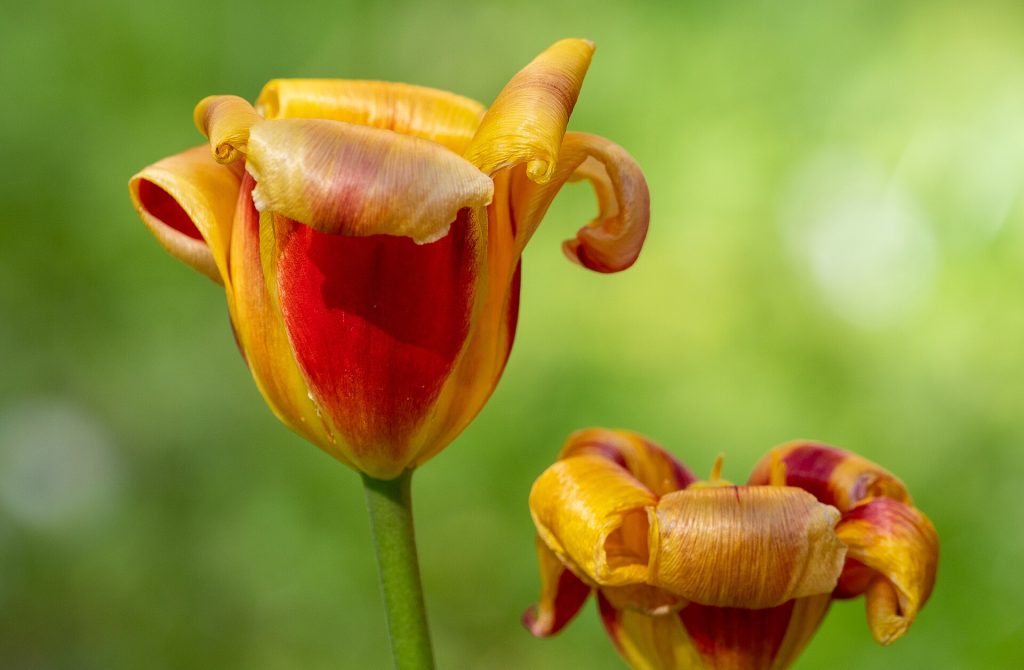
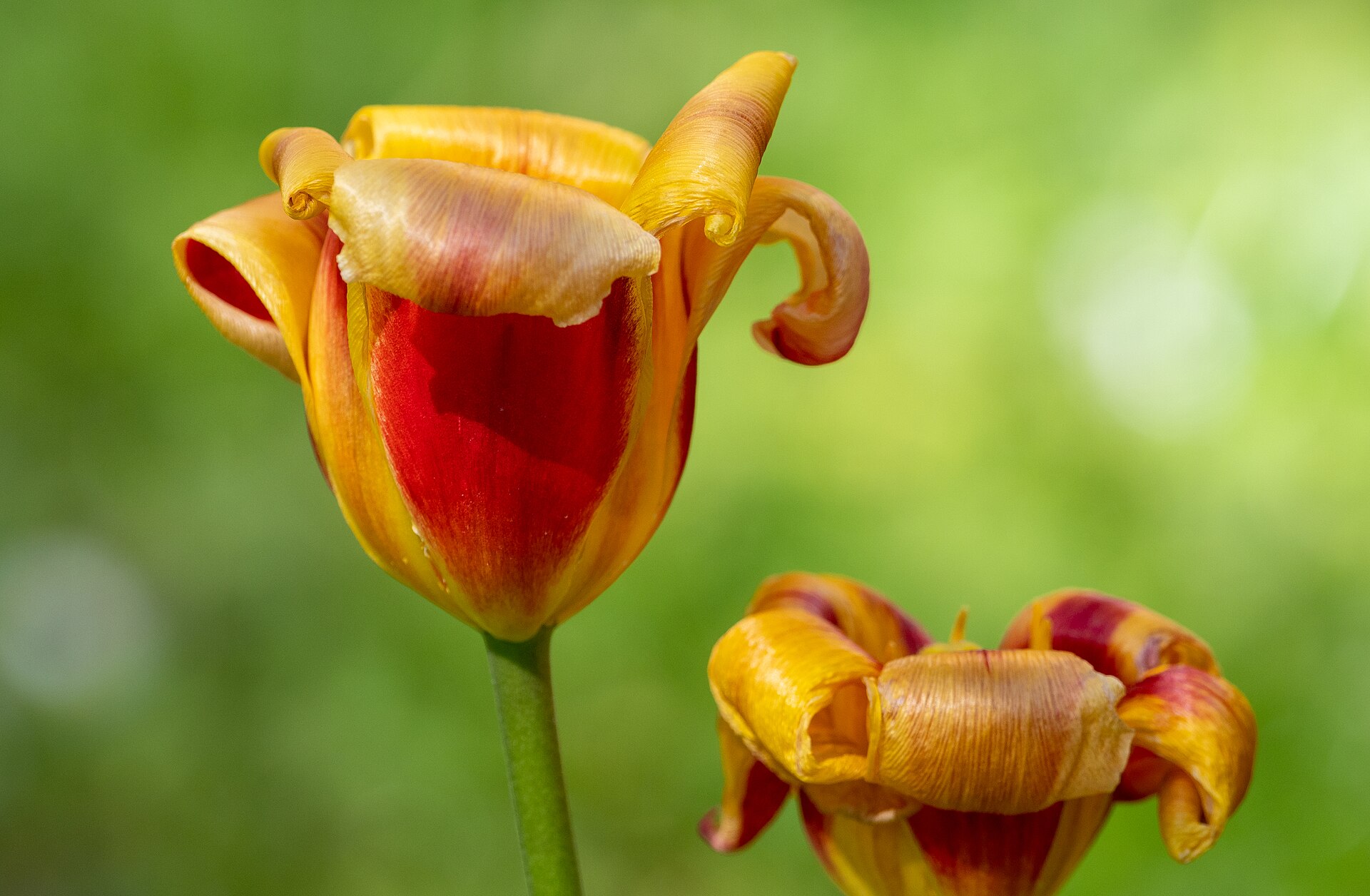
Tulips droop for their own reasons: they keep growing after they are cut and bend toward the light. A drooping tulip isn’t always a dying one. See our guide to tulips in a vase for why it happens and how to straighten them.
When flowers can’t be saved
Some flowers recover more readily than others. UMass Amherst notes that roses and chrysanthemums can have difficulty recovering once wilted. Signs that a flower is past saving include:
- Petals that are dropping, browning or turning papery.
- A stem that is slimy, soft or mushy at the base.
- No improvement after a few hours in fresh water following a fresh cut under water.
Remove those flowers so they don’t affect the rest, and move the healthy ones into a smaller vase.
Keep exploring
Learn what your flowers mean in our flower meanings guide, or choose a long-lasting bouquet for someone else in what flowers to send. Carnations, chrysanthemums and alstroemeria are among the longest-lasting choices; see the carnation and alstroemeria guides. Hydrangeas have their own rescue steps in how to keep hydrangeas fresh.
Frequently asked questions
Often, yes. Recut the stems by about an inch under water, put them in warm water with flower food and leave them somewhere cool. UMass Amherst Extension says wilted flowers often recover within an hour or two.
Warm water, about 100°F (38°C), holds fewer dissolved gas bubbles and moves more easily up a cut stem than cold water, according to UMass Amherst Extension.
The Chicago Botanic Garden suggests floating the whole rose in warm water, recutting an inch off the stem under water and gently straightening the head while it floats for at least half an hour.
Recut the stem and submerge the whole flower head in cool water for 30 minutes to an hour, then put it back in fresh water. This is a common florist method.
When petals are dropping or browning, the stem is slimy at the base, or a flower shows no improvement a few hours after a fresh cut and fresh water.