

New Baby Flowers: What to Send to Welcome a Newborn

A new baby is one of the happiest reasons to send flowers. A bouquet tells new parents you are celebrating with them, even if you can’t visit yet. But new parents are also tired, busy and short on space, so the best new baby flowers are easy to look after, not too strongly scented and safe for a home that may have pets, and soon a curious toddler.
This guide covers the best flowers and colors for a new baby, when and where to send them, what to avoid, pet safety, budget and card message ideas. It is part of our what flowers to send guide.
New baby flowers at a glance
- Best choices: daisies, roses, gerberas, tulips, carnations and potted orchids.
- Colors: soft pastels, bright cheerful mixes, or pink or blue if you know the parents like the tradition.
- Where to send: usually to the family’s home once they are back from the hospital.
- Avoid: strong scents, flowers that drop a lot of pollen, and anything toxic to their pets.
- Easiest gift: an arrangement that arrives in its own vase or a low-maintenance potted plant.
The best flowers for a new baby, and why
- Daisies: according to The Old Farmer’s Almanac, the daisy was the sacred flower of Freyja, the Norse goddess of love, beauty and fertility, and became a symbol of motherhood, childbirth and new beginnings. The Almanac notes that daisies are a common gift for new mothers. Gerberas, sometimes called gerbera daisies, are a bright alternative.
- Roses: white roses stand for innocence and a new beginning in the Almanac’s list, and pink roses for grace, happiness and gentleness.
- Gerberas: Interflora says white gerberas stand for purity and innocence, and yellow ones for cheerfulness.
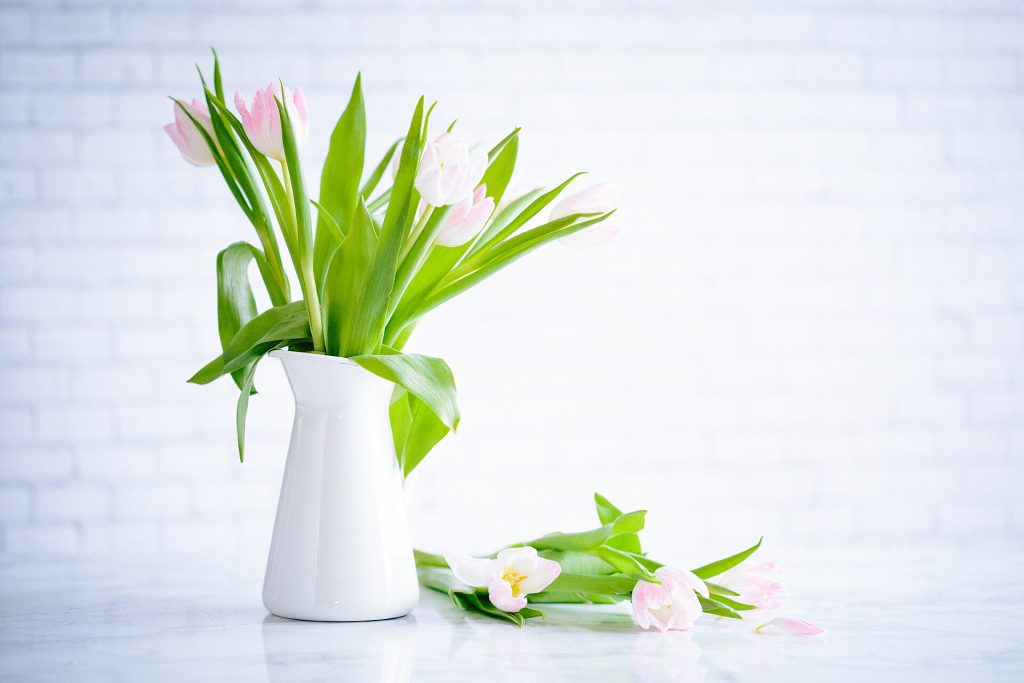
- Tulips: a fresh, light-scented spring choice. Pink tulips carry a gentle, affectionate love that suits family.
- Carnations: the Almanac lists “a mother’s love” among their meanings, and they can last up to two weeks in a vase, according to University of Illinois Extension. Choose pink or white rather than yellow.
- Orchids: a potted moth orchid flowers for weeks and needs watering only occasionally, which suits busy new parents.
- Their birth flower: the baby’s birth month flower makes a lovely, personal touch, such as daisies for an April baby or chrysanthemums for a November baby.
Choosing colors
Soft pinks, creams, peaches and pale yellows feel gentle and celebratory. Pink for a girl and blue for a boy is a familiar tradition, but many parents prefer neutral or bright mixed colors, so only follow it if you know they like it. Truly blue flowers are rarer, so florists often use hydrangeas or irises, which are both listed as toxic to pets (see below).
What to avoid
- Strong scents: new parents may not want a heavily scented bouquet in a small room with a newborn. Lilies, in particular, have a strong scent and pollen, and are dangerous to cats.
- High-maintenance bouquets: loose stems that need arranging and frequent water changes add to a busy parent’s to-do list. Choose a bouquet in its own vase or a potted plant.
- White flowers for Chinese or Japanese families: the Cultural Atlas notes that in Chinese culture white and yellow flowers are generally avoided as gifts, and that in Japan lilies, camellias and white flowers are usually associated with funerals.
- Carnations or even numbers for Russian families: according to the Cultural Atlas, carnations are associated with funerals in Russia, and an uneven number of flowers should be given except at a funeral.
- Chrysanthemums for Italian families: they symbolize death in Italy, according to the Cultural Atlas.
- Yellow carnations: in the Victorian language of flowers they meant disdain or rejection.
Pet safety
Many new parents already have a cat or dog, and soon there will be a crawling baby too, so it is worth choosing flowers that are safe if a leaf or petal is chewed. The ASPCA lists true lilies as highly toxic to cats, and the FDA warns that even small amounts of pollen or vase water can cause kidney failure. Tulips, carnations, chrysanthemums, hydrangeas, irises and daffodils are listed as toxic to dogs and cats, usually causing stomach upset. The ASPCA lists roses, gerbera daisies, orchids (Phalaenopsis), snapdragons, zinnias and Peruvian lilies (alstroemeria) as non-toxic. Baby’s breath is listed as non-toxic, although it may cause mild stomach upset if eaten.
The ASPCA’s lists are about pets, not children. If you are worried about a plant and a small child, ask a pediatrician or a poison control center.
Budget guidance
New baby flowers don’t need to be large. A small, cheerful bouquet in its own vase is often more welcome than a big arrangement in a home that is already full of gifts. A few ideas:
- Seasonal flowers give the best value and freshness.
- Long-lasting flowers such as carnations stretch the budget.
- A potted orchid lasts for weeks and can be kept long after the baby’s arrival.
- If friends or coworkers want to send something, one shared bouquet with a group card works well.
Delivery timing
Check where the family is before you send. Many hospitals restrict flowers on some wards, so ask first or send flowers to the home instead. Most families appreciate flowers arriving a few days after they get home, when the first rush of visitors has passed. If you don’t know when they will be home, send a message first to ask when a delivery would be convenient, so the flowers don’t sit on a doorstep.
Card message ideas
- “Congratulations on your beautiful new arrival!”
- “Welcome to the world, [baby’s name]!”
- “So happy for you all. Sending lots of love to your growing family.”
- “Congratulations, new mom and dad! Enjoy every cuddle.”
- “Daisies for new beginnings, and for the newest member of the family.”
- For a second or third baby: “Congratulations, and welcome to the family, little one.”
Keep exploring
Read about daisy meanings and rose meanings, find the baby’s flower in our birth flowers by month guide, or see what flowers to send for every occasion.
Frequently asked questions
Daisies are a traditional gift for new mothers, as a symbol of motherhood and new beginnings. Roses, gerberas, tulips, carnations and potted orchids are also popular.
Soft pastels and bright mixed colors suit most families. Pink or blue works if you know the parents like the tradition.
The home is usually best. Many hospitals restrict flowers on some wards, and the family will have more time to enjoy them at home.
Avoid strongly scented flowers such as lilies, high-maintenance bouquets and anything toxic to the family’s pets.
Choose roses, gerbera daisies, moth orchids or alstroemeria, which the ASPCA lists as non-toxic. Avoid lilies if there is a cat at home.
Sources
- The Old Farmer’s Almanac: April birth flowers
- The Old Farmer’s Almanac: Flower meanings
- Interflora: Gerbera guide
- University of Illinois Extension: Help your flowers last longer
- Royal Brompton and Harefield hospitals: Visitor information
- Cultural Atlas: Chinese etiquette
- Cultural Atlas: Japanese etiquette
- Cultural Atlas: Russian etiquette
- Cultural Atlas: Italian etiquette
- ASPCA: Lily
- FDA: Lovely lilies and curious cats
- ASPCA: Baby’s breath
- ASPCA: Cats plant list