

How to Arrange Flowers for Beginners: A Simple Step-by-Step Guide
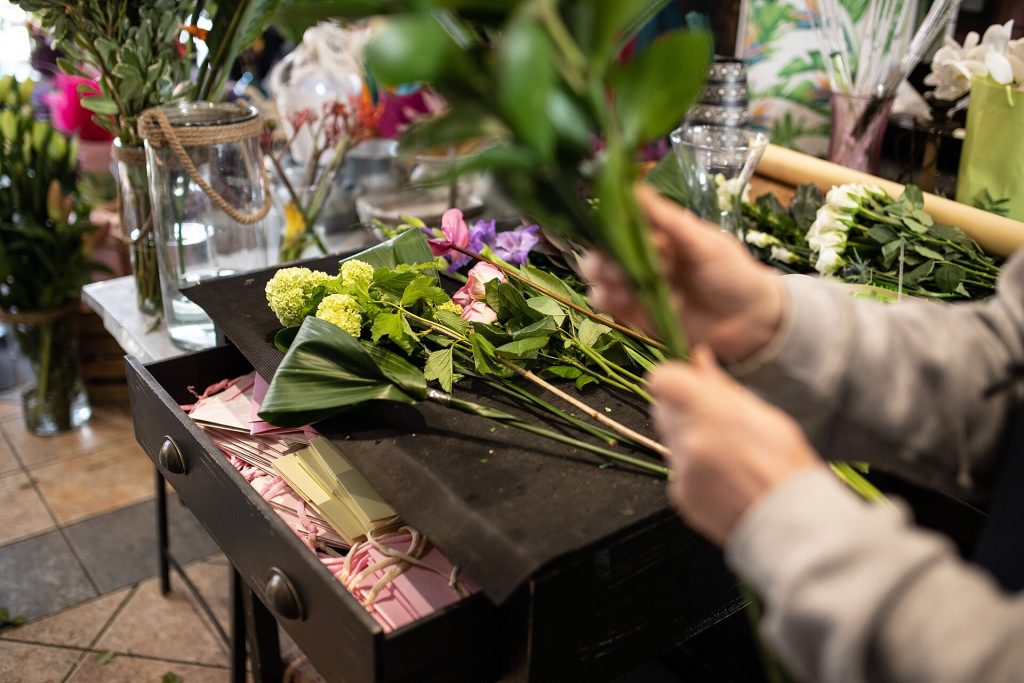
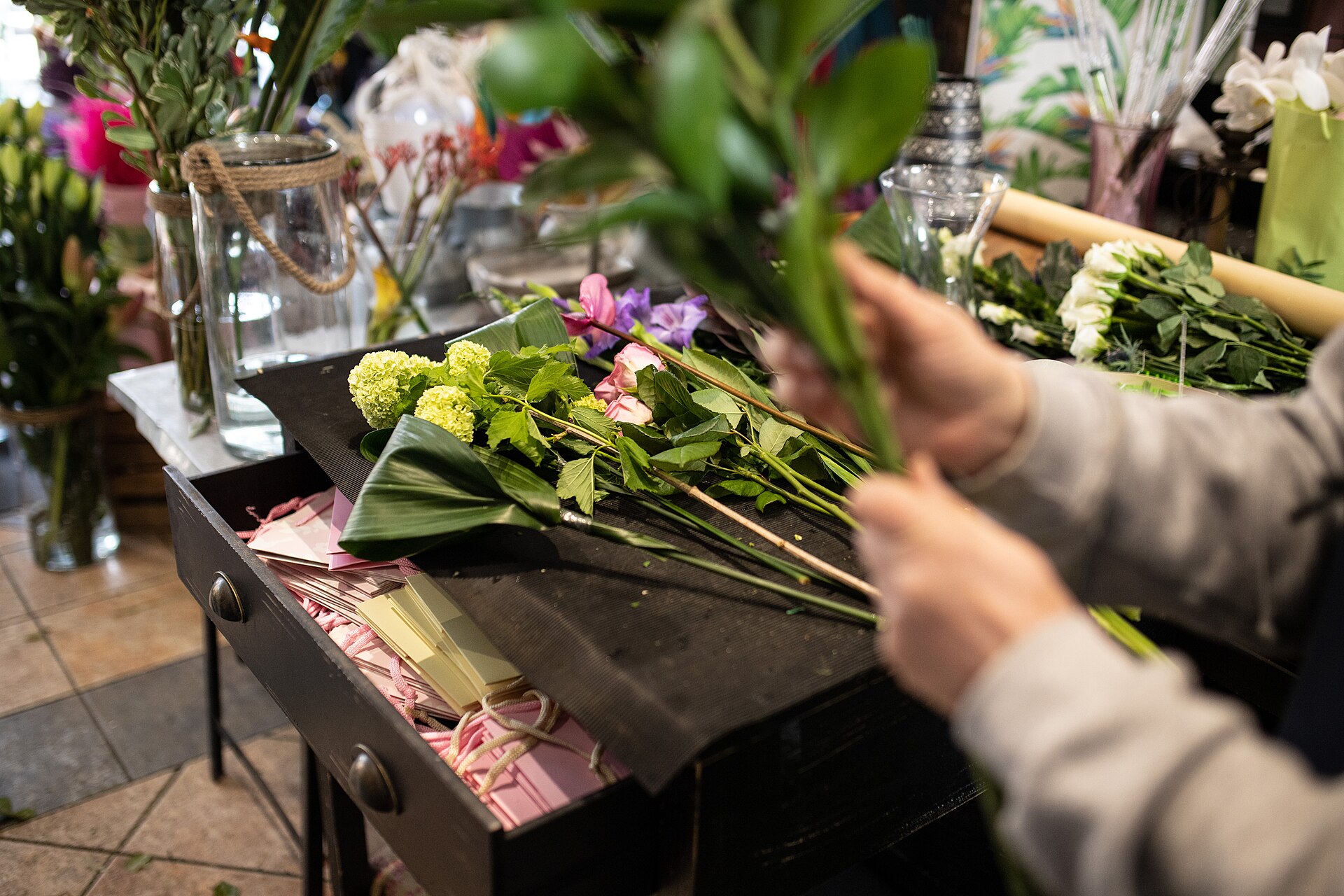

You don’t need floristry training to make a bouquet look good at home. A few design guidelines, a clean vase and a simple order of work will turn a grocery-store bunch or a handful of garden stems into an arrangement that looks considered rather than crammed in.
Flower arranging is simply the craft of placing cut stems in a vase or bowl so they look balanced and last well. If you are wondering how to start, the method below is enough: prepare the flowers, support the stems, then add greenery, focal flowers and filler in that order.
This guide covers the basics, drawing on floral design guides from Iowa State University, Mississippi State University, South Dakota State University and University of California Cooperative Extension. It is part of our flower care and learning guides.
What you need
- A clean vase: wash it with hot, soapy water first. Bacteria left from the last bouquet shorten the life of the next one.
- A sharp knife or floral shears: a clean cut helps stems drink, and blunt scissors can crush them.
- Flower food: the packet from the bouquet, or a homemade flower food recipe.
- Something to support the stems (optional): clear waterproof tape, a flower frog or a ball of chicken wire.
- Flowers in three roles: greenery, a few focal flowers and some filler. More on these below.
Tools that make a first arrangement easier
You can start with a clean jar and kitchen scissors. These are the upgrades that help most at the beginning. Prices are on Amazon and change often, so we do not list them here.
- Fiskars 6-Inch Steel Micro-Tip Pruning Scissors
 Spring-loaded micro-tip scissors made for flower stems and tight, clean cuts.
- Nisoger 8-Inch Clear Glass Vase
 A simple clear glass vase, about 8 inches tall, with a wider base.
- Homjoy 4-Pack Glass Cylinder Vases, 4, 6, 8 and 10 inch
 Four cylinder heights in one set, useful if you want a group of vases on a table. Keep flowers and open flames apart if you also use them as hurricane holders.
- Vase Buddy reusable silicone flower arranging grid
 A washable silicone grid that stretches over the rim to hold stems in place, as an alternative to floral foam. Sized for openings from 5 to 8 inches; measure your vase first.
- Chrysal Bio-Based Flower Food, 10 oz jar with scoop
 A commercial flower food from a florist-supply brand. Use it as the label directs.
As an Amazon Associate, Flowerlyn earns from qualifying purchases.
Prepare the flowers first
Arranging goes better when the flowers are well hydrated. Recut each stem by about an inch at an angle, strip any leaves that would sit below the waterline and give the flowers a drink in a bucket of water before you start. University of California Cooperative Extension suggests conditioning freshly cut flowers this way, in warm water in a cool place for several hours, before arranging them. Our guide to keeping cut flowers fresh has the full routine.
Support the stems
Iowa State University’s guide describes a few simple ways to hold stems in place in a vase:
- Crossing the stems: stems placed at angles lean on each other and form their own support. This works well in vases with a narrow neck.
- A tape grid: run strips of waterproof tape across the mouth of the vase in a tic-tac-toe pattern, then place stems through the squares. It is the easiest way to keep a wide-mouthed vase from looking sparse.
- A flower frog: a weighted pin holder or grid that sits in the bottom of a low bowl.
Whatever you use, cover it with foliage or flowers by the end. UC Extension notes that if you use floral foam, soak it until it sinks and use a new, clean piece each time.
Get the proportions right
The most useful single rule for beginners is about height. Floral design guides from South Dakota State University and Mississippi State University recommend making the arrangement about 1.5 times the height of an upright vase, and up to about twice its height. For a vase 8 inches tall, that means flowers rising about 12 inches above the rim. For a low bowl, use about 1.5 times its length.
Arranging flowers for a table
Dining table arrangements have one extra constraint: people need to see each other. As UC Extension points out, keep a centerpiece low enough that it does not block the view across the table. A low bowl or a short vase, using the 1.5 times length guideline for a low container, works better than a tall upright vase. If the table is long, two or three smaller arrangements are often easier to keep low than one tall one.
Choose your colors
UC Extension’s beginner advice is to keep the color palette simple: two or three colors that work together, plus filler and greenery. A few easy approaches:
- One color in several shades, such as blush, pink and deep rose.
- Neighboring colors on the color wheel, such as yellow, orange and peach.
- A single bold accent, such as a mostly white arrangement with a few blue flowers.
Want your colors to send a message too? Our flower meanings guides explain what each flower and color is said to mean, for example in our rose meaning guide.
A simple step-by-step method
Iowa State’s guide follows an order that suits beginners well:
- 1. Water and food: fill the clean vase with fresh water and flower food.
- 2. Greenery first: add foliage to set the overall shape and build a supporting base for the flowers.
- 3. Focal flowers next: place your largest or showiest flowers, such as roses, peonies, sunflowers or hydrangeas. South Dakota State’s guide notes that the focal point usually sits about a third or less of the way up from the rim, near the center.
- 4. Filler last: add filler flowers and small accents, such as baby’s breath, waxflower or spray roses, to fill gaps and soften the shape.
- 5. Hide the mechanics: make sure tape, frogs or wire are covered by foliage or flowers.
Turn the vase as you work and step back often. UC Extension suggests looking at the arrangement from all sides; a lazy Susan makes that easier. If the arrangement will sit against a wall, it only needs to look full from the front.
Once the arrangement is finished
Treat the finished arrangement like any other vase of cut flowers. Fresh water, a clean vase and a cool spot out of direct sun will do most of the work. See our guide to keeping cut flowers fresh for the full routine, including how to recut stems and when to use flower food. If you want to keep the blooms after they fade, try how to dry flowers or how to press flowers.
Make more from a grocery-store bouquet
A single mixed bouquet often looks better split into two or three small arrangements than crammed into one vase. Group the flowers by type or color, cut the stems to suit small vases or jars, and put the shortest pieces in a low glass or bud vase. As the bouquet ages, keep doing this: Illinois Extension suggests moving healthy blooms into a smaller vase as others fade.
Flowers that suit beginners
Long-lasting, forgiving flowers make practice less stressful. Carnations, chrysanthemums and alstroemeria are among the longest-lasting cut flowers, and roses and tulips are easy to find most of the year. Read more in our guides to carnations, chrysanthemums, alstroemeria and baby’s breath. If you’re using tulips, read tulips in a vase first, since they keep growing after they are cut.
Keep exploring
Arranging flowers for someone else? See what flowers to send, including anniversary flowers and birthday flowers, or pick a birth flower for a personal touch. Not sure what a flower in your bouquet is? Try our guide to identifying flowers. For a festive project, try a Christmas flower arrangement.
Frequently asked questions
Use a clean vase with flower food, add greenery first to set the shape, then your largest focal flowers, then filler to fill gaps. A tape grid across the vase mouth makes it easier to keep stems in place.
A common guideline from university floral design guides is about 1.5 times the height of an upright vase, and up to about twice its height.
Focal flowers are the largest or showiest blooms, such as roses or peonies, that draw the eye. Filler flowers, such as baby’s breath or waxflower, are smaller and fill the gaps between them.
Cross the stems so they support each other, make a grid of waterproof tape over the vase mouth, or use a flower frog in a low bowl. Cover the support with foliage when you’re done.
For beginners, University of California Cooperative Extension suggests keeping it simple with two or three colors that work together, plus filler and greenery.
Fill a clean vase with water and flower food, add greenery to set the shape, place your largest focal flowers, then add filler to close the gaps. Use a tape grid if the vase mouth is wide, and aim for an overall height of about 1.5 times the vase.
Keep the centerpiece low enough that people can see each other across the table. A low bowl or short vase works better than a tall one. University floral design guides suggest making a low arrangement about 1.5 times the length of the container.
Begin with a clean vase, fresh water, flower food and a small mix of greenery, a few focal flowers and some filler. Prepare and hydrate the stems first, then work in that order. A grocery-store bouquet is enough to practice with.
Sources
- Iowa State University Extension: How to create a floral arrangement
- South Dakota State University Extension: Flower arranging (Extension Circular)
- Mississippi State University Extension: Notes for leading floral design workshops
- University of California Cooperative Extension: Flowers 101, from seed to vase
- University of California Cooperative Extension: Extending the Freshness of Cut Flowers at Home (Publication 8113)
- University of Illinois Extension: Extend the vase life of your fresh flowers