

Iris Meaning: What Irises Symbolize, by Color
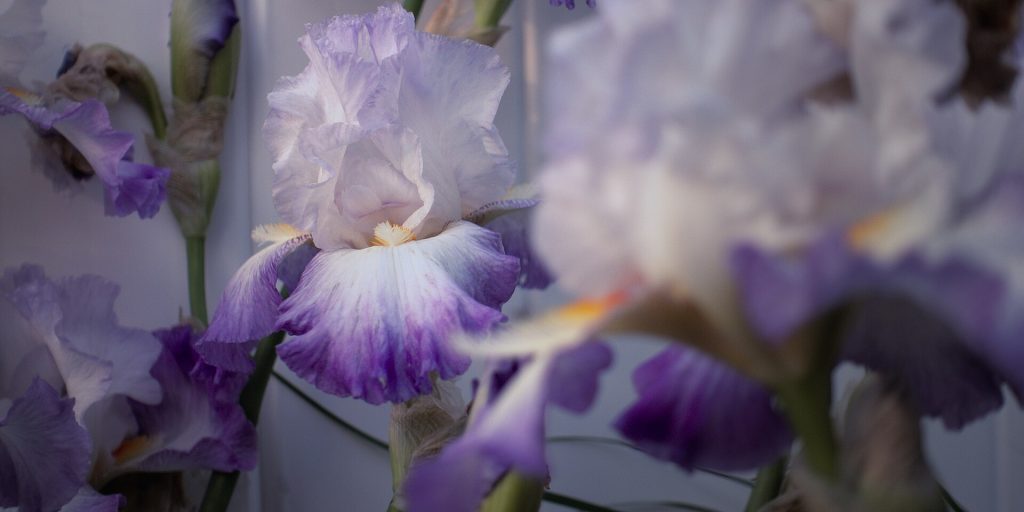
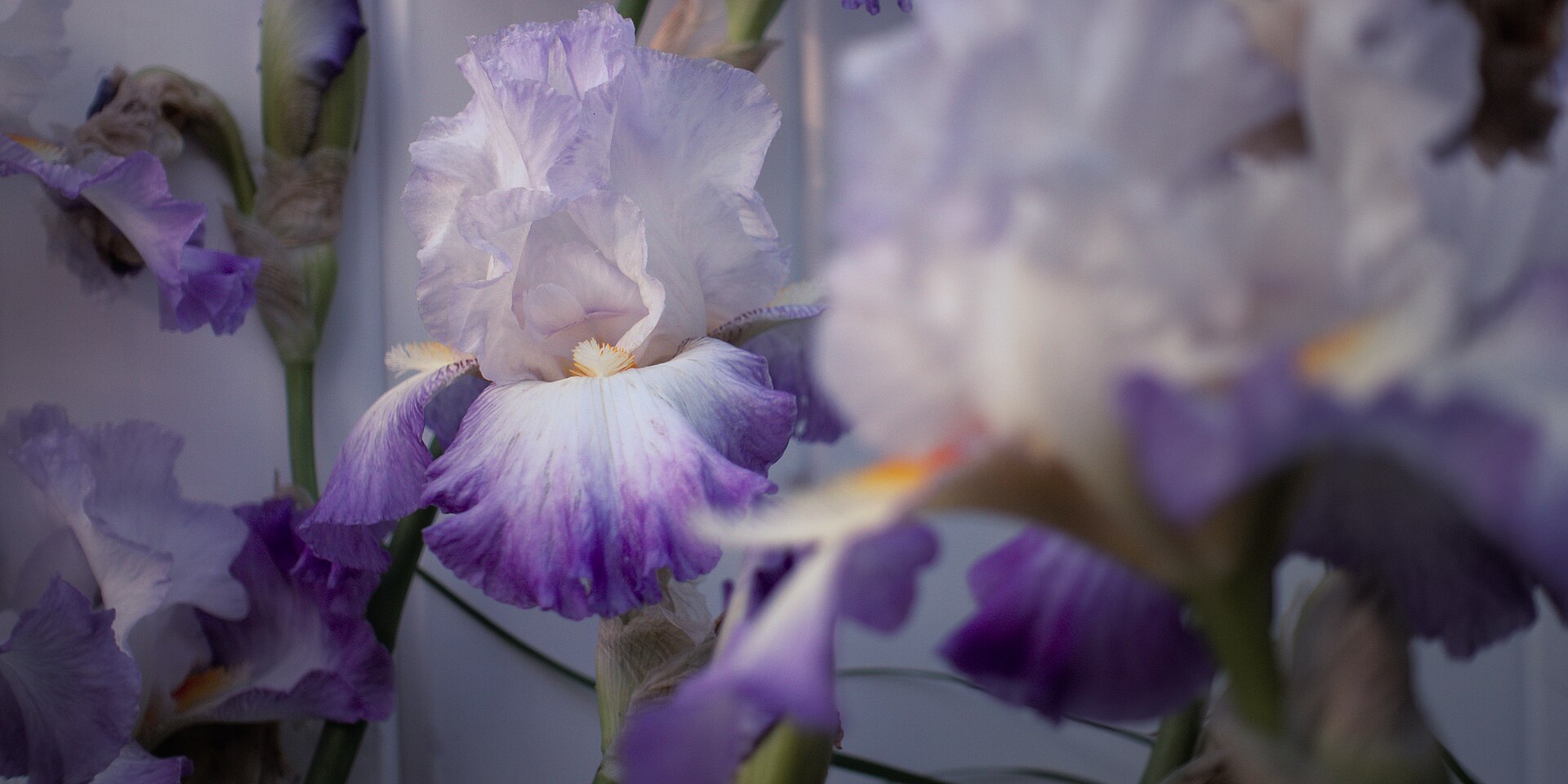

The iris is one of the most elegant flowers a florist sells: tall, upright stems topped with ruffled petals in deep purple, blue, white or yellow. It takes its name from the Greek goddess of the rainbow, and it carries some of the most uplifting meanings in the language of flowers: faith, hope and wisdom.
This guide covers what irises mean, their color meanings, their history, the best occasions, care and pet safety. It is part of our flower meanings guide.
Iris meaning at a glance
- Overall meaning: faith, hope, wisdom and valor.
- Birth month: February on Interflora’s UK list (see February birth flowers).
- Best for: new beginnings, graduations, new jobs and 25th anniversaries.
- Vase life: about 3 to 6 days, according to Interflora.
- Pets: toxic to cats and dogs, according to the ASPCA.
What do irises symbolize?
The Old Farmer’s Almanac’s flower meanings chart gives the iris’s Victorian meanings as faith, trust, wisdom, hope and valor. Interflora sums the iris up as a flower of faith, hope and wisdom, and adds that because it blooms as the weather warms, it also stands for spring and new beginnings. Its blue flowers guide suggests sending irises to someone who is starting a new adventure or facing a big decision.
Irises in myth and history
Interflora explains that the flower is named after Iris, the messenger of the gods in Greek mythology, who traveled on a rainbow between heaven and earth. The Greek word means “messenger”, which is why the iris is also linked with communication. Fittingly, irises come in almost every color of the rainbow.
The iris also has a long royal history. Britannica says the iris is, arguably, the fleur-de-lis of the French royal standard, and Interflora notes that the symbol appeared on the French monarchy’s coats of arms, coins and shields in the Middle Ages. Interflora adds that in Egypt irises were a symbol of protection and power, placed on pharaohs’ tombs, and in China a symbol of spring, vitality and change. In the US, the purple iris is the state flower of Tennessee.
Iris botany
According to Britannica, Iris is a genus of about 300 species in the iris family, Iridaceae. Each flower has six petal-like parts: the upright inner ones are called standards and the drooping outer ones are called falls. The best-known garden irises are the bearded, or German, irises. Britannica notes that Dutch irises are hybrids created in the Netherlands. The iris is also the source of orrisroot, used to make “essence of violet” perfume.
Iris color meanings
Interflora gives these color meanings for irises:
- Purple: wisdom, dignity and respect, which suits birthdays and anniversaries.
- Blue: faith and hope, a good choice for a graduation or a new job.
- White: purity and compassion, used for weddings, sympathy and new babies.
- Yellow: passion and friendship.
Birth month and best occasions
On Interflora’s UK list, the iris is a February birth flower alongside the violet. The US list from The Old Farmer’s Almanac gives February the violet and the primrose. Read more in our February birth flowers guide. Interflora also names the iris as the flower for the 25th wedding anniversary.
Irises suit:
- Birthdays, especially in February.
- Graduations, new jobs and big decisions.
- Anniversaries, especially the 25th.
- Sympathy: Interflora suggests white irises in a funeral spray or bouquet.
- New babies: white irises for a fresh start.
Season and availability
Interflora says irises are in season from April to June and cut irises can be bought all year. Interflora adds that they don’t last as long in the heat, so take extra care with them in warmer months.
How to care for cut irises
Interflora puts the vase life of irises at about 3 to 6 days, and a Kansas State University Extension table puts them in the 2 to 7 day group, so they are not the longest-lasting flower. Buy them in bud if you can. Interflora’s tips:
- Remove any leaves that would sit below the waterline.
- Cut 3 to 4 cm from the stems at an angle and add flower food.
- Keep them away from direct sunlight and heat sources.
- Keep an eye on the water level, as irises are very thirsty flowers. Change the water when it looks cloudy and re-trim the stems.
For more tips, read our guide to keeping flowers fresh longer.
Are irises safe for cats and dogs?
No. The ASPCA lists irises as toxic to dogs, cats and horses. They contain pentacyclic terpenoids, which can cause salivation, vomiting, drooling, lethargy and diarrhea. The highest concentration is in the rhizomes (the underground stems), so take care with garden irises too. If your pet eats any part of an iris, contact your vet or the ASPCA Animal Poison Control Center on (888) 426-4435 (a fee may apply).
Keep exploring
See all flower meanings, or read about two more February favorites, the violet and the freesia, which belongs to the same plant family as the iris.
Frequently asked questions
Irises symbolize faith, hope and wisdom. In the Victorian language of flowers, they also meant trust and valor.
Purple irises mean wisdom, dignity and respect. Blue irises mean faith and hope, and white irises mean purity and compassion.
Iris was the messenger of the gods in Greek mythology, who traveled on a rainbow. The flower takes her name because it comes in so many colors.
Yes. On Interflora’s UK list, the iris is a February birth flower alongside the violet.
Yes. The ASPCA lists irises as toxic to dogs, cats and horses, and the rhizomes contain the highest concentration of the toxins.