

Apology Flowers: What to Send When You’re Sorry

Apology flowers cannot undo a mistake on their own, but they can help say what is hard to put into words. A thoughtful bouquet shows that you have taken time and care, and in the language of flowers a few blooms even carry a message of forgiveness, sorrow or a fresh start.
This guide covers which apology flowers and colors to choose when you want to say sorry, what to avoid, how much to spend, what to write on the card, pet safety and delivery timing. It is part of our what flowers to send guide.
Apology flowers at a glance
- Best apology flowers: white tulips, white or soft pink roses, purple hyacinths, pink carnations, and the recipient’s own favorite flowers.
- Colors to choose: white for forgiveness and a fresh start; soft pink for gentle affection; soft purple for sincere regret.
- Colors to avoid: yellow roses and yellow carnations for a partner; loud red when the moment calls for an apology, not romance.
- Size and spend: a modest hand-tied or standard vase arrangement with a sincere card beats a grand gesture.
- Most important: a specific apology, ideally in person or by phone first, then a short card in your own words.
- Timing: soon after you have apologized directly, not instead of that conversation.
The best flowers to say sorry, and why
These are the clearest apology flowers in the sources we cite. Meanings come from flower guides and the Victorian language of flowers; they are traditions, not rules, so the recipient’s taste still matters most.
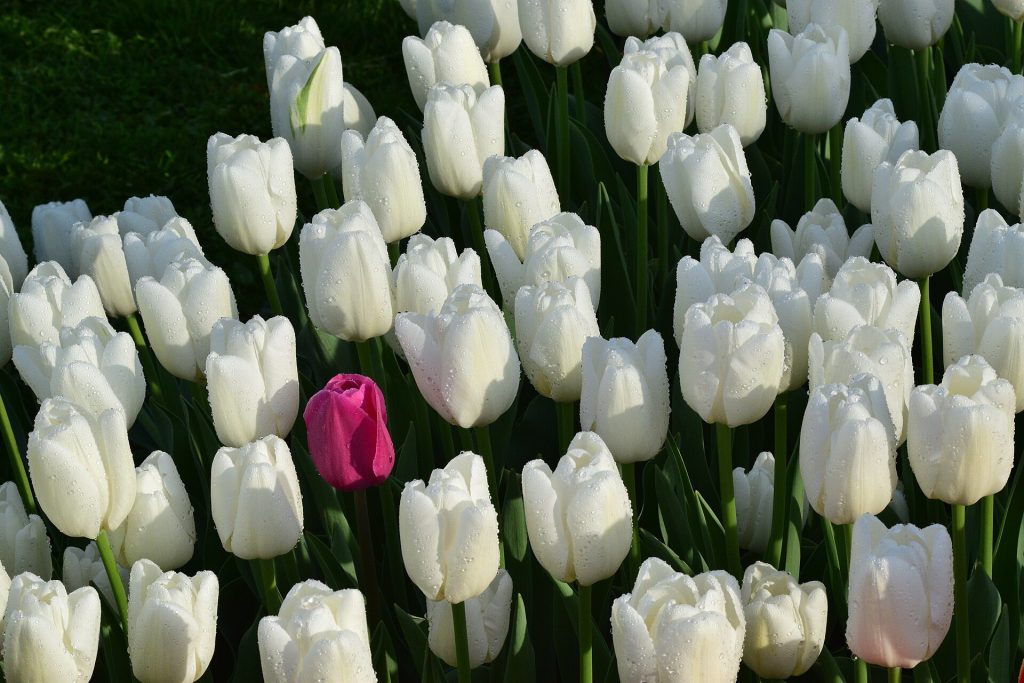
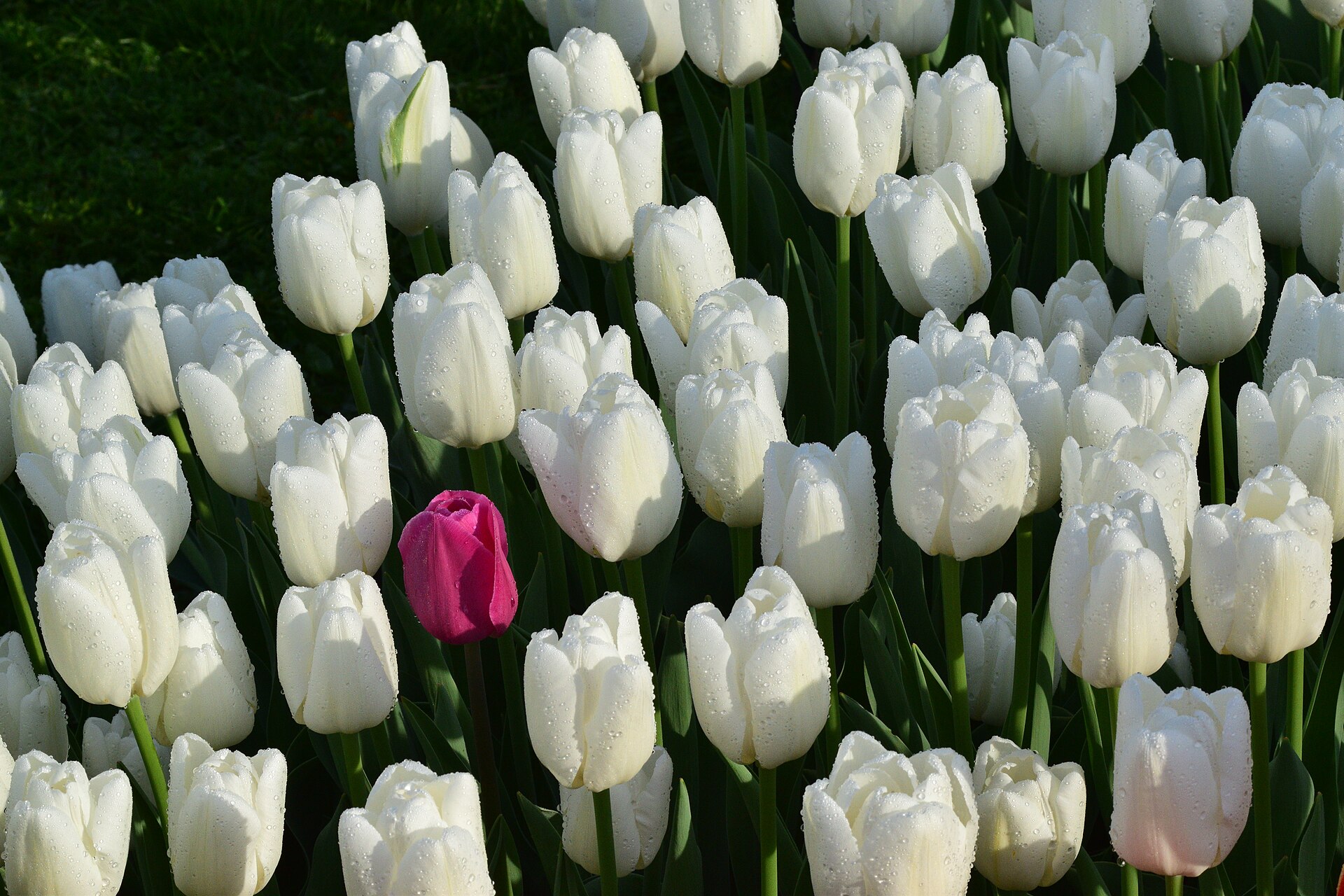
- White tulips: Interflora says white tulips “tend to mean worthiness or to send a message of forgiveness”, which makes them the clearest apology flower. Soft pink tulips carry a gentler love that suits friends and family.
- White roses: The Old Farmer’s Almanac gives white roses the meanings purity, innocence, reverence, a new beginning and a fresh start. In the Victorian language of flowers, the white rose also said “I’m worthy of you”. Soft pink roses add grace and gentleness without the heat of red.
- Purple hyacinths: the Almanac gives purple hyacinth the Victorian meaning “sorrow”, and Interflora links hyacinths with sincerity. Used thoughtfully, purple hyacinths say “I’m sorry” more directly than almost any other bloom. Keep them out of reach of pets.
- Pink carnations: the Almanac records the Victorian meaning “I’ll never forget you”. They last well in a vase and suit a quieter, lasting apology.
- Soft pink peonies or hydrangeas (in season): full, soft blooms that feel heartfelt without looking flashy. Peonies are short-season; hydrangeas also work as a potted plant.
- Their favorite flower: choosing the flower they love, rather than the most expensive one, shows you have been listening.
- A potted plant: a living plant, such as a white or soft pink moth orchid, can signal that you are committed to the relationship for the long term, not only for this week.
Colors to choose and avoid
In the sources above, white is the color most closely linked with forgiveness and fresh starts. Soft pinks are gentle and affectionate, and suit friends and family as well as partners. Soft purple, especially in hyacinths, reads as sincere regret. Red is the color of passionate love, so a red bouquet for a partner can feel more like romance than an apology. Save red for when things are back on track.
Skip yellow roses for a partner: the Almanac notes that in Victorian times they meant jealousy, a decrease of love and infidelity, and today they usually mean friendship, which can confuse a romantic apology. Yellow carnations carried disdain and disappointment in the Victorian lists. Bright, celebratory mixes can also feel tone-deaf if the hurt is still fresh.
Apology flowers for a partner, friend or coworker
- Partner: white tulips, white or soft pink roses, or purple hyacinths, with a specific card. Keep the bouquet modest unless they have told you they love big arrangements. Follow up in person.
- Friend or family: soft pink tulips or roses, pink carnations, or their favorite seasonal flower. A lighter, warmer tone usually fits better than a somber purple-only bouquet.
- Coworker or client: a small, neat arrangement in white or soft pink, with a short, professional note. Avoid romantic wording and very personal blooms. Delivery to the office is fine if the card stays discreet.
What to avoid
- Yellow roses for a partner: friendship yellow can undercut a romantic apology.
- Yellow carnations: in the Victorian language of flowers they meant disdain, disappointment and rejection.
- Cultural missteps: the Cultural Atlas notes that in Russia yellow flowers should not be given to a romantic interest and an uneven number of flowers should be given except at a funeral; that in Italy yellow flowers can indicate jealousy and chrysanthemums symbolize death; that in Japan white flowers are usually associated with funerals; and that in Chinese culture white and yellow flowers are generally avoided as gifts. For recipients from those cultures, soft pink is often a better choice than white.
- Grand gestures instead of an apology: an enormous bouquet can feel like an attempt to buy forgiveness. A modest bouquet and a sincere message are usually received better.
- Sending flowers if they’ve asked for space: if the person has asked you not to contact them, respect that. Flowers are not a way around it.
- Using white lilies as a casual apology: white lilies read as sympathy or funeral flowers for many people. Save them for remembrance, and choose tulips, roses or hyacinths when you mean “I’m sorry”.
How much to spend, and what size to send
With apology flowers, sincerity matters far more than size. Think in three simple tiers rather than chasing a price tag:
- Small hand-tied: a handful of white tulips or soft pink roses, wrapped simply. Enough for a clear, personal apology, especially after you have already spoken.
- Standard vase arrangement: a florist’s everyday arrangement in white and soft pink. The most common “I’m sorry” size when you want the flowers to sit on a table and last several days.
- Statement bouquet: only if you know they love large arrangements, or you are making amends after a longer hurt and you have already apologized in person. Without that conversation, a big bouquet can feel like pressure.
Choosing their favorite flower in season is both personal and good value. A potted orchid or hydrangea can outlast a cut bouquet and quietly underline that you want the relationship to continue. Avoid overspending to make a point.
Pet safety
If they have a cat, avoid lilies. The ASPCA lists true lilies as highly toxic to cats, and the FDA warns that even small amounts can cause kidney failure. Tulips, carnations and hyacinths are listed as toxic to dogs and cats. The ASPCA lists hyacinths as causing intense vomiting and diarrhea, so keep them well out of reach. Roses, orchids (Phalaenopsis) and gerbera daisies are listed as non-toxic, so a white or pink rose bouquet is a good pet-safe apology.
Delivery timing
Apology flowers work best after you have apologized directly, in person, by phone or in a message, rather than instead of it. Send them soon afterward, while the apology is still fresh. Same-day delivery helps when the conversation happened this morning; next-day is fine when you need time to choose the right blooms and write the card carefully.
If you send them to a workplace, keep the card discreet, since coworkers may read it. If the situation is still tense, sending flowers to their home, where they can read the card privately, is often better.
To help the flowers last, University of Illinois Extension recommends a clean vase, flower food, recutting the stems and changing the water every two to three days. Read our guide to keeping flowers fresh longer.
What to write on an apology card
A good apology message is short, specific and about them, not you. Name what you did, say you are sorry, and avoid excuses or “but”. Example messages:
- “I’m sorry for [what you did]. You deserved better from me.”
- “I was wrong, and I’m sorry. I’d love to talk when you’re ready.”
- “I’m sorry I [missed your event / forgot / said what I said]. I hope these brighten your day a little.”
- “White tulips, for forgiveness, and a promise to do better.”
- “These purple hyacinths mean I’m sorry. I mean it.”
- For a partner: “I’m sorry I hurt you. I love you, and I’m listening.”
- For a friend: “I’m sorry. Our friendship means a lot to me.”
- For a coworker: “Sorry about [the mix-up]. Thanks for being so understanding.”
- For family: “I’m sorry for how I handled [the situation]. I care about you, and I want to make this right.”
Avoid phrases like “I’m sorry if you were upset”, which can sound like you are blaming the other person. Handwrite the card when you can; a typed note from a florist is fine if you keep the wording personal.
Apology flowers vs thank-you flowers
Apology flowers try to repair a hurt. Thank-you flowers celebrate help you already received. Keep the tone different: apology notes own the mistake; gratitude notes name the favor. Soft tulips, white roses and purple hyacinths suit apologies; sweet peas, pink hydrangeas and cheerful mixes suit thanks. If you are unsure which message you need, write the card first and let that decide the bouquet.
Keep exploring
Read about tulip meanings, rose meanings, hyacinth meanings and carnation meanings, or see what flowers to send for every occasion. For care after they arrive, start with our flower care guide. For the wider meaning of white blooms, see white flowers meaning.
Frequently asked questions
White tulips are the clearest apology flower, as they symbolize worthiness and forgiveness. White roses (for a fresh start), soft pink roses, purple hyacinths and pink carnations are also strong choices.
White, for forgiveness and new beginnings; soft pink, for gentle affection; and soft purple, especially in hyacinths, for sincere regret. Avoid yellow for a partner and save red for romance.
Flowers work best alongside a sincere apology, not instead of one. Apologize directly first, then send flowers with a short, specific card.
Name what you did, say you are sorry and avoid excuses. For example: “I’m sorry for what I said. You deserved better from me.”
Choose a size that matches the relationship and the hurt, not a price meant to impress. A small hand-tied or a standard vase arrangement with a sincere card is enough for most apologies; save large statement bouquets for when you have already talked it through.
Home is usually better if the situation is still tense, so they can read the card privately. Workplace delivery is fine for a light professional apology if the note stays short and discreet.
Roses, moth orchids and gerbera daisies are listed as non-toxic by the ASPCA. Avoid lilies around cats, and keep tulips and hyacinths out of reach of pets.
Sources
- Interflora: Tulip guide
- Interflora: Rose guide
- Interflora: Hyacinth guide
- The Old Farmer’s Almanac: Flower meanings
- Cultural Atlas: Russian etiquette
- Cultural Atlas: Italian etiquette
- Cultural Atlas: Japanese etiquette
- Cultural Atlas: Chinese etiquette
- University of Illinois Extension: Help your flowers last longer
- ASPCA: Lily
- ASPCA: Hyacinth
- FDA: Lovely lilies and curious cats
- ASPCA: Cats plant list