

Winter Flowers: 19 Blooms for the Garden and Indoors

Winter is the quietest season in the garden, but it is not empty. A surprising number of plants flower between December and March, some of them right through frost and snow, and many of the most popular holiday plants bloom indoors in the darkest weeks of the year.
This guide covers 12 winter flowers for the garden and 7 for indoors, with the USDA hardiness zones they suit, when they bloom, how to grow them and whether they are safe around pets. Plant details come from NC State Extension’s plant database and other university sources listed at the end. It is part of our flower care guides.
Winter flowers at a glance
- For cold winters (zones 3 to 5): snowdrops, winter aconite, snow crocus, Christmas roses and witch hazel.
- For mild winters (zones 7 to 9): camellias, wintersweet, fragrant daphne, paperbush and pansies.
- For fragrance: witch hazel, wintersweet, fragrant daphne, paperbush and sasanqua camellias.
- Indoors: amaryllis, poinsettia, Christmas cactus, paperwhites, florist’s cyclamen, moth orchids and kalanchoe.
- Pet-friendly picks: the ASPCA lists camellias, Christmas cactus and moth orchids as non-toxic to dogs and cats.
A note on timing: “winter” flowering depends on where you live. Many of these plants bloom in December or January where winters are mild, but wait until February or March in colder zones.
12 winter flowers for the garden
1. Christmas rose (Helleborus niger). White flowers with yellow stamens that open from around Christmas in mild areas to February or March in cold ones. It is an evergreen perennial for part to full shade in rich, well-drained, neutral to alkaline soil, hardy in zones 3 to 8, and NC State lists it as deer and rabbit resistant. See Christmas rose meaning for its legend and Victorian message. The ASPCA lists it as toxic to dogs and cats.
2. Lenten rose (Helleborus x hybridus). The hybrid hellebores flower a little later, in late winter and early spring, in shades of white, green, pink and purple. NC State says their flower stems push up at the first sign of warmer weather in late winter, and lists them for zones 4 to 9, with a long bloom season and good cut flowers. Like all hellebores, they are toxic to pets.
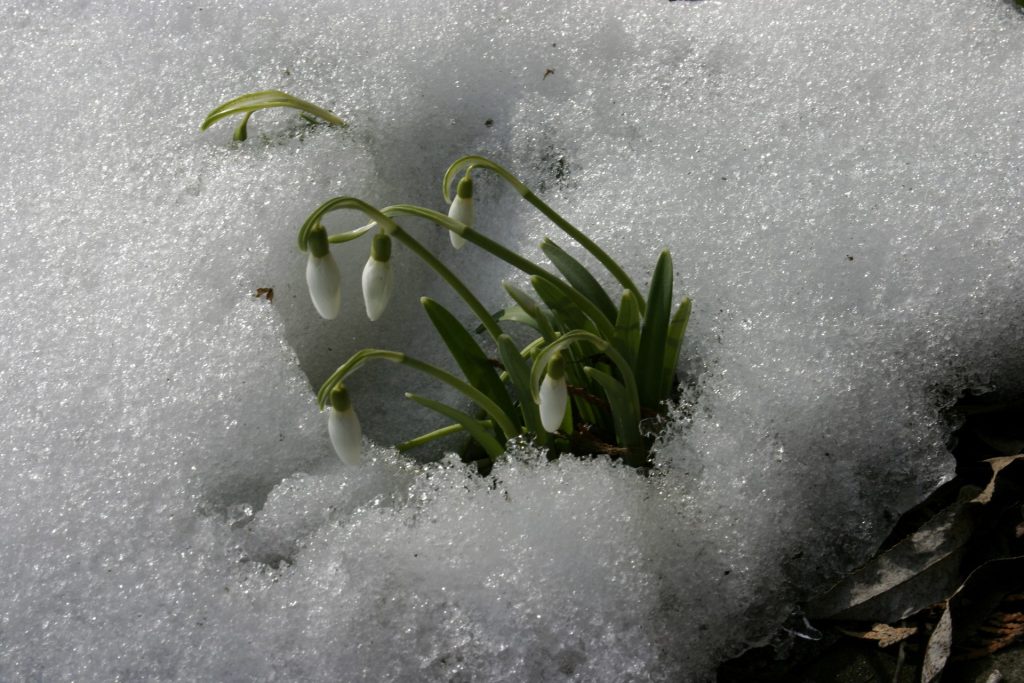
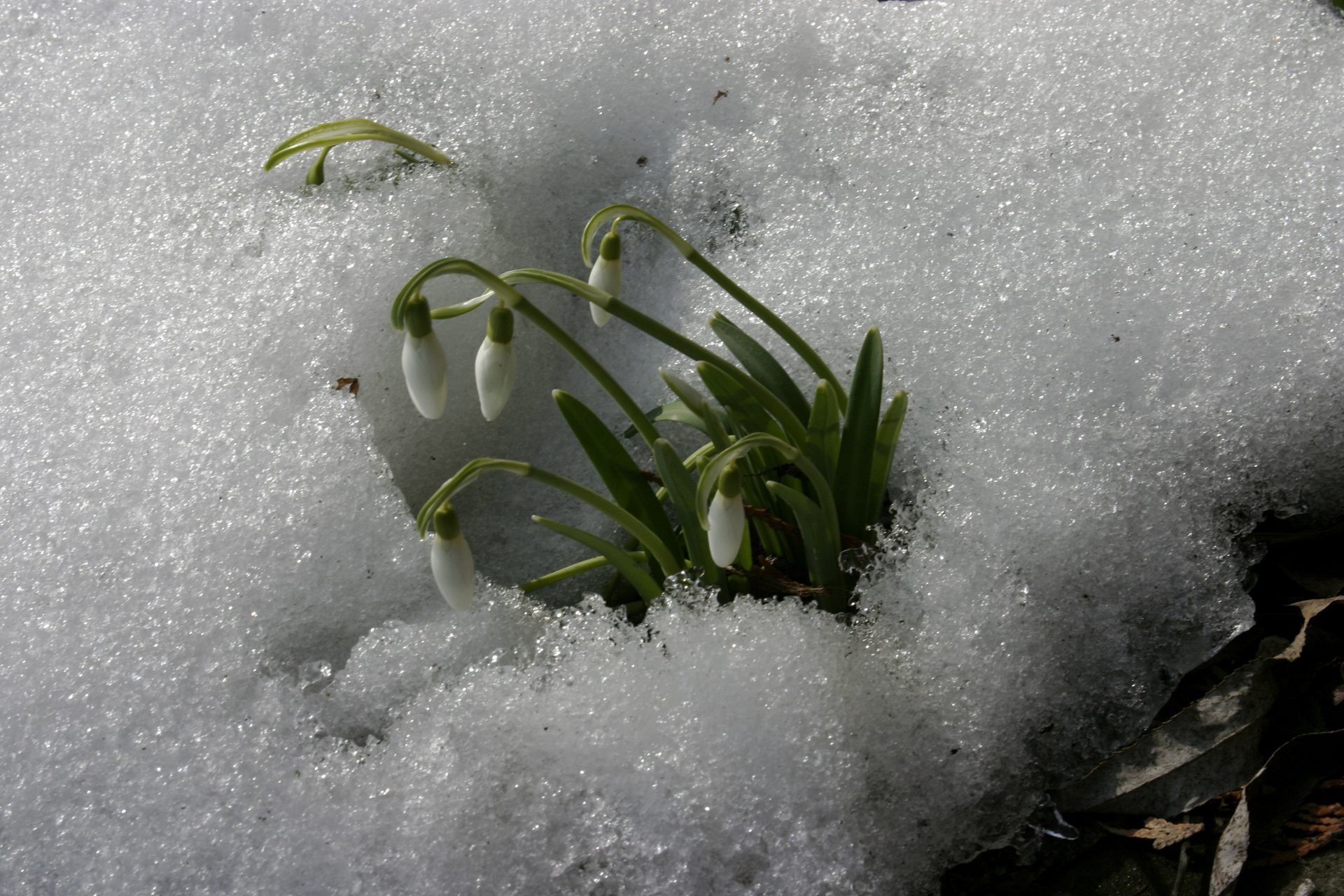
3. Snowdrop (Galanthus nivalis). Small white bells with a green mark on the inner petals, flowering in late winter to early spring, often while snow is still on the ground. NC State lists snowdrops for zones 3 to 9 and notes that they spread by self-seeding and bulb offsets, so they are ideal under deciduous trees or in a woodland corner. Snowdrops are one of the January birth flowers and a symbol of hope and resilience (see flowers that mean strength). They are not on the ASPCA’s plant list.
4. Winter aconite (Eranthis hyemalis). Bright yellow buttercup-like cups set on a ruff of green leafy bracts, just 3 to 6 inches tall. NC State recommends planting the tubers in late summer to early fall, 2 to 3 inches deep, in rich, well-drained soil, and lists it for zones 3 to 7. It goes dormant by late spring. NC State rates its toxicity as high, so keep it away from pets and children.
5. Snow crocus (Crocus tommasinianus). One of the first crocuses up, with lavender flowers that can appear while snow is still on the ground. NC State suggests planting the corms 3 to 4 inches deep in well-drained soil in sun, and says this species tolerates deer browsing and is reportedly resistant to squirrels. Zones 3 to 8.
6. Witch hazel (Hamamelis). Spidery, ribbon-like flowers on bare branches. NC State describes the hybrid witch hazels (Hamamelis x intermedia) as having fragrant yellow, orange or red flowers in winter or early spring, for zones 4 to 9, while the native Ozark witch hazel (Hamamelis vernalis) is a tough, fragrant shrub for zones 3 to 8. Both like sun to part shade, and NC State says the Ozark witch hazel flowers best in full sun.
7. Winter jasmine (Jasminum nudiflorum). Cheerful yellow flowers on sprawling stems before the leaves appear: the name nudiflorum means “naked flowering”. NC State lists it for zones 6 to 10 and says it is adaptable, even to poor soil, but looks messy unless pruned after flowering.
8. Camellia (Camellia sasanqua and C. japonica). The classic winter shrub of the South. NC State says sasanqua camellias bloom in late fall and winter, often with fragrant flowers, while Japanese camellias bloom in winter and spring. Both suit zones 7 to 9 and like well-drained, slightly acidic soil and shelter from drying winter wind. The ASPCA lists camellias as non-toxic to dogs and cats. See camellia meaning.
9. Wintersweet (Chimonanthus praecox). A large shrub with fragrant, cup-shaped flowers on bare branches: pale yellow-green outer petals around a reddish-purple center. NC State says it can start flowering in December in warmer areas and continue through March, but may not bloom until February or March where winters are colder. It suits zones 7 to 9, and plants grown from seed can take up to 10 years to bloom, so buy a plant.
10. Fragrant daphne (Daphne odora). Deeply fragrant pink, lavender or white flowers in mid to late winter, for zones 7 to 9. NC State says it needs very well-drained soil and often lives only three or four years, although it is easy to grow from cuttings. It rates the plant’s toxicity as high, so plant it away from pets and children.
11. Paperbush (Edgeworthia chrysantha). Clusters of yellow flowers with a gardenia-like fragrance on bare, three-pronged branches. NC State says it begins to bloom in December and continues through winter. The common name comes from its use in making quality paper, which in Japan is used for banknotes. Zones 7 to 10, in part shade and rich, moist soil.
12. Pansies and violas. The easiest way to get winter color in pots and beds where winters are mild. NC State recommends planting pansies in fall for winter and early spring blooms in zones 6 to 10, deadheading to keep them flowering, and notes they can bloom for four to six months. The flowers are edible, too. In the Victorian language of flowers, the pansy means “thoughts”.
7 winter flowers for indoors
13. Amaryllis. Huge, trumpet-shaped flowers from a bulb, in red, white, pink and striped forms. A bare bulb usually flowers about 8 to 12 weeks after planting, so plant in fall for winter flowers. See how to care for amaryllis and amaryllis meaning. The ASPCA lists amaryllis as toxic to dogs and cats.
14. Poinsettia. The classic Christmas plant, grown for its colorful bracts rather than its tiny flowers. Keep it warm, bright and away from drafts. See how to care for a poinsettia and poinsettia meaning. The ASPCA lists it as toxic, though it usually causes only mild symptoms.
15. Christmas cactus. Pink, red, white or orange flowers that dangle from the stem tips around the holidays, on a plant that is easy to keep for years. See Christmas cactus care for watering and how to make it bloom again. The ASPCA lists it as non-toxic to dogs and cats.
16. Paperwhites. Fragrant white narcissus that usually flower about 4 to 6 weeks after planting, even in a bowl of pebbles and water. They are the classic December birth flower. See how to grow paperwhites. The ASPCA lists narcissus as toxic.
17. Florist’s cyclamen (Cyclamen persicum). Swept-back flowers in white, pink, red, magenta or lavender above heart-shaped leaves. NC State says it typically blooms from early winter to spring and goes dormant in summer, which matches its native Mediterranean climate of cool, wet winters and hot, dry summers. Keep it in a cool, bright room. In the Victorian language of flowers, cyclamen means “resignation” and “goodbye”, so it is not the most tactful choice for a welcome gift. The ASPCA lists cyclamen as toxic to dogs and cats.
18. Moth orchid (Phalaenopsis). Long-lasting sprays of flowers that can bloom for weeks, any time of year, which makes them a dependable winter windowsill plant. See how to care for an orchid. The ASPCA lists moth orchids as non-toxic to dogs and cats.
19. Kalanchoe. A succulent with dense clusters of small red, orange, yellow or pink flowers, often sold in winter. It likes bright light and dislikes overwatering. The ASPCA lists kalanchoe as toxic to dogs and cats.
Winter flowers for the vase
You can make a winter bouquet with flowers from the garden and the florist. Hellebores make good cut flowers, and NC State suggests floating Christmas rose heads in a bowl of water. Branches of witch hazel and wintersweet bring scent indoors. From the florist, look for amaryllis, anemones, ranunculus, tulips and carnations, and mix in evergreens and berries. For long-lasting choices, University of Illinois Extension says carnations and mums may last up to two weeks in a vase, while daffodils and narcissus last about four to eight days.
For step-by-step help, see how to make a Christmas flower arrangement and how to keep cut flowers fresh.
Winter flowers and their meanings
- Snowdrop: hope, resilience and renewal, according to Interflora.
- Christmas rose: “Relieve my anxiety” in the Victorian language of flowers, and hope in the dark of winter.
- Camellia: in the Old Farmer’s Almanac’s list of Victorian meanings, pink means “longing for you”, red “you’re a flame in my heart” and white “you’re adorable”.
- Pansy: thoughts.
- Amaryllis and poinsettia: see amaryllis meaning and poinsettia meaning.
- Holly: defense and domestic happiness, according to the Almanac. See December birth flowers.
For more, see our flower meanings list and Christmas flowers guide.
Tips for a garden that flowers in winter
- Plant where you will see them. Winter flowers are small and you will mostly enjoy them from indoors, so put them near a door, a path or a window.
- Check your zone. Camellias, wintersweet, daphne and paperbush need mild winters (zones 7 and up), while snowdrops, aconites and snow crocus are happy in much colder gardens.
- Plant bulbs in fall. Snowdrops, winter aconite and crocus go in the ground in late summer or fall to flower the following winter.
- Give shade lovers shelter. Hellebores do best under deciduous trees, which let in winter sun and give summer shade, and out of drying winter wind.
- Add fragrance. Witch hazel, wintersweet and fragrant daphne all scent the air on mild winter days.
Pet safety
According to the ASPCA’s toxic and non-toxic plants lists, camellias, Christmas cactus and moth orchids are non-toxic to dogs and cats. Hellebores (Christmas and Lenten roses), amaryllis, poinsettias, paperwhites, cyclamen and kalanchoe are listed as toxic. NC State rates winter aconite and fragrant daphne as highly toxic. If your pet eats any plant and seems unwell, call your vet or the ASPCA Animal Poison Control Center on (888) 426-4435 (a fee may apply). For holiday plants, see Christmas plants safe for pets.
Keep exploring
For holiday plants, read Christmas flowers and Christmas rose meaning, find care guides for amaryllis, Christmas cactus and paperwhites, or browse all our flower care guides.
Frequently asked questions
Outdoors, snowdrops, winter aconite, snow crocus, Christmas and Lenten roses (hellebores), witch hazel, winter jasmine, camellias, wintersweet, fragrant daphne, paperbush and pansies can all flower in winter, depending on your zone. Indoors, amaryllis, poinsettias, Christmas cactus, paperwhites, cyclamen, moth orchids and kalanchoe bloom in winter.
Indoors, poinsettias, amaryllis and Christmas cactus are the classic winter flowering plants. In the garden, snowdrops and hellebores are the classic winter flowers in cold climates, and camellias in mild ones.
Snowdrops, winter aconite, snow crocus and Christmas roses all flower in late winter and can come through snow. NC State lists snowdrops and Christmas roses for zones as cold as 3, and witch hazel flowers on bare branches in cold weather too.
Where winters are mild, pansies and violas planted in fall give color through winter and into spring. For indoors, plant an amaryllis bulb or paperwhites in late fall or early winter for flowers in a few weeks.
The ASPCA lists camellias, Christmas cactus and moth orchids as non-toxic to dogs and cats. Hellebores, amaryllis, poinsettias, paperwhites, cyclamen and kalanchoe are listed as toxic.
Sources
- NC State Extension: Helleborus niger
- NC State Extension: Helleborus x hybridus
- NC State Extension: Galanthus nivalis
- NC State Extension: Eranthis hyemalis
- NC State Extension: Crocus tommasinianus
- NC State Extension: Hamamelis x intermedia
- NC State Extension: Hamamelis vernalis
- NC State Extension: Jasminum nudiflorum
- NC State Extension: Camellia sasanqua
- NC State Extension: Camellia japonica
- NC State Extension: Chimonanthus praecox
- NC State Extension: Daphne odora
- NC State Extension: Edgeworthia chrysantha
- NC State Extension: Viola x wittrockiana
- NC State Extension: Cyclamen persicum
- Clemson Cooperative Extension: Hellebore
- Interflora: January birth flowers
- Missouri Botanical Garden: Helleborus niger
- University of Illinois Extension: Help your Valentine’s flowers last longer
- The Old Farmer’s Almanac: Flower meanings, the language of flowers
- ASPCA: Toxic and non-toxic plants