

Red Flowers Meaning: Love, Passion and Festive Cheer

Red is the boldest color in any flower shop. It is the color of Valentine’s Day, of a dozen long-stemmed roses and of the poinsettias and amaryllis that brighten December. Most people know that red flowers mean love, but different red blooms carry different shades of that message, from a confession of love to deep mourning.
This guide explains what red flowers symbolize today, what the Victorians read into them, 12 red flowers and their meanings, when to send red and when to think twice. It is part of our flower meanings series, alongside pink, white, yellow and purple flowers meaning.
Red flowers meaning at a glance
- Main meaning: romantic love, passion and deep affection.
- Also: courage, celebration, good luck in some cultures and, at Christmas, festive cheer.
- Most famous red flower: the red rose, the classic way to say “I love you”.
- Best for: Valentine’s Day, anniversaries, Christmas and bold birthday bouquets.
- Think twice: dark crimson roses (mourning in the Victorian language of flowers) and red with white for some hospital visits in Britain.
What do red flowers symbolize?
Interflora, the UK florist network, says the red flower meaning is traditionally linked to romance, deep affection and devotion, and notes that red is closely linked with romantic love while yellow is more commonly associated with friendship. That is why red flowers are the default for Valentine’s Day and anniversaries.
But red is not only romantic. A red bouquet also reads as energetic and celebratory, which is why red flowers work for a big birthday, a congratulations or a festive table. Interflora adds that red tulips and carnations can stand for celebration and thoughtfulness too, and that red and white together can suggest unity, a popular combination for weddings and milestones.
Red flowers in the Victorian language of flowers
In the 1800s, people sent coded messages with flowers, and red blooms carried some of the most intense ones. The Old Farmer’s Almanac lists these traditional meanings:
- Red rose: love, “I love you”.
- Red tulip: passion, a declaration of love.
- Red carnation: “alas for my poor heart”, “my heart aches” and deep love.
- Red chrysanthemum: “I love you”.
- Red camellia: “you’re a flame in my heart”.
- Red salvia: “forever mine”.
- Dark crimson rose: mourning.
- Red columbine: anxious, trembling.
So even in the Victorian era, most red flowers spoke of love. The shade and the bloom changed the details: a red tulip was a confession, while a very dark crimson rose was a flower of grief.
12 red flowers and what they mean
1. Red roses. The classic symbol of love and desire. A single red rose and a dozen red roses are both romantic gestures; our rose meaning guide covers what different numbers of roses are said to mean. In English history, the red rose was also the emblem of the House of Lancaster in the Wars of the Roses, against the white rose of York. The ASPCA lists roses as non-toxic to dogs, cats and horses.
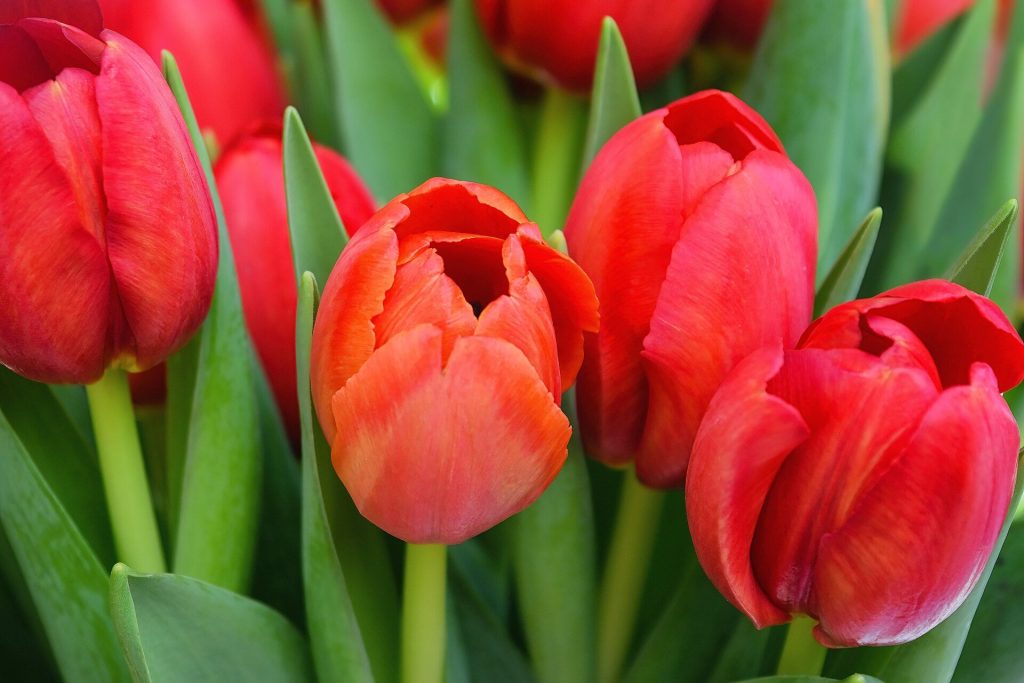
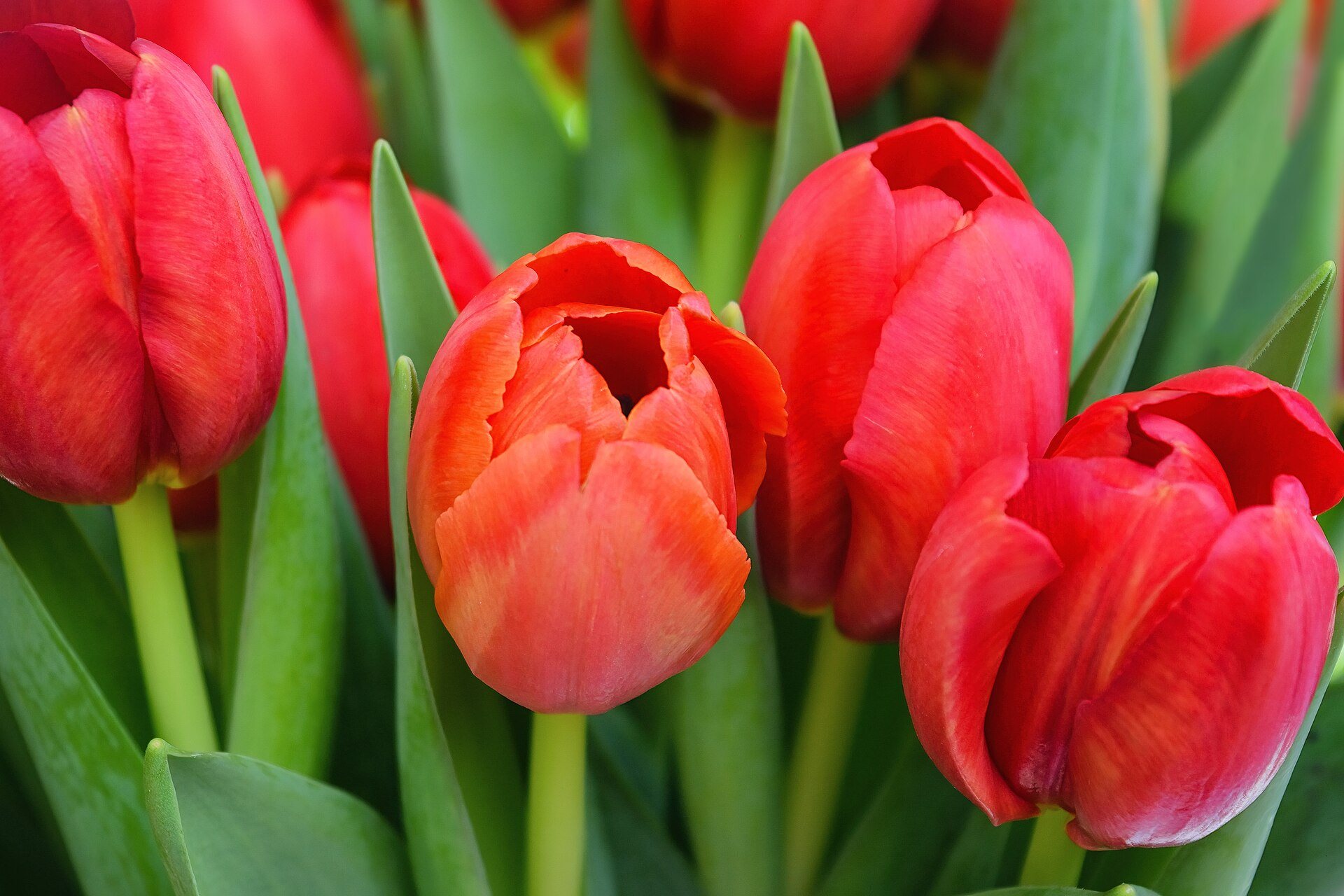
2. Red tulips. A declaration of love in the Victorian language of flowers, and Interflora links red tulips with perfect love. They are a fresh, slightly less formal alternative to red roses, especially in late winter and spring. The ASPCA lists tulips as toxic to dogs, cats and horses.
3. Red carnations. Deep love and admiration, with an old note of heartache. Carnations last a long time in a vase, so a red carnation bunch is good value. The ASPCA lists carnations as toxic to dogs, cats and horses, with mild stomach upset and skin irritation as the usual signs.
4. Red amaryllis. Interflora calls the amaryllis the most popular red Christmas flower, with tall stems and big trumpet-shaped blooms. A potted amaryllis bulb is a gift that flowers for weeks; see how to care for amaryllis. The ASPCA lists amaryllis as toxic to dogs, cats and horses.
5. Red poinsettias. The red “petals” are really colored leaves called bracts around tiny flowers. Poinsettias stand for Christmas cheer and celebration in the US. The ASPCA lists them as toxic to pets but notes their toxicity is generally overrated: they mainly irritate the mouth and stomach. See how to care for a poinsettia.
6. Red chrysanthemums. “I love you” in the Almanac’s list, and a long-lasting fall flower. Check the recipient’s culture first, because in some European countries chrysanthemums are mainly funeral flowers. The ASPCA lists chrysanthemums as toxic to pets.
7. Red camellias. “You’re a flame in my heart.” Camellias bloom in winter and early spring in mild climates, so a red camellia plant is a lovely romantic gift for a gardener. The ASPCA lists camellia as non-toxic to dogs, cats and horses.
8. Red ranunculus. Layered, rose-like petals and a romantic look. Interflora suggests red ranunculus for weddings and luxury arrangements. The ASPCA lists ranunculus (buttercup) as toxic to dogs, cats and horses.
9. Red anemones. Simple petals around a dark center. Interflora says red anemones are usually available from winter through spring and bring a romantic, wildflower feel to seasonal bouquets.
10. Red dahlias. Big, dramatic late-summer and fall blooms. Interflora links dahlias with lasting bonds and commitment, which suits an anniversary. The ASPCA lists dahlias as toxic to dogs, cats and horses, with mild signs.
11. Red gerberas. Cheerful rather than romantic, so a good red flower for a birthday or a friend. Interflora suggests red gerberas for birthdays and get well soon gifts. The ASPCA lists the gerbera daisy as non-toxic to dogs and cats.
12. Red poppies. The flower of remembrance for those who died in war, worn around Remembrance Day in Britain and Canada and around Memorial Day in the US. A red poppy is a symbol of respect rather than romance.
When to send red flowers
- Valentine’s Day: red roses are the tradition, but red tulips, ranunculus and anemones are in season in February and feel a little more personal. See flowers that mean love for more ideas.
- Anniversaries: red roses, or red dahlias for lasting commitment.
- Christmas: red amaryllis, poinsettias, red roses with evergreens, and holly berries. Our December birth flowers guide covers holly.
- Birthdays: red gerberas or a mix of red, orange and yellow for a bright, celebratory look.
- Congratulations: a bold red bouquet says “big news” better than any other color.
- For him: red is one of the colors men tend to like in flowers. See flowers for men.
When to think twice about red
- A first date or a new friend: a full red rose bouquet can feel like too much, too soon. See first date flowers and flowers that mean friendship.
- Red and white for a hospital visit in Britain: Plant-Lore, a British folklore archive, records an old belief among nurses and patients that red and white flowers in the same vase mean a death on the ward, because they suggest “blood and bandages”. It is only a superstition, but if you are sending flowers to someone in a British hospital, choose one color or the other. See get well soon flowers.
- Funerals: red roses are often chosen by a spouse or partner to show love, but a mostly red arrangement can look celebratory. See sympathy and funeral flowers.
- Cultural meanings: color symbolism is not universal. The Cultural Atlas notes that in Chinese culture, gifts wrapped in red and gold denote luck, while white wrapping has sour connotations, so red is a happy color there.
Red flowers and pets
Red roses, red gerberas and red camellias are on the ASPCA’s non-toxic list for dogs and cats. Red tulips, carnations, amaryllis, poinsettias, chrysanthemums, ranunculus and dahlias are listed as toxic to some degree. Red lilies are the biggest risk for cat owners: the FDA warns that even small amounts of a lily plant, its pollen or the vase water can cause kidney failure in cats. See flowers safe for cats and flowers safe for dogs.
How to keep red flowers looking their best
Trim the stems, strip any leaves below the waterline, change the water every couple of days and keep the vase away from heat, direct sun and ripening fruit. Our guides to making roses last longer and keeping cut flowers fresh have the details.
Keep exploring
Find more color guides in pink flowers meaning, white flowers meaning, yellow flowers meaning and purple flowers meaning, or browse the full flower meanings list and our guide to what flowers to send. Blue and orange are covered in blue flowers meaning and orange flowers meaning.
Frequently asked questions
Red flowers mostly mean romantic love, passion and deep affection. Depending on the flower, red can also stand for courage, celebration, remembrance (red poppies) and Christmas cheer (poinsettias and amaryllis).
Red roses are the classic symbol of love and desire. In the Victorian language of flowers a red rose meant “I love you”, while a very dark crimson rose meant mourning.
The red tulip (a declaration of love), the red chrysanthemum (“I love you”) and the red camellia (“you’re a flame in my heart”) all carry strong love meanings in the Old Farmer’s Almanac’s list.
They can be. A spouse or partner often chooses red roses to show love. For friends and colleagues, white or soft-colored flowers are the more traditional choice.
The best known are the poinsettia, whose red parts are actually leaves called bracts, and the amaryllis. Red roses, red carnations and holly berries are also popular in Christmas arrangements.
Sources
- Interflora: Red flowers, a guide to meaning, gifting and care
- Interflora: Flower meanings
- The Old Farmer’s Almanac: Flower meanings, the language of flowers
- Plant-Lore: Red and white flowers
- Cultural Atlas: Chinese culture, etiquette
- ASPCA: Toxic and non-toxic plants
- FDA: Lovely lilies and curious cats, a dangerous combination