

Pink Flowers Meaning: Admiration, Gratitude and Gentle Love
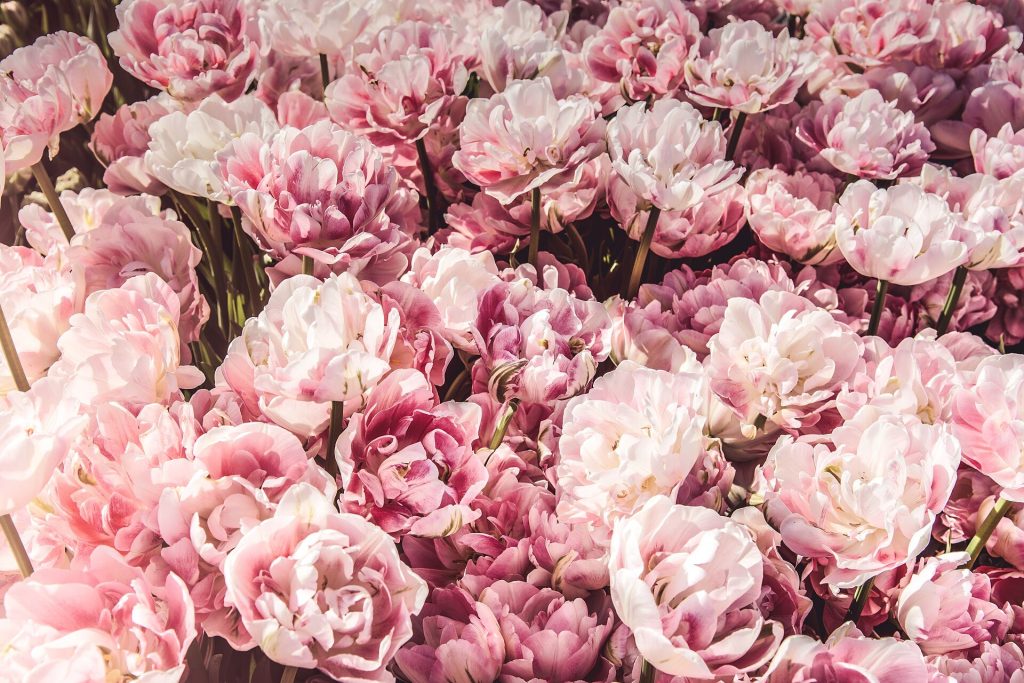
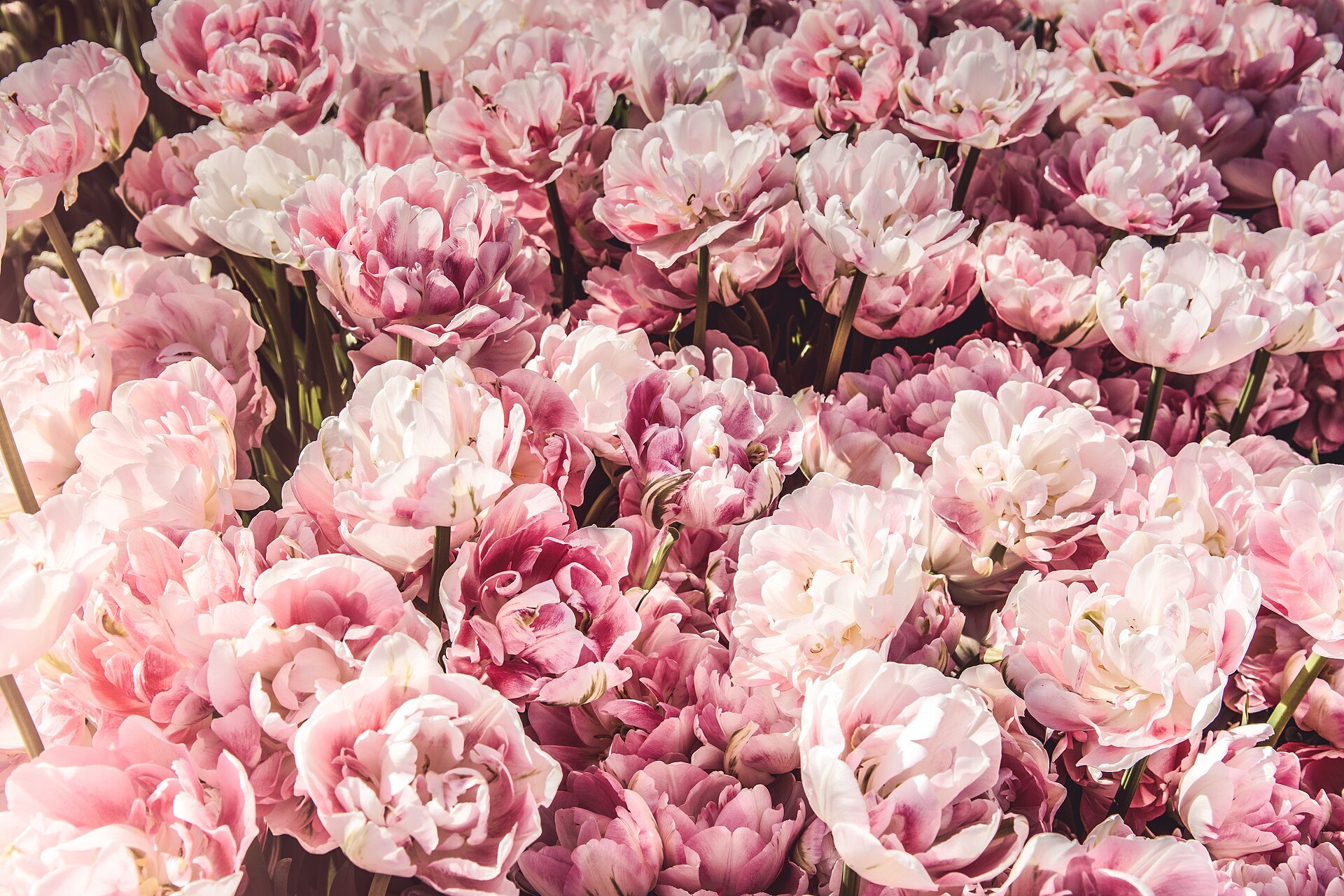

Pink is the most versatile color in the flower shop. It can say “I love you” without the intensity of red, “thank you” to a mother or a host, and “welcome” to a new baby. In modern flower symbolism, pink stands for admiration, affection and gratitude, which is why pink roses, carnations, peonies and tulips are favorites for so many occasions.
This guide explains what pink flowers mean today, what the Victorian language of flowers said about individual pink blooms, and when pink is the right choice. It is part of our flower meanings series, alongside white flowers meaning, yellow flowers meaning and purple flowers meaning.
Pink flowers meaning at a glance
- Today: admiration, affection and gratitude, according to Interflora’s flower meanings guide.
- In love: a gentler, sweeter kind of love than red, from new romance to family love.
- In the Victorian language of flowers: mostly warm meanings, such as grace, happiness and gentleness (pink rose), “I’ll never forget you” (pink carnation) and “longing for you” (pink camellia).
- Best occasions: Mother’s Day, new babies, thank yous, birthdays, anniversaries, early romance and get well wishes.
What do pink flowers symbolize today?
Interflora’s flower meanings guide links pink flowers with admiration, affection and gratitude, and names pink asters, pink roses and pink camellias as examples. Pink is a softened red, so it keeps some of red’s warmth while losing its intensity. That is what makes it so easy to give: the message is caring and appreciative, but rarely too much.
Pale blush and baby pink look delicate and calm, which suits sympathy, new babies and thank yous. Hot pink and magenta look playful and bold, which suits birthdays and celebrations. Both carry the same core message of affection and appreciation.
Pink in the Victorian language of flowers
The language of flowers that became popular in the 19th century was kind to pink. The Old Farmer’s Almanac lists these traditional meanings:
- Pink rose: grace, happiness and gentleness.
- Pink carnation: “I’ll never forget you”.
- Pink camellia: “longing for you”.
- Larkspur: an open heart and lightness, with fickleness noted for pink or simple varieties.
Interflora adds that sweet peas carry color meanings too, with pink for happiness.
Is pink a “girl’s” color?
Not originally. Smithsonian Magazine explains that pink and blue, along with other pastels, became popular colors for babies in the mid-19th century, and that it took time for them to become gender signals. A 1918 trade publication even said the accepted rule was pink for boys and blue for girls, although historians disagree about how common that view really was. The pink-for-girls convention grew stronger through the 20th century. In flowers, pink has no gender at all: pink roses, carnations and gerberas suit anyone.
Pink flowers, by bloom
Pink roses. Interflora says pink roses represent admiration, blossoming love and affection, and the Almanac gives grace, happiness and gentleness. Pink roses work for partners, friends and family alike. The ASPCA lists roses as non-toxic to dogs, cats and horses.
Pink carnations. “I’ll never forget you” in the Victorian language of flowers, and today a symbol of love and gratitude, especially to mothers. They are the classic Mother’s Day flower and one of the January birth flowers.
Pink peonies. Interflora links soft pink peonies with romance, prosperity and good fortune, which is why they are so popular for weddings and anniversaries. See how to make peonies last in a vase. The ASPCA lists peonies as toxic to dogs, cats and horses.
Pink tulips. A gentler kind of love and affection. Interflora says pink tulips represent true love and nurture, a good fit for Mother’s Day. See tulips in a vase for care tips.
Pink camellias. “Longing for you”, a lovely message for a partner you miss. The ASPCA lists camellia as non-toxic to dogs, cats and horses.
Pink gerberas. Admiration, which makes them perfect for a friend. The ASPCA lists the gerbera daisy as non-toxic to dogs and cats.
Pink alstroemeria. Admiration, affection and gratitude, on top of the flower’s main meaning of friendship and devotion. Interflora notes that alstroemeria can last up to two weeks with good care.
Pink dahlias. Interflora says the dahlia symbolizes grace and kindness, which makes pink dahlias a thoughtful thank you.
Pink orchids. Interflora describes orchids as a symbol of rare and delicate beauty. Pink moth orchids are easy to find as potted plants; see how to care for an orchid.
Pink lisianthus. Interflora says a pink lisianthus arrangement suits the birth of a new baby, symbolizing happiness, youth and innocence.
Pink hyacinths. Playful joy, according to Interflora, and a fragrant spring gift.
Cherry blossoms. Pale pink cherry blossoms are a symbol of spring, celebration and the short-lived beauty of life, especially in Japan.
Pink anemones, with a caution. Red and pink anemones have traditionally been linked with death and forsaken love, so choose another pink flower for a romantic gift if the recipient knows the old meanings.
Other flowers often found in pink include hydrangeas (pink in neutral to alkaline soil), ranunculus, sweet peas, zinnias, asters and lotus.
When to send pink flowers
- Mother’s Day: pink is the classic Mother’s Day color, and pink carnations are the traditional flower.
- New babies: soft pink lisianthus, roses or carnations, mixed with white for a gentle look. See new baby flowers.
- Early romance and Valentine’s Day: pink roses say “I really like you” without the full weight of a red rose bouquet. See Valentine’s Day flowers and first date flowers.
- Anniversaries: pink peonies or a pink and red rose mix. See anniversary flowers.
- Thank you: pink roses, dahlias and alstroemeria all carry gratitude. See thank you flowers.
- Birthdays and friendship: pink gerberas for admiration, or a bright pink and yellow mix. See birthday flowers.
- Get well soon: soft pink is calming and cheerful at once. See get well soon flowers.
Are pink flowers safe for pets?
A flower’s color does not change its safety, so check the type of flower. Roses, gerbera daisies, camellias, alstroemeria and Phalaenopsis orchids are listed by the ASPCA as non-toxic to dogs and cats. Peonies, tulips, carnations, hyacinths and hydrangeas are listed as toxic. Pink lilies, such as stargazers, are as dangerous as any true lily: the FDA warns that even small amounts of a lily plant, its pollen or the vase water can cause kidney failure in cats. See flowers safe for cats and flowers safe for dogs.
Keep exploring
Compare other colors in purple flowers meaning, yellow flowers meaning and white flowers meaning, read about flowers that mean love, or browse the full flower meanings list. Red is covered in red flowers meaning. Blue and orange are covered in blue flowers meaning and orange flowers meaning.
Frequently asked questions
Pink flowers mean admiration, affection and gratitude, according to Interflora. They also stand for a gentler, sweeter kind of love than red flowers.
Pink roses mean admiration, blossoming love and affection, according to Interflora. The Old Farmer’s Almanac lists grace, happiness and gentleness.
They can be. Pink says “I really like you” in a softer way than red, so pink roses are popular for new relationships. Pink flowers also suit friends and family, so the message depends on the occasion.
The pink carnation is the traditional Mother’s Day flower. Pink roses, peonies and tulips are also popular choices.
In the Victorian language of flowers, a pink carnation means “I’ll never forget you”. Today pink carnations are given as a sign of love and gratitude, especially to mothers.
Sources
- Interflora: Flower meanings
- Interflora: Pink flowers and their meanings
- Interflora: Lisianthus meaning
- Interflora: Sweet pea guide
- The Old Farmer’s Almanac: Flower meanings, the language of flowers
- Smithsonian Magazine: Why girls wear pink and boys wear blue
- ASPCA: Toxic and non-toxic plants
- FDA: Lovely lilies and curious cats, a dangerous combination