

Blue Flowers Meaning: Calm, Trust and Nature’s Rarest Color

Blue is the color of a clear sky and a calm sea, and blue flowers carry the same mood. They feel cool, peaceful and a little unusual, partly because blue is genuinely rare in the plant world. Most people can name a dozen red or yellow flowers, but blue ones take more thought: hydrangeas, delphiniums, cornflowers, irises, hyacinths and forget-me-nots.
This guide explains what blue flowers mean, why so few flowers are truly blue, what individual blue blooms symbolize, when to send them and which ones are safe around pets. It is part of our flower meanings series, alongside purple flowers meaning and white flowers meaning.
Blue flowers meaning at a glance
- Main meanings: calm, trust and sincerity, according to Interflora, plus loyalty, peace and remembrance.
- In the Victorian language of flowers: constancy (blue hyacinth), humility (bluebell), “I think of you” (blue salvia) and true love memories (forget-me-not), according to The Old Farmer’s Almanac.
- Best occasions: weddings (“something blue”), new babies, anniversaries, get well wishes, sympathy and thank you.
- Good to know: true blue is rare in nature, and roses, carnations and chrysanthemums have no natural blue varieties. Vivid blue roses in shops have been colored.
What do blue flowers symbolize?
Interflora sums up blue flowers as calm, trust and sincerity. Its guide to blue flowers adds a longer list of meanings that blue blooms have carried over time and across cultures: serenity and tranquility, trust and openness, mystery and inspiration, love and desire, loyalty and sympathy, and heroism and honesty.
That mix makes blue one of the most flexible flower colors. A blue bouquet can say “I believe in you”, “I am thinking of you” or “I am here for you”, without the strong romantic message of red or the bright party mood of yellow and orange. Blue also pairs well with white for a fresh, clean look, and with yellow for a cheerful contrast.
Blue in the Victorian language of flowers
The language of flowers that was so popular in the 19th century gave several blue flowers gentle, faithful meanings. The Old Farmer’s Almanac lists these:
- Blue hyacinth: constancy.
- Bluebell: humility, and kindness in its notes on Victorian flower meanings.
- Blue salvia: “I think of you”.
- Forget-me-not: true love memories, and “do not forget me”.
- Iris: faith, trust, wisdom, hope and valor.
- Speedwell: feminine fidelity.
- Bachelor’s button (cornflower): single blessedness.
Unlike yellow, blue has few negative old meanings to worry about, so blue flowers are a safe choice for almost any message.
Why are blue flowers so rare?
Blue is the least common flower color. The UC Botanical Garden at Berkeley says fewer than 10% of flowers are blue, or even bluish, and Cambridge University Botanic Garden gives the same figure. The reason is chemistry. Plants have no simple blue pigment. Instead, blue usually comes from a pigment called delphinidin, one of the anthocyanins, which can look red, purple or blue depending on conditions inside the petal cells.
Getting a stable blue takes several things at once: the right anthocyanin, the right level of acidity in the cell, and often metal ions or other compounds that bind to the pigment. Cambridge University Botanic Garden notes that delphinidin is the pigment behind the blue of bluebells, delphiniums, Himalayan blue poppies, and violas and pansies. A review in Frontiers in Plant Science notes that some plant families, including roses, carnations and chrysanthemums, have no naturally blue flowers because they lack a key enzyme needed to make delphinidin.
Hydrangeas show the chemistry in action. According to UMass Amherst Extension, aluminum in the flower tissue turns bigleaf hydrangeas blue, and the plant can only take up that aluminum when the soil is acidic. In neutral to alkaline soil, the same plant flowers pink. See our hydrangea meaning guide for the full story.
Are blue roses real?
Not in nature. Roses cannot make delphinidin on their own, so breeders could never produce a blue rose by crossing roses. Suntory, the Japanese company, worked on the problem with biotechnology from 1990, announced its first roses with blue pigment in 2004 and began selling them as “Applause” in Japan in 2009. Even these genetically modified roses are a pale lavender blue rather than sky blue, as a review of floriculture biotechnology in the journal Plant Introduction describes them.
So if you see a bright, electric blue rose at a florist, it has been dyed or tinted. That does not make it a bad gift, just know what you are buying. Suntory itself says Applause signifies “dreams come true” in the language of flowers. For the meanings of natural rose colors, see our rose meaning guide.
Blue flowers, by bloom
1. Hydrangeas. Big, full heads in sky blue to deep blue. Interflora links hydrangeas with understanding and heartfelt emotion. They are thirsty cut flowers, so see how to keep hydrangeas fresh. The ASPCA lists hydrangeas as toxic to dogs and cats.
2. Delphiniums and larkspur. Tall spikes that add height to a bouquet. Interflora says delphiniums stand for strength and dignity, and its meanings table also gives positivity and generosity. Larkspur is a July birth flower. The ASPCA lists larkspur (Delphinium species) as toxic to dogs and cats.
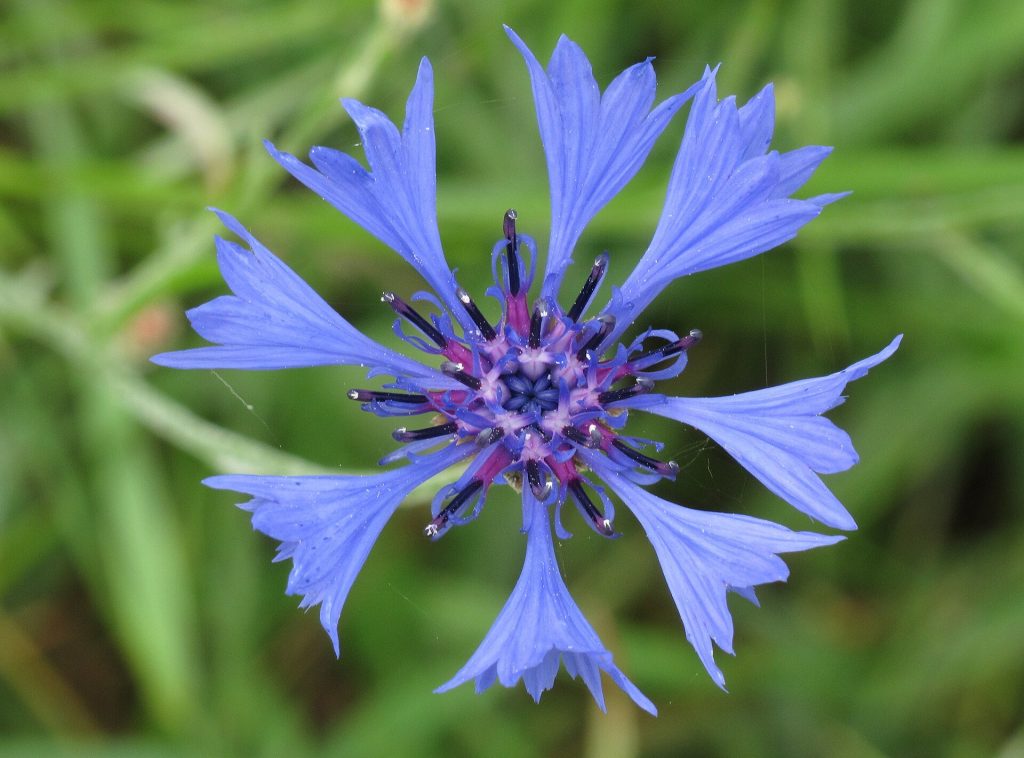
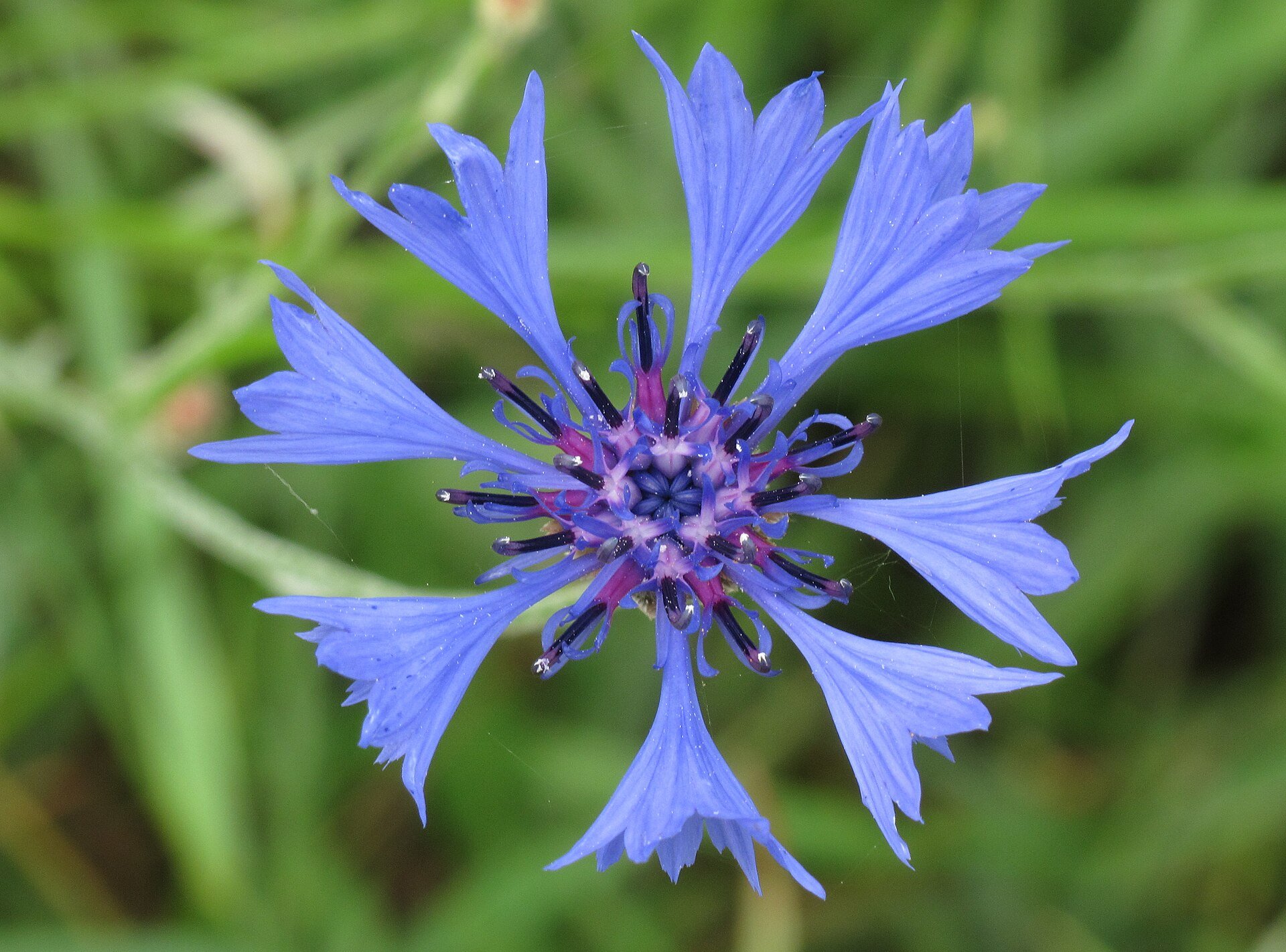
3. Cornflowers. Also called bachelor’s buttons, cornflowers are one of the few flowers with a true, intense blue. The Almanac’s Victorian meaning is single blessedness. The ASPCA lists cornflower (Centaurea cyanus) as non-toxic to dogs and cats.
4. Irises. Elegant blue and violet blooms. Interflora says blue irises represent hope and wisdom and suggests sending them to someone starting a new adventure. The ASPCA lists irises as toxic to dogs and cats.
5. Hyacinths. Fragrant spring bulbs. The Almanac gives the blue hyacinth the meaning of constancy, and Interflora describes hyacinths as sincerity and playfulness. The ASPCA lists hyacinth as toxic to dogs and cats.
6. Grape hyacinths. Small spikes of deep blue bells (Muscari) that look lovely in a little jar or as a potted bulb in spring. Despite the name, they are a different plant from hyacinths, and the ASPCA lists grape hyacinth (Muscari armeniacum) as non-toxic to dogs and cats.
7. Forget-me-nots. Tiny sky-blue flowers with a yellow eye. True to their name, they stand for remembrance and true love, and Interflora suggests them for sympathy bouquets and memory gardens. Forget-me-nots are not on the ASPCA’s toxic and non-toxic plants list.
8. Blue anemones. Dark-centered blooms in deep blue and violet. Interflora says blue anemones represent anticipation and suggests them for winter weddings. Anemones are not on the ASPCA’s toxic and non-toxic plants list.
9. Bluebells. The woodland flower of British springs. Interflora says bluebells symbolize humility and everlasting love, and the Almanac lists humility. Wild bluebells are best enjoyed where they grow rather than picked.
10. Agapanthus. Also called African lily, with globes of blue flowers on tall stems. Interflora links agapanthus with love and beauty and notes that its sculptural shape suits modern arrangements.
11. Sea holly. Spiky, silvery-blue Eryngium, which Interflora says means independence and attraction. Interflora suggests it for wild or rustic arrangements, and its thistle-like look also suits bouquets for men (see flowers for men).
12. Asters. Daisy-like flowers in blue, violet and purple. Interflora links asters with love and wisdom, and asters are a September birth flower. The ASPCA lists China aster (Callistephus chinensis) as non-toxic to dogs and cats.
Other blue or blue-violet flowers with their own guides include lavender and violets.
When to send blue flowers
- Weddings: blue flowers are a classic way to add “something blue”. Interflora links them with fidelity, commitment and calm joy. See wedding flowers.
- New babies: soft blue blooms are a traditional choice for a new arrival, especially a baby boy, although any cheerful color works. See new baby flowers.
- Anniversaries: blue stands for loyalty and lasting love. See anniversary flowers.
- Get well soon: calm blue tones are restful in a recovery room. See get well soon flowers, and check hospital rules before sending.
- Sympathy and remembrance: forget-me-nots, blue hydrangeas and blue irises with white flowers make a gentle tribute. See sympathy flowers.
- Congratulations: Interflora says blue blooms say “You’ve done it!” with style and sincerity. See congratulations flowers.
Are blue flowers safe for pets?
It depends on the flower. According to the ASPCA’s toxic and non-toxic plants lists:
- Listed as non-toxic to dogs and cats: cornflower (bachelor’s button), grape hyacinth and China aster.
- Listed as toxic to dogs and cats: hydrangea, larkspur (delphinium), iris, hyacinth and lavender.
- Not on the ASPCA list: forget-me-nots and anemones, so ask your vet if you are unsure.
If your pet eats any plant and seems unwell, call your vet or the ASPCA Animal Poison Control Center on (888) 426-4435 (a fee may apply). For more choices, see flowers safe for cats and flowers safe for dogs.
Keep exploring
Compare other colors in purple flowers meaning, white flowers meaning, orange flowers meaning, yellow flowers meaning, pink flowers meaning and red flowers meaning, find blooms by occasion in what flowers to send, or browse the full flower meanings list.
Frequently asked questions
Blue flowers mean calm, trust and sincerity, according to Interflora. They are also linked with loyalty, peace, inspiration and remembrance, which makes them suitable for weddings, anniversaries, get well wishes and sympathy.
Plants have no simple blue pigment. Blue usually comes from the pigment delphinidin combined with the right cell acidity and other compounds, and many plants cannot make it. Fewer than 10% of flowers are blue or bluish, according to the UC Botanical Garden at Berkeley.
Not naturally. Roses cannot make the blue pigment delphinidin, so bright blue roses in shops are dyed. Suntory’s genetically modified “Applause” rose, sold in Japan since 2009, has real blue pigment but looks lavender blue.
Interflora suggests delphiniums and forget-me-nots as romantic blue flowers. Forget-me-nots stand for true love and remembrance, and bluebells for everlasting love.
The ASPCA lists cornflowers (bachelor’s buttons), grape hyacinths and China asters as non-toxic to dogs and cats. Hydrangeas, delphiniums, irises, hyacinths and lavender are listed as toxic.
Sources
- Interflora: Blue flowers names and meanings
- Interflora: Flower meanings
- The Old Farmer’s Almanac: Flower meanings, the language of flowers
- UC Botanical Garden at Berkeley: Blue, nature’s rarest flower color
- Cambridge University Botanic Garden: Bluebells, the science behind Britain’s most beloved spring flower
- Frontiers in Plant Science: Fragmentary blue, resolving the rarity paradox in flower colors
- Suntory Global Innovation Center: The challenge of blue roses
- Plant Introduction: Biotechnology in floriculture
- UMass Amherst Extension: Hydrangeas, color and fertilizing
- ASPCA: Toxic and non-toxic plants