

Flowers That Mean New Beginnings: 12 Blooms for a Fresh Start

A new year, a new job, a new home, a new baby or simply a fresh start after a hard time: some of life’s best moments are beginnings. Flowers are a natural way to mark them, because so many flowers are themselves a sign of something new, pushing up through cold ground at the end of winter or opening at the start of spring.
This guide covers 12 flowers that mean new beginnings, hope or renewal, where those meanings come from, which ones suit which occasion and what to write on the card. It is part of our flower meanings series, alongside flowers that mean love and flowers that mean friendship.
Flowers that mean new beginnings at a glance
- Classic new beginnings flowers: daffodils, white roses, lotus flowers and daisies.
- For hope and renewal: snowdrops, irises, cherry blossoms and crocuses.
- For good fortune in a new venture: peonies, and proteas for strength and courage.
- For the New Year: snowdrops and carnations (January’s birth flowers), paperwhites, white flowers and the first spring bulbs.
- Best color: white, which The Old Farmer’s Almanac links with a new beginning and a fresh start in white roses.
12 flowers that mean new beginnings
1. Daffodils. The best-known flower of new beginnings. Interflora’s flower meanings table gives daffodils “new beginnings and renewal”, and the Almanac says they are associated with renewal and the arrival of spring. Daffodils are a March birth flower. One tip: Interflora notes that a single daffodil has been associated with bad luck, while a whole bunch is said to bring the opposite, so always give a bunch. The ASPCA lists daffodils as toxic to dogs and cats.
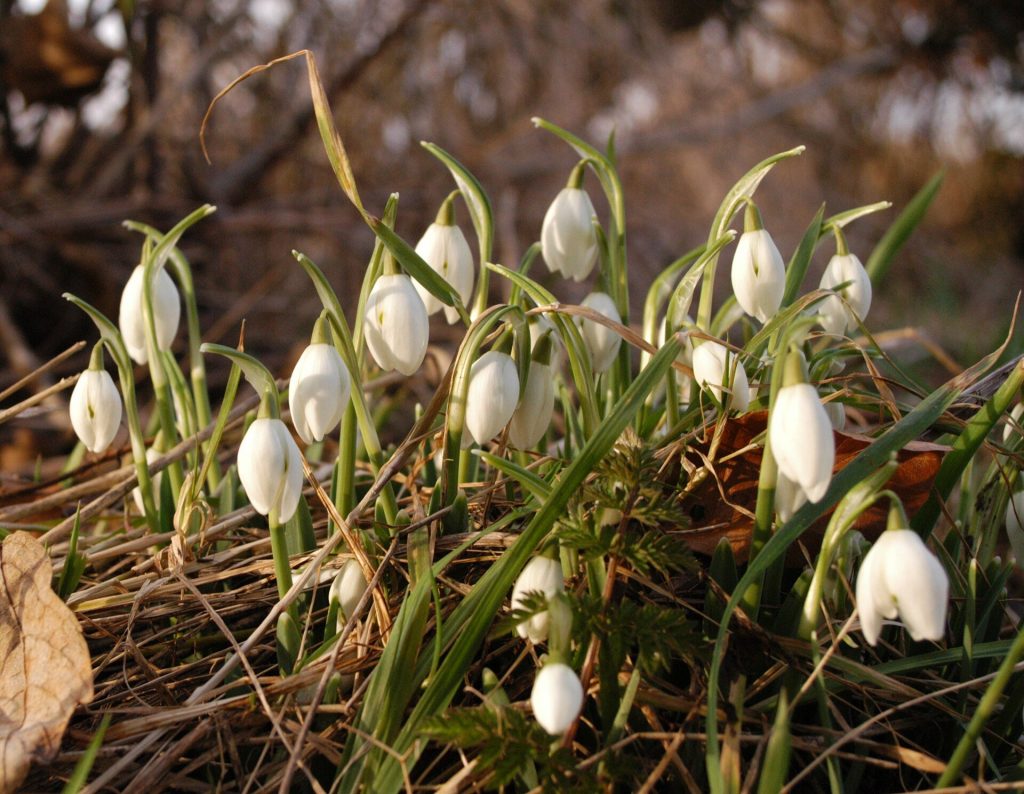
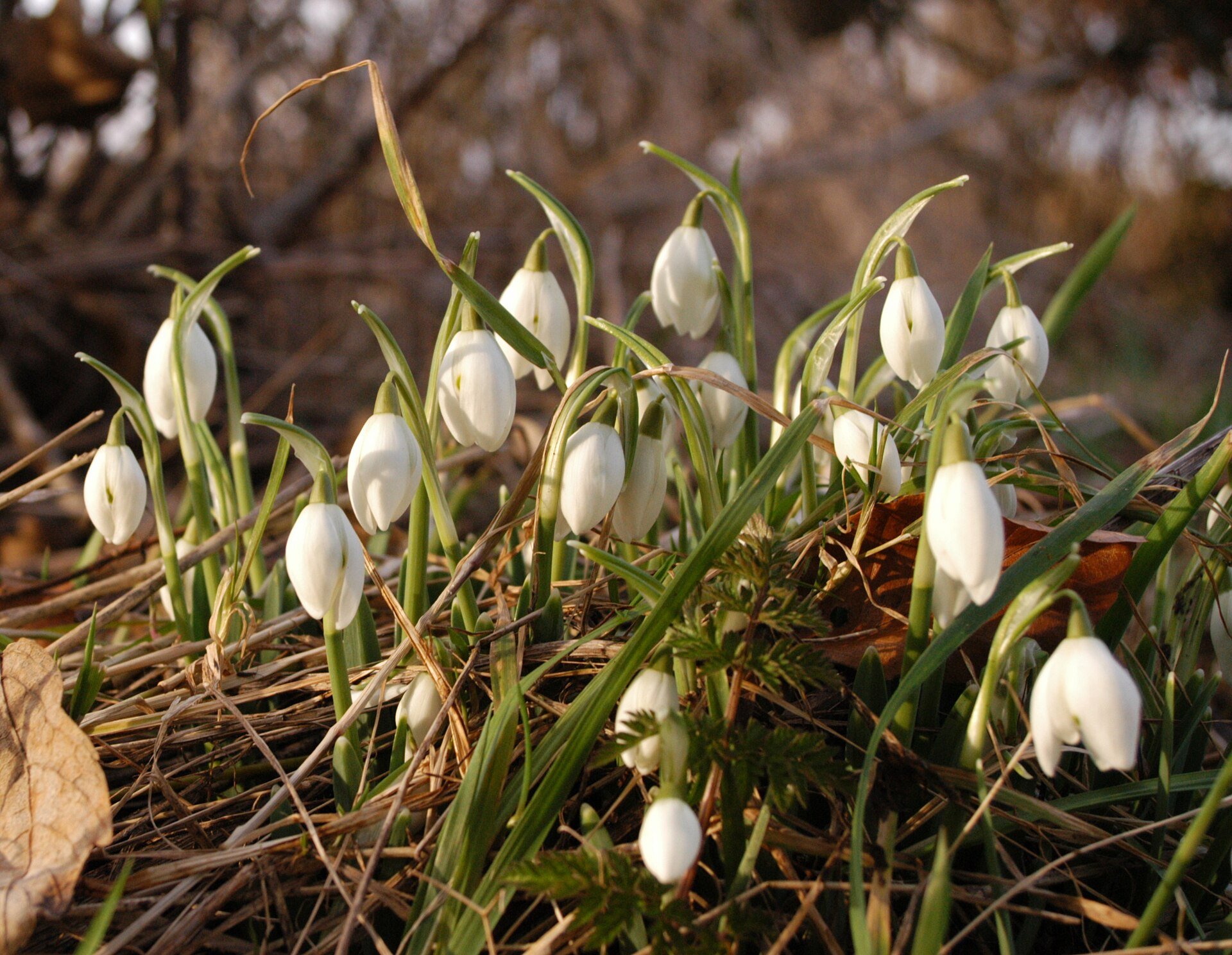
2. Snowdrops. Small white bells that are often among the first flowers to appear after winter. Interflora says snowdrops symbolize hope, renewal and the promise of brighter days, and the Almanac says that today the snowdrop signifies hope and beauty. Snowdrops are one of the January birth flowers, which makes them a lovely New Year gift as a pot of bulbs. They are not on the ASPCA’s toxic and non-toxic plants list.
3. White roses. The Almanac’s list of rose colors gives the white rose purity, innocence, reverence, a new beginning and a fresh start, and it names white roses first among its flowers that symbolize new beginnings. They suit weddings, new homes and quiet fresh starts. See white flowers meaning. The ASPCA lists roses as non-toxic to dogs and cats.
4. Daisies. The Almanac tells how the daisy was the sacred flower of Freyja, the Norse goddess of love, beauty and fertility, and so became a symbol of motherhood, childbirth and new beginnings. Daisies are a classic gift for new mothers and an April birth flower. Gerbera daisies are listed by the ASPCA as non-toxic to dogs and cats, but chrysanthemum-type daisies are listed as toxic.
5. Lotus flowers. The Almanac lists the lotus as purity, enlightenment, self-regeneration and rebirth. In Buddhist and Hindu art, the lotus rising clean from muddy water is a symbol of spiritual growth, which makes it a meaningful motif for anyone starting over after a difficult time. Lotus flowers are rarely sold as cut flowers, so a lotus card, print or dried seed pod can carry the meaning instead.
6. Cherry blossoms. In Japan, sakura bloom for about two weeks in early spring, at the start of the academic and fiscal year, and Japan’s national tourism organization says the blossoms commonly represent renewal and the passage of time. Cut branches of flowering cherry are sometimes sold in spring. The ASPCA lists cherry (Prunus species) as toxic to dogs and cats.
7. Irises. The Almanac’s meanings for iris are faith, trust, wisdom, hope and valor. Interflora suggests sending blue irises to someone embarking on a new adventure or facing a big decision. Irises are a February birth flower on Interflora’s list. The ASPCA lists irises as toxic to dogs and cats.
8. Crocuses. Among the earliest spring flowers, often blooming while there is still snow around. The Almanac gives the spring crocus the meanings of cheerfulness and youthful gladness. A pot of crocus bulbs is a cheerful late-winter gift. Be careful with the name: the ASPCA lists autumn crocus (Colchicum autumnale), a different plant, as toxic to dogs and cats, so keep any crocus away from pets.
9. Paperwhites. Fragrant white narcissus that many people grow indoors in winter. Our guide to December birth flowers covers the paperwhite’s meanings of pure love, hope and new beginnings, and our how to grow paperwhites guide shows how to time them for the holidays or the New Year. The ASPCA lists narcissus, including paperwhites, as toxic to dogs and cats.
10. White carnations. Long lasting and easy to find in winter. Interflora says white carnations are well suited to graduations and new beginnings, and the carnation is a January birth flower. The ASPCA lists carnations as toxic to dogs and cats, with usually mild effects.
11. Peonies. Interflora says peonies can represent good fortune, and its meanings table gives “romance and prosperity”, which makes them a generous gift for a new business, a wedding or a new home. The ASPCA lists peonies as toxic to dogs and cats.
12. Proteas. Big, sculptural flowers from South Africa. Interflora links proteas with strength and courage, a good message for anyone brave enough to start again. Proteas also dry well, so the gift can last (see how to dry flowers).
Which flowers to send for each new beginning
- New Year: snowdrops in a pot, white roses, white carnations or a mixed white and green bouquet. Interflora calls January “a month of fresh starts”, and its birth flowers, the carnation and snowdrop, fit the mood.
- New job or promotion: irises, sunflowers or a bright mixed bouquet. See congratulations flowers.
- New home: a potted plant or bulbs they can keep, or peonies in season. A plant that does well indoors, such as a moth orchid, often outlasts cut flowers.
- Graduation: white carnations, which Interflora recommends for graduations, or the graduate’s school colors.
- New baby: daisies, which the Almanac calls a common gift for new mothers. See new baby flowers.
- Wedding: white roses for a new beginning, and peonies for good fortune. See wedding flowers.
- A fresh start after a hard time: daffodils or snowdrops for hope, or a protea for strength. Keep the message gentle and personal.
Flowers to think twice about
- A single daffodil: Interflora notes the old superstition that one daffodil is bad luck, so give a bunch.
- Lilies in a home with cats: the FDA warns that true lilies are highly toxic to cats, so skip them for a new home if there is a cat.
- Heavily scented flowers for a hospital room: strong scent can be a lot in a small, shared space. See get well soon flowers for hospital rules.
Card message ideas for a new beginning
- “Here’s to new beginnings. So proud of you.”
- “Wishing you every happiness in your new home.”
- “Happy New Year! May this one be your best yet.”
- “Congratulations on the new job. They are lucky to have you.”
- “Welcome to the world, little one.”
- “Spring always comes. Thinking of you as you start again.”
Pet safety
According to the ASPCA’s toxic and non-toxic plants lists, roses and gerbera daisies are non-toxic to dogs and cats. Daffodils, paperwhites, irises, cherry, carnations, peonies and chrysanthemum-type daisies are listed as toxic. Snowdrops, lotus and proteas are not on the ASPCA list, so ask your vet if you are unsure. If your pet eats any plant and seems unwell, call your vet or the ASPCA Animal Poison Control Center on (888) 426-4435 (a fee may apply). See flowers safe for cats and flowers safe for dogs.
Keep exploring
Find more meanings in flowers that mean love, flowers that mean friendship, white flowers meaning and yellow flowers meaning, browse what flowers to send for every occasion, or look up any month in our birth flowers by month guide. For more blooms of courage and resilience, see flowers that mean strength. Visiting a new home? See housewarming flowers.
Frequently asked questions
The daffodil is the best-known new beginnings flower: Interflora gives it “new beginnings and renewal”. White roses, lotus flowers, daisies and snowdrops also carry meanings of a fresh start, rebirth or hope.
Snowdrops are a classic symbol of hope, because they flower at the end of winter. The Almanac also lists hope among the meanings of the iris, and Interflora gives sunflowers the meaning of joy and hope.
White. The Old Farmer’s Almanac gives the white rose the meanings of a new beginning and a fresh start, and white flowers are widely linked with new beginnings in Western traditions.
Snowdrops and carnations, January’s birth flowers, suit the New Year well, as do white roses, paperwhites and early spring bulbs such as daffodils and crocuses in pots.
Bright, positive flowers work well: irises for hope and a new adventure, sunflowers for joy, or a cheerful mixed bouquet. A potted plant for their new desk is another good option.
Sources
- The Old Farmer’s Almanac: Flower meanings, the language of flowers
- The Old Farmer’s Almanac: January birth flowers
- The Old Farmer’s Almanac: April birth flowers
- Interflora: Flower meanings
- Interflora: January birth flowers
- Interflora: Blue flowers names and meanings
- Travel Japan (JNTO): Sakura, Japan’s symbol of spring
- ASPCA: Toxic and non-toxic plants
- FDA: Lovely lilies and curious cats, a dangerous combination